Kvrguša Recipe – Bosnian Chicken and Batter Bake
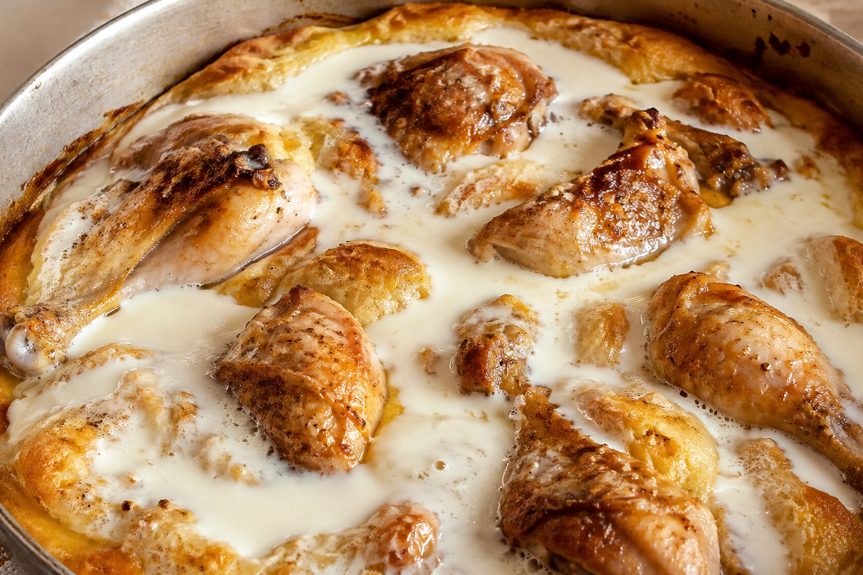
Kvrguša is a Bosnian chicken and batter bake, especially associated with home cooking in Bosanska Krajina. Bone-in chicken pieces sit among raised patches of savory batter, with golden edges and a soft interior flavored by the cooking juices. It is a complete family meal made in one wide baking pan.
The chicken goes into the oven before the batter. That first stage starts the browning and gives the meat a head start; then the pourable mixture of eggs, flour, milk, sparkling water, and baking powder spreads between the pieces. A cultured-cream and milk finish is added only after the chicken and batter are cooked.
This kvrgusa recipe serves six and allows about one hour and forty minutes, including the refrigerated seasoning interval and a final rest. Pan width and chicken-piece size matter as much as the clock. Keep the batter layer shallow, use a thermometer, and preserve the finishing step that gives this version its characteristic texture.
Kvrguša – Bosnian Chicken and Batter Bake
Ingredients
- 35 1/4 oz bone-in chicken thighs and drumsticks skin-on; choose smaller, similarly sized pieces; US weight rounded; the Metric weight includes bones
- 1 1/2 tsp fine table salt for the chicken; keep separate from batter and finishing salt
- 1/2 tsp ground black pepper for the chicken
- 1 tsp sweet paprika for the chicken; not automatically smoked or hot
- 1 1/3 tbsp sunflower oil to coat the chicken; separate from pan oil; US volume rounded
- 2 1/2 cups unbleached all-purpose flour spoon and level cups; weigh for best results; practical US match for source Type 405
- 4 large eggs US large is a practical match for the source’s German size M; approximately 50 g out of shell per egg
- 1 2/3 cups whole milk for the batter; source 3.5% milkfat; US whole milk is commonly about 3.25%, a practical adaptation; US volume rounded
- 8 1/2 fl oz plain sparkling mineral water unflavored, freshly opened; stir in last; US volume rounded
- 10 g baking powder weigh in either system to preserve the source amount; not baking soda
- 1 tsp fine table salt for the batter
- 2 tbsp sunflower oil coat the baking pan; not part of the chicken coating
- 8 7/8 oz full-fat cultured sour cream unflavored; source Schmand or sour cream at 20–24% milkfat preferred; ordinary US full-fat sour cream around 18% is a disclosed practical adaptation, not identical; US weight rounded
- 3 3/8 fl oz whole milk for the finish, separate from batter milk; US volume rounded
- 1 small pinch fine table salt for the finish; the source does not define a gram weight
Equipment
- 1 Round metal baking pan about 14 inches (35–36 cm) wide and 2 inches deep per base batch; see scaling notes
- 1 Mixing bowl and whisk make a smooth pourable batter
- 1 Small bowl keep the cream finish separate
- 1 Kitchen scale weigh flour, chicken, cream, and baking powder
- 1 Liquid measures keep batter milk and finishing milk separate
- 1 Tongs and oven mitts handle the hot chicken and pan safely
- 1 Food thermometer verify chicken and batter reach 165°F (74°C)
- 1 Serving spatula portion the cooked batter between the chicken pieces
Method
- Season and chill the chicken. Pat the chicken dry with paper towels without rinsing it. Combine the chicken salt, black pepper, and sweet paprika. Rub the pieces with the measured chicken-coating oil, then season all over. Cover and refrigerate for 20 minutes. Keep raw poultry separate from other food and clean hands, tools, and work surfaces afterward.
- Prepare the oven and pan. While the chicken chills, preheat a conventional oven to approximately 390°F (200°C), with a rack in the middle. Coat a roughly 14-inch (35–36-cm) round metal baking pan with the separate pan oil. Arrange the chicken with a little space between pieces. For larger scales use additional comparable pans; do not make one deep casserole.
- Prebake the chicken. Bake for 20 minutes, turning the pieces once after about 10 minutes to begin coloring both sides. This is only the first cooking stage. Continue directly with the batter and the remaining bake; do not cool partially cooked chicken for finishing later.
- Mix and rest the batter. During the chicken’s first baking stage, whisk the eggs with the batter salt. Whisk in about half of the batter milk. Combine flour and baking powder, then whisk them into the egg mixture in portions. Gradually add the remaining batter milk, followed by the sparkling water. The batter should be smooth and pourable, a little thicker than a very thin crêpe batter, not a kneadable dough. Rest it for 5 minutes during the same prebaking interval, then stir briefly.
- Pour around the chicken. Carefully remove the hot pan using oven mitts. With tongs, lift the chicken pieces slightly to loosen any that stick. Pour the batter evenly between and partly beneath them, keeping as much of the upper skin exposed as possible. Leave the cooking juices in the pan; they flavor the baked batter.
- Bake the chicken and batter together. Increase the conventional oven to approximately 430°F (220°C). Bake for another 25–30 minutes as an initial guide, until the batter is puffed, fully set, and deep golden with some crisp darker edges. Check representative thick chicken pieces away from bone and the center of the batter with a food thermometer: both must reach at least 165°F (74°C). Continue baking if either is under temperature or the batter is wet and raw inside. If everything is cooked but the batter is pale, allow about 3–5 extra minutes while watching closely.
- Whisk the cultured-cream finish. While the main bake finishes, whisk the cultured sour cream with the separate finishing milk and its small pinch of salt until smooth and pourable. Keep chilled until ready to use. This is the measured finishing mixture, not extra batter.
- Pour and warm the finish. Once the chicken and batter are fully cooked, remove the pan and switch the oven off. Pour the cultured-cream mixture over the hot baked batter without needing to bury all the chicken skin. Return the pan to the switched-off, still-hot oven for about 5 minutes so the finish warms and partly soaks in. Do not boil it away or continue cooking until the dish dries out.
- Rest and portion. Remove the pan and rest for 5 minutes. Cut or scoop the batter between the chicken pieces. Divide the cooked meat, batter, and cream finish evenly among the main portions shown, carving larger pieces if needed. Remember that the chicken is bone-in and serve promptly.
Notes
What Is Kvrguša?
Kvrguša combines chicken with a batter that cooks directly in the same pan. The uneven surface is part of its character: raised areas brown more deeply while the interior stays softer where it meets the juices and finishing cream. Some regional usage also calls the dish batakuša.
This is a specific home-style preparation, not a claim that every household uses identical quantities. Here the defining sequence is chicken first, batter second, and a cultured-cream finish after the main bake. Leaving out the batter or pouring cream onto ordinary roasted chicken would produce a different meal.
Choose Bone-In Thighs and Drumsticks
Use similarly sized, smaller bone-in thighs and drumsticks with the skin on. Their dark meat suits the longer oven sequence better than treating lean breast meat as an automatic replacement. The measured weight includes bones and skin, so it is not a weight of boneless cooked meat.
The source serves six, but the number of whole pieces in a package varies. Select smaller pieces when possible, and divide cooked meat and batter fairly among the portions. If your chicken pieces are large, carve the fully cooked meat rather than promising an identical whole piece to every diner.
Pat poultry dry without washing it under running water. Season with the measured chicken oil and spices, then keep covered in the refrigerator for twenty minutes. Use separate utensils for raw poultry and the ready-to-eat cream mixture, and clean the work surface after handling the chicken.
Mix a Smooth, Pourable Batter
Unbleached all-purpose flour is a practical American match for German Type 405, although brands absorb liquid differently. Weighing is the most reliable way to preserve the flour amount. If using cups, spoon the flour in and level it rather than packing it.
Whisk eggs and batter salt first, then work in part of the batter milk. Add the combined flour and baking powder gradually, followed by the rest of that milk. Stir in freshly opened, unflavored sparkling mineral water last. The mixture should flow around the chicken on its own; it should not be a dough that needs rolling or kneading.
Let the batter stand for five minutes during the chicken’s first oven stage, then stir briefly before pouring. Keep baking powder distinct from baking soda. The measured milk for the finish belongs in a separate bowl, not in this batter.
Bake Chicken and Batter in a Wide Metal Pan
Use a round metal tepsija or baking pan about fourteen inches across, within the source’s thirty-two-to-thirty-six-centimeter range. The pan needs space for the chicken in one layer and for the batter to spread between the pieces. A small, deep dish can leave a thick wet center beneath a browned surface.
Preheat the conventional oven to about 390°F (200°C). Oil the pan with its separate measured oil, arrange the chicken, and prebake for twenty minutes, turning once halfway through. Keep the cooking juices in the pan. This first stage does not establish that the chicken is safe to eat, and it must be followed directly by the remaining cooking.
Remove the hot pan carefully, loosen any sticking pieces with tongs, and pour the batter between and partly underneath them. Leave much of the upper skin exposed. Increase the oven to about 430°F (220°C) and bake another twenty-five to thirty minutes as an initial guide.
Check the thickest chicken pieces away from the bone and the center of the batter: both need to reach at least 165°F (74°C). The batter must also be fully set rather than wet and raw inside. Browned skin or a puffed surface alone cannot establish that the middle is cooked. Extra time may be needed for larger pieces, and multiple pans need air circulation or separate batches.
Add the Cultured-Cream Finish at the Right Time
Whisk the cultured cream with the separate finishing milk and a small pinch of salt while the main bake finishes. Once the chicken and batter are cooked, pour this mixture over the hot batter and return the pan to the switched-off, still-hot oven for five minutes. It warms and partly soaks in without being boiled away.
The original uses Schmand or sour cream around twenty to twenty-four percent milkfat. An unflavored cultured product in that range is the closest match. Ordinary full-fat American sour cream around eighteen percent is a practical adaptation at the same Metric mass, with a somewhat different richness and heat behavior. Reduced-fat and fat-free products are not direct equivalents.
The original whole milk is about three-and-a-half percent fat; ordinary American whole milk is commonly about three-and-a-quarter percent. These are disclosed shopping adaptations, not a separately kitchen-tested reformulation. Keep the cream and milk quantities measured so the finish moistens the batter without becoming an unplanned extra layer of liquid.
Kvrguša, Kljukuša, and Pita
The similar-sounding kljukuša uses grated potatoes, onion, and flour baked as a potato mixture. Kvrguša uses chicken and a pourable egg-and-flour batter. They have different ingredients, structures, and cooking requirements.
Kvrguša is also distinct from a thin-sheet pita such as burek or sirnica: no jufka sheets are stretched, filled, or rolled here. Regional names can overlap, but this method is a chicken-and-batter bake rather than a filled pastry. It also contains much more than plain roasted chicken.
Serve, Store, and Reheat
Rest the finished pan for five minutes, then cut or scoop the batter between the chicken pieces and divide the meal evenly. A fresh side such as kupus salata gives a crisp contrast. The bake already supplies chicken and a substantial batter component, so extra bread, rice, or potatoes are not necessary.
Refrigerate leftovers in shallow containers within two hours, or within one hour when the surroundings exceed 90°F. Keep at 40°F or below and use within two days. Do not leave the pan on the counter until it is completely cool.
Reheat portions covered at about 340°F (170°C) until the chicken and batter reach 165°F throughout. Fifteen to twenty minutes is a starting estimate for small portions, not a safety test; larger refrigerated portions take longer. The cream finish and once-crisp edges soften on storage. Freezing can soften them further.
For preparation ahead, you can season raw chicken and keep it refrigerated within its original storage window. Mix the batter close to baking. Do not partially prebake chicken, refrigerate it, and plan to finish it later; carry both baking stages through in the same cooking session.
Practical Questions
Why is the center still wet? Check pan width, batter depth, oven temperature, and chicken size. Keep baking until both chicken and batter reach 165°F and the batter has set. A browned top does not mean a thick center is ready.
Can I omit the finish? The cultured-cream and milk finish defines this version. It is added after the main bake so it moistens the baked batter instead of becoming another raw batter ingredient.
How do I double or triple the recipe? Keep the same individual chicken size and batter depth. Use two or three comparable pans, with extra oven batches if needed. All ingredients, including eggs, pan oil, and the finishing mixture, scale; the oven temperatures and the doneness target remain the same.