Pljeskavica Recipe – Balkan Beef Patties
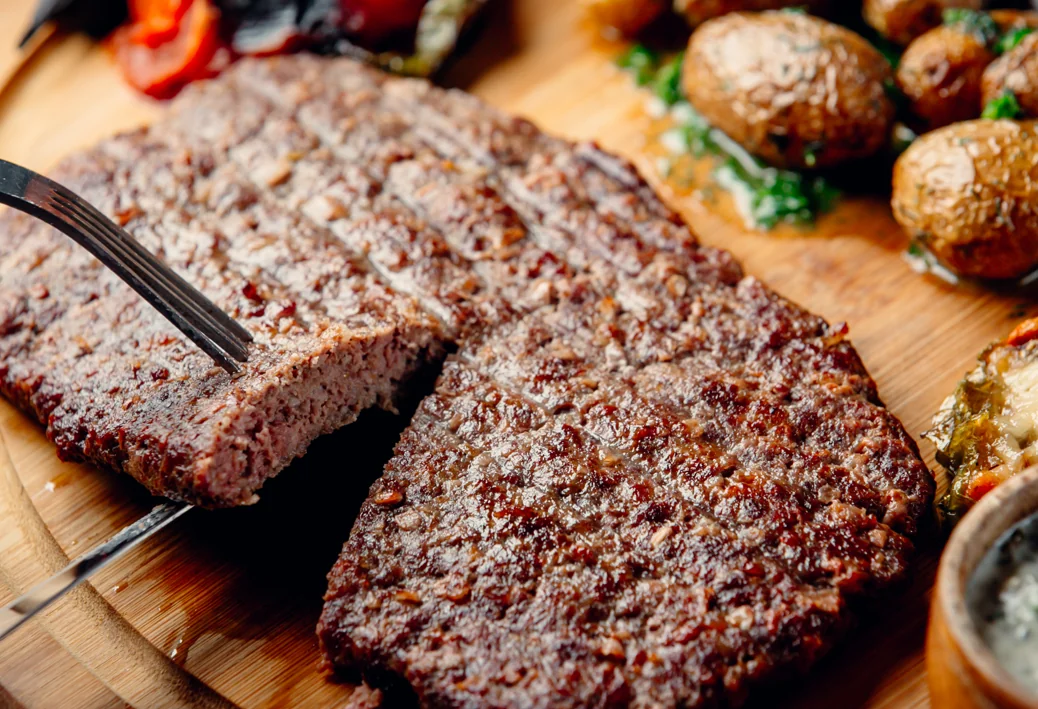
Pljeskavica is a wide, thin Balkan ground-meat patty with a browned surface and a cohesive, juicy interior. This all-beef version uses finely chopped onion, sweet paprika, black pepper, salt, and a small amount of cold sparkling water. It contains no egg, breadcrumbs, baking soda, cheese, or hidden filling.
The texture depends on how the meat is handled. Cold ground beef is mixed thoroughly until tacky, rested in the refrigerator, then combined with the onion and shaped considerably wider and thinner than many American hamburger patties. A second chill helps the large patties transfer to the grill or skillet without breaking.
The recipe below keeps a clear two-stage chilling schedule and a precise meat-to-salt ratio. The sections after the card explain the choice of beef, the late addition of onion, shaping, heat control, thermometer placement, serving, and common problems. US amounts are rounded equivalents; switch to Metric for the exact formula.
Pljeskavica (Balkan Beef Patties)
Ingredients
- 1 3/4 lb ground beef well chilled; about 18–20% fat; US 80/20 is suitable
- 2 1/3 tsp fine salt weigh for precision; US volume assumes fine table salt
- 2 tbsp plain sparkling mineral water very cold; add gradually
- 1 tsp sweet paprika not hot paprika; US volume approximate
- 1/2 tsp freshly ground black pepper US volume approximate; grind size varies
- 2.8 oz onion peeled and very finely chopped; add after the first chill
- 1 tsp sunflower oil use sparingly for shaping paper and cooking surface; do not add twice
Equipment
- Chilled mixing bowl and kitchen scale keep the mixture cold and weigh the salt accurately
- Covered container and tray for both refrigerated rests; arrange patties without overlap
- Parchment paper for shaping only; remove before cooking, especially near flame
- Grill, griddle, or large heavy skillet large enough for the patties to lie flat with space between them; batch cooking extends the cooking time
- Wide spatula support the whole thin patty when turning
- Tip-sensitive food thermometer insert sideways into the center of the thickest area
Method
- Keep everything cold. Keep the beef refrigerated until mixing and use a chilled bowl. Prepare a covered container and a tray that can hold the patties without overlap.
- Season the beef. Put the cold ground beef in the bowl and distribute the salt, sweet paprika, and black pepper evenly over it. Leave the onion out for now.
- Mix thoroughly. Work the meat by hand for 5–6 minutes, repeatedly folding, pressing, and bringing it together. This method develops a cohesive beef mixture rather than a loosely handled hamburger texture.
- Add the sparkling water. Work in the very cold sparkling water gradually. Continue only until the liquid is absorbed and the mixture is evenly tacky and cohesive. Do not add extra water to compensate for very lean beef.
- Chill the mixture. Press the mixture into a shallow covered container and refrigerate for 90 minutes at 40°F (4°C) or below.
- Add the fine onion. Shortly before shaping, peel and very finely chop the onion. Work it evenly into the chilled mixture without unnecessarily warming the meat. Large onion pieces can make thin patties fragile.
- Portion and flatten. Divide into the displayed number of equal servings. Use some of the measured oil to lightly grease shaping parchment. Flatten each portion between sheets to about 6 1/4–7 inches (16–18 cm) across and 3/8 inch (1 cm) thick, making the center slightly thinner than the rim.
- Chill the patties. Lay the shaped patties side by side on a suitable tray, cover, and refrigerate for another 30 minutes. Keep any portions waiting for later cooking batches refrigerated.
- Preheat the cooking surface. Fully preheat a grill, griddle, or large suitable skillet. Lightly brush the cooking surface with the remaining measured oil as appropriate for the equipment; follow its heat-use instructions. Remove all shaping parchment before cooking and keep it away from flame.
- Cook and turn carefully. Transfer the cold patties to the hot surface with space between them. Cook about 5–6 minutes per side, turning with a wide spatula once the first side has formed a crust and releases readily. Do not press on the patties; adjust heat if the outside darkens too fast.
- Check the center. Insert a clean tip-sensitive thermometer sideways into the center of the thickest area of each thin patty. It must reach at least 160°F (71.1°C) before removal. Continue cooking if needed; do not judge safety by surface browning, interior color, or a fixed time alone.
- Serve on clean plates. Transfer to a clean plate and serve promptly. Offer warm bread, extra raw onion, ajvar, grilled peppers, or salad separately if desired. Never return cooked meat to the unwashed raw-meat tray.
- Store leftovers promptly. Refrigerate cooked leftovers in shallow containers within 2 hours, or within 1 hour above 90°F (32°C). Keep at 40°F (4°C) or below, use within 3–4 days, and reheat throughout to 165°F (74°C).
Nutrition
Notes
- Base mixture: Use beef with about 18–20% fat; US 80/20 ground beef matches the upper end. No egg, breadcrumbs, flour, baking soda, cheese, or other filling is included. Salt is 1.75% of the raw beef weight. US measures are rounded; Metric gives the precise formula.
- Chilling: Refrigerate the mixed meat for 90 minutes before adding the onion, then chill the formed patties for 30 minutes. Keep at 40°F (4°C) or below. Working time does not replace either refrigerated rest.
- Portions: The base recipe makes four large patties. Divide the mixture evenly according to the displayed servings. Patty size is about 6 1/4–7 inches (16–18 cm) across and 3/8 inch (1 cm) thick, with a slightly thinner center. Larger batches need more patties of the same size, not much thicker patties.
- Oil and optional sides: Use the measured oil sparingly for shaping paper and the cooking surface rather than adding it twice. Somun or lepinja, extra raw onion, ajvar, kajmak, grilled peppers, and salad are separate optional accompaniments, not ingredients in the beef mixture or nutrition estimate. No homemade kajmak method is supplied.
- Cooking time: About 5–6 minutes per side is a guide for similarly thin patties on a preheated surface. Use a thermometer to confirm at least 160°F (71.1°C) in each patty before removing it; color and time alone are insufficient. Do not press with the spatula. The displayed cook time assumes sufficient cooking space for one batch; smaller pans and scaled batches take longer.
- Raw storage: Keep ground beef covered and cold and follow the package use-by/storage instructions. Prepare fresh butcher-counter beef promptly, preferably on purchase day, and do not extend its safe storage window by mixing it into this recipe. Freeze fresh formed patties promptly with parchment between them; thaw covered in the refrigerator and cook promptly.
- Leftovers: Refrigerate cooked patties promptly in shallow containers within 2 hours, or within 1 hour above 90°F (32°C). Keep at 40°F (4°C) or below and use within 3–4 days. Reheat throughout to 165°F (74°C). Use clean plates and utensils for cooked meat.
- Nutrition: Estimated per one large patty using USDA cooked broiled 80/20 beef and the USDA reference 69% cooking yield for medium-fat grilled patties, plus all onion, seasoning, salt, and measured oil. This is a reference estimate for cooked meat with drippings not served, not a measured yield of this recipe. A pan-broiled reference calculation is about 380 kcal per serving; the full raw-ingredient sum is about 529 kcal but does not account for discarded drippings. Beef fat content, geometry, cooking, and retained oil change actual values. Bread and all optional toppings are excluded; no personal kitchen or laboratory test is claimed.
Pljeskavica, ćevapi, and American hamburgers
Pljeskavica is widespread across the Balkans and is particularly associated with the southern Serbian grilling tradition, including Leskovac. That does not mean there is one universal meat blend or seasoning formula. Household and regional versions vary in meat, heat, onions, and whether they are plain, mixed with cheese, or filled.
This recipe defines one straightforward, unstuffed beef version. Other versions may use lamb or other meat combinations, but those are separate variations rather than ingredients missing from this mixture. The base remains entirely beef, with no pork or alcohol.
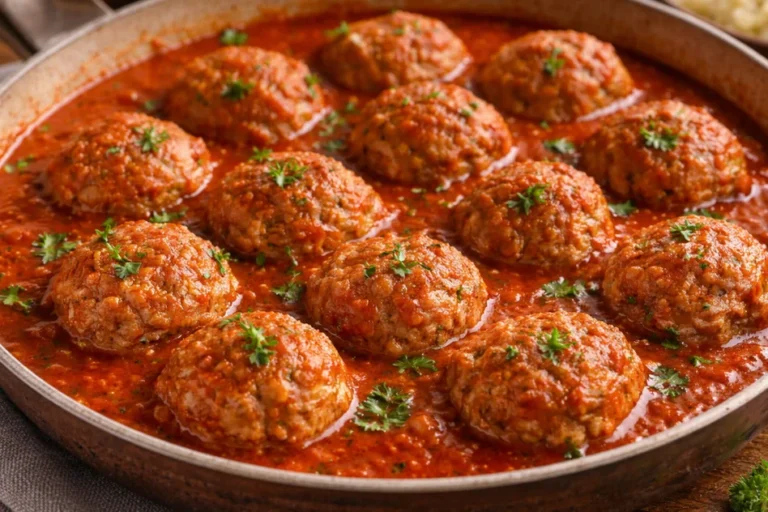
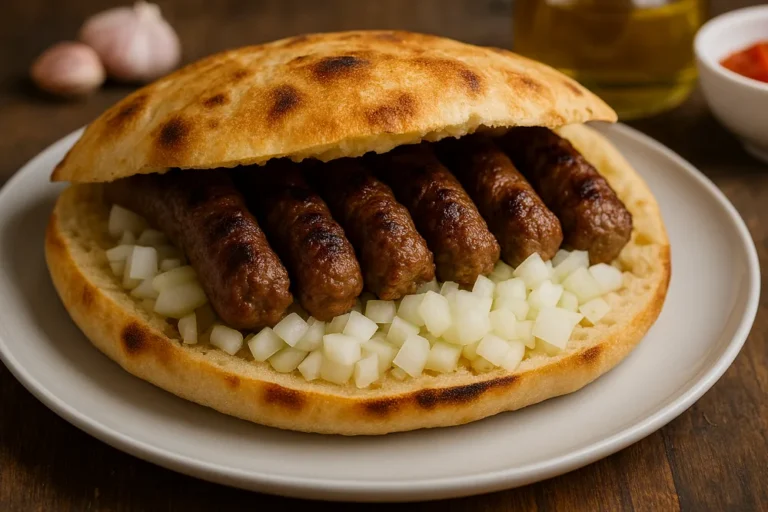
Ćevapi are small, elongated pieces of mixed and shaped ground meat, while a pljeskavica is a single broad, flat patty. A simple Bosnian beef ćevapi preparation may contain just beef and salt; this pljeskavica also contains onion, paprika, pepper, and a little sparkling water. Shape and the specific formula both matter. Another distinct beef dish is ćufte, made as round meatballs that finish cooking in tomato sauce rather than as grilled patties.
An American hamburger is the closest familiar comparison, but American burgers also come in many styles. The useful distinction here is practical: this recipe deliberately develops a tacky, bound meat mixture and forms a much wider, thinner patty. Advice to handle a loose burger mixture as little as possible is not a substitute for the mixing stage in this recipe.
Choosing beef with enough fat
Use chilled ground beef with about 18–20% fat. A US package marked 80/20 means approximately 80% lean and 20% fat, matching the upper end of that range. Very lean ground beef or steak tartare meat is not an equivalent choice for a large, thin patty exposed to direct heat.
Fat contributes to the eating texture, but some renders out during cooking. Adding extra sparkling water cannot turn very lean beef into the same mixture. Nor does a higher-fat starting point justify cooking longer than necessary once the safe center temperature has been reached.
Keep the meat refrigerated until mixing and use a chilled bowl. If working in a warm kitchen, organize the scale, covered container, shaping paper, and tray first so the beef does not sit out while equipment is found. Never taste the raw mixture to adjust seasoning.
Salt, thorough mixing, and a small amount of sparkling water
The salt is 1.75% of the raw beef weight. Weigh it rather than assuming a tablespoon of one salt weighs the same as another. Fine table salt, coarse sea salt, and kosher salt have different volume-to-weight relationships, which is why the Metric amount is the precise reference.
Distribute the salt, sweet paprika, and black pepper over the cold beef and mix firmly for 5–6 minutes, repeatedly folding and pressing it together. The mixture should move from loose particles toward a more uniform, tacky mass that holds together. The goal is cohesion, not a bread-like, fluffy texture.
Work in the very cold sparkling water gradually and stop once it has been absorbed. There should not be a pool of liquid left in the bowl. The modest amount helps the mixture become pliable; carbonation is not presented as a substitute for salt, mixing, adequate fat, or refrigeration.
Egg, breadcrumbs, and flour are unnecessary in this defined formula and would change its texture. Baking soda is used in some other recipes, but it is not needed here. Do not add ajvar, cheese, or kajmak to the raw mixture; those belong to a different version or to serving.
Why the onion waits until after the first chill
Press the mixed meat into a shallow covered container and refrigerate for 90 minutes at 40°F (4°C) or below. This stage makes the mixture firmer and easier to shape. It is refrigerated resting, not time on the counter while other food is prepared.
Only then peel and very finely chop the onion. Small, evenly distributed pieces provide flavor and moisture without cutting large gaps through a thin patty. Coarse chunks are more likely to make the edges crack or a section break off during turning.
Work the onion into the chilled meat without unnecessarily warming it. Adding it after the first rest limits how long it stands in the salted mixture before cooking. Extra raw onion offered at the table is a separate accompaniment, not an instruction to enlarge the onion quantity in the meat.
Shaping broad, thin patties without weak edges
Divide the mixture evenly according to the servings shown in the recipe card. For the base recipe, this gives four large patties. The raw mixture weighs roughly 927 g before the cooking oil, so equal portions are about 232 g; this is a calculated guide, not a measured cooked yield.
Use lightly greased parchment to help flatten and transfer each portion. Keep the shaping oil and cooking oil within the one measured allocation rather than adding it twice. Aim for about 6¼–7 inches (16–18 cm) across and about ⅜ inch (1 cm) thick, with the center slightly thinner than the rim.
The center adjustment reduces doming as the meat contracts. The patty may start larger than the bread because it shrinks while cooking. Do not make an extremely thin, fragile edge around a thick center; relatively even cooking still depends on a reasonably even shape.
Arrange the shaped patties side by side, cover, and refrigerate for another 30 minutes. Avoid stacking soft, unchilled patties directly together. For a larger batch, make more similarly sized patties rather than scaling each patty into a much thicker disc.
Grill or skillet: control heat and leave room
A grill, flat griddle, large grill pan, or suitable heavy skillet can work. The full patty should lie flat, with space around it. Fully preheat the cooking surface and use only a thin coating of the measured oil. Follow the cookware’s heat limits, especially for nonstick surfaces.
Take patties directly from the refrigerator as cooking space becomes available. Peel away all parchment before placing meat on the hot surface; shaping paper does not belong over the flame. Portions waiting for a later batch stay covered in the refrigerator.
Allow about 5–6 minutes per side as a starting guide. Wait for the first side to form a crust and release readily before turning, then support the thin patty with a wide spatula. Repeatedly trying to pry up a stuck patty can tear it before the underside has set.
Do not press on the cooking meat. Pressing drives out juices rather than making a wide patty cook more evenly. If the outside is becoming too dark before the center is ready, reduce the heat or move it to a gentler area of the grill and continue monitoring. A charred surface is not proof of a safe center.
The displayed 12-minute cooking allowance assumes enough space for one batch of patties at the intended thickness. A skillet that fits only one or two, or a doubled recipe, needs additional batches and more elapsed time. Do not overlap patties to force the original cooking time.
Check ground beef at 160°F, through the side
Use a clean, tip-sensitive thermometer to check each patty. Insert the probe sideways into the thickest area so the sensing tip reaches the center without touching the cooking surface. This is more reliable for a thin patty than inserting vertically and accidentally reading the hot pan.
Ground beef must reach at least 160°F (71.1°C) before removal. Surface browning, pinkness, clear-looking juices, and a fixed number of minutes are not reliable substitutes for that check. Keep cooking if the center has not reached the minimum.
Clean the thermometer as appropriate between raw or undercooked meat and the finished food. Use a clean serving plate and utensils; never put a cooked patty back on the unwashed tray that held raw beef. These handling steps matter alongside the cooking temperature.
Troubleshooting Pljeskavica
The patty falls apart
Check whether the mixture was mixed until cohesive, both refrigerated rests were completed, the onion was finely chopped, and extra water was avoided. Large onion pieces and weak, thin edges can create break points. Support the whole patty during transfer and wait for the underside to release before turning.
It is dry or tastes too dense
Very lean beef, prolonged cooking, and pressing the patty on the grill are common causes of dryness. Keep the intended fat content and stop cooking after the center has safely reached the minimum rather than extending the time by habit. A firm, cohesive texture belongs to this mixture, but added breadcrumbs or egg would turn it toward a different style.
It becomes thick and small
Meat contracts on heat. Shape it broadly before cooking, with a slightly thinner center, and chill it so that shape transfers cleanly to the grill. Trying to flatten it repeatedly while cooking forces out juices and is not the same technique.
It sticks, burns, or stays undercooked inside
A barely warm surface can encourage sticking, while turning too early interrupts crust formation. Excessive heat or a thick center can brown the exterior too quickly. Adjust the cooking heat and check the center temperature rather than judging by grill marks. Keep the cooking surface clean and respect the cookware’s limits.
Serving and clearly separated variations
Warm somun or lepinja, finely chopped raw onion, ajvar, grilled peppers, and a fresh salad are natural accompaniments. Kajmak is another traditional topping option, separate from the beef mixture. No homemade dairy method is provided by this recipe, and all accompaniments are excluded from its nutrition estimate.
Hotter versions, cheese mixed into the meat, stuffed patties, and different meat blends should be identified as variations. A stuffed patty needs its own shaping and sealing instructions; simply inserting a cheese center into this thin plain version changes the way it cooks.
Preparing ahead, freezing, and storing leftovers
Prepare and chill the mixture on the cooking day, within the original safe storage window of the ground beef. Follow the package use-by date and temperature instructions; mixing, salting, or adding onion does not extend them. Fresh meat bought from a butcher’s counter is best prepared promptly, preferably the purchase day.
Fresh formed patties can be frozen promptly with parchment between them and airtight wrapping around them. Thaw covered in the refrigerator and cook promptly. This recipe does not depend on thawing meat on the counter or assign a personally tested freezer-quality period.
Transfer cooked leftovers to shallow containers and refrigerate within 2 hours, or within 1 hour if the surroundings are above 90°F (32°C). Keep at 40°F (4°C) or below and use within 3–4 days. Reheat the center throughout to 165°F (74°C); gently reheating with a cover can help limit drying, but temperature still needs checking.
What the nutrition estimate includes
The estimate describes one cooked patty without bread or toppings. It uses USDA cooked, broiled 80/20 ground beef with a 69% reference cooking yield for medium-fat grilled patties, plus the full onion, seasoning, salt, and measured oil. Drippings are assumed not to be served.
This gives approximately 394 kcal per portion. A separate pan-broiled reference calculation gives about 380 kcal. Summing every raw ingredient without allowing for lost drippings gives about 529 kcal instead, which illustrates why the raw fat total should not automatically be treated as the expected plated result.
These are database-based estimates, not measured results from a kitchen trial. The yield comes from a reference category, not a direct test of these wide onion-containing patties. Beef at 18% rather than 20% fat, the actual grill, patty thickness, doneness, and retained oil change the result. Salt and oil are conservatively counted in full, even though some may remain on paper or leave with drippings.
Frequently asked questions
Can it be made entirely from beef?
Yes. That is the defined recipe here. A mixture of meats is not a requirement, and a regional name should not be used to imply that every cook follows one formula.
Do I need egg, breadcrumbs, or baking soda?
No. Accurate salt, thorough mixing, cold handling, and both rests provide cohesion in this version. Those additions would change the formula and texture.
Why not add the onion before the 90-minute chill?
The late addition limits its time in the salted mixture before shaping. Very fine chopping also protects the structure of the broad, thin patties.
Can I cook them without a grill?
Yes, on a suitable large griddle or heavy skillet. Cook in batches if needed, keep waiting portions refrigerated, remove the paper, and verify at least 160°F in every patty.