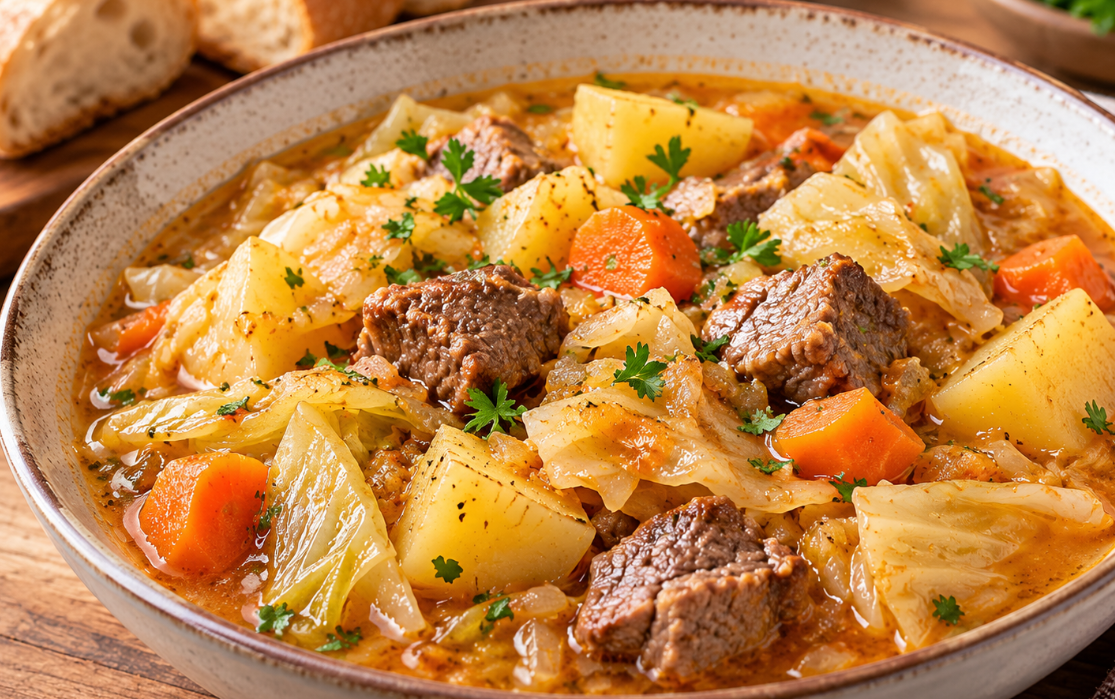
Kalja Recipe – Bosnian Beef and Cabbage Stew
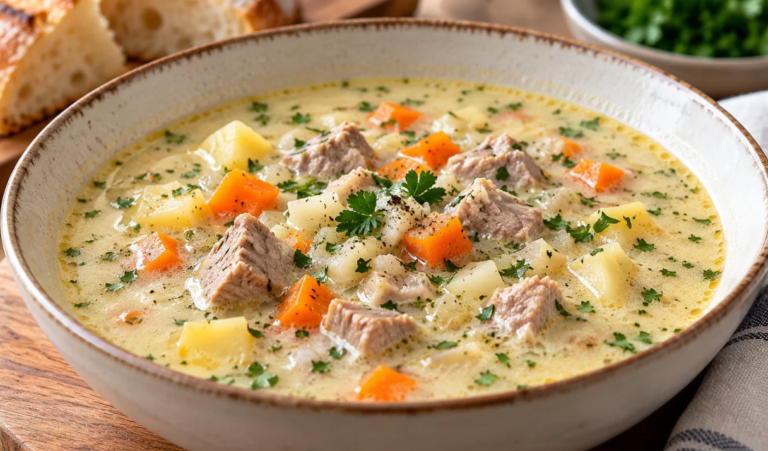
Kalja is a traditional Bosnian beef and cabbage stew served as a substantial dish na kašiku—a meal eaten with a spoon. Large pieces of fresh cabbage soften around slowly simmered beef shoulder, potatoes, and carrots, with a concentrated cooking broth gathered between them.
The order of cooking matters. The beef gets a head start before the cabbage and potatoes go into the pot, so the meat can become tender without reducing the vegetables to a mash. A little tomato paste, sweet paprika, garlic, and bay support the beef and cabbage rather than covering their flavor.
This kalja recipe makes six main portions and needs about two and a half hours, with extra simmering if your shoulder is still firm. Use a roomy, heavy pot, weigh the cabbage after trimming, and keep the pieces large. The short covered rest at the end belongs in the schedule too.
Kalja – Bosnian Beef and Cabbage Stew
Ingredients
- 24 3/4 oz boneless beef shoulder trim thick outer sinew, then weigh; cut into 1¼–1½-inch (3–4-cm) pieces
- 35 1/4 oz fresh green cabbage prepared weight after removing damaged leaves and the hard core; cut into 1½–2½-inch (4–6-cm) pieces
- 15 7/8 oz Yukon Gold potatoes peeled weight; cut into about 1¼-inch (3-cm) pieces
- 6 3/8 oz yellow onion prepared weight; finely diced
- 5 5/8 oz carrots prepared weight; cut into thick slices
- 10 g garlic peeled and finely chopped; weigh this small quantity in either system
- 1 1/2 tbsp tomato paste US spoon measure is approximate; Metric preserves the exact weight
- 20 g flat-leaf parsley washed, dried, and chopped; weigh this small quantity in either system
- 3 1/3 tsp sunflower oil for the first beef batch; US spoon measure is approximate
- 2 1/4 tsp sunflower oil for the second beef batch; separate from the first portion
- 1 1/3 tsp sweet paprika not smoked or hot; US volume is approximate
- 2 1/8 cups hot water first addition, for the beef; US volume is rounded
- 1 1/6 tsp fine table salt first addition; not an equal-volume kosher-salt substitution
- 1 g ground black pepper weigh for the closest match in either system
- 2 bay leaves remove before serving
- 1 1/4 cups hot water second addition; keep separate from the first; US volume rounded
- 2/3 tsp fine table salt second addition; separate from the first measured salt
Equipment
- 1 Heavy lidded pot at least about 6½ quarts (6 L) for 1x; enough headroom for the raw cabbage
- 1 Kitchen scale weigh trimmed meat and prepared vegetables
- 2 Cutting boards separate raw meat from vegetables
- 1 Chef’s knife cut sturdy, even pieces
- 1 Measuring tools keep the two water, salt, and oil stages separate
- 1 Tongs and clean plate handle browned beef
- 1 Wooden spoon and ladle check the bottom gently and portion the stew
- 1 Food thermometer check leftovers reach 165°F (74°C) when reheating
Method
- Prepare the ingredients. Pat the trimmed beef dry without rinsing it and cut into 1¼–1½-inch (3–4-cm) pieces. Remove damaged cabbage leaves and the hard core, then weigh the prepared cabbage and cut into large 1½–2½-inch (4–6-cm) pieces. Cut peeled potatoes into about 1¼-inch (3-cm) pieces, finely dice onion, slice carrots thickly, and chop garlic and parsley. Keep raw-meat tools separate from washed vegetables.
- Brown the beef in batches. Heat the first measured oil portion in a heavy pot over medium-high heat. Brown a comfortable single layer of beef for about 4 minutes, then transfer to a clean plate. Add the second oil portion and brown the remaining beef in comparable uncrowded batches. At the base scale this is about two batches; larger recipes need additional batches and suitable pots. Do not cook all the meat through at this stage.
- Build the aromatic base. Lower the heat to medium. Soften the onion and carrots in the pot for about 6 minutes, scraping up browned bits without burning them. Stir in garlic for 30 seconds, then tomato paste for about 1 minute. Stir in the sweet paprika for only a few seconds before adding liquid so it does not scorch.
- Give the beef a head start. Return the browned beef and its collected juices. Add the first-stage hot water and salt, black pepper, and bay leaves. Bring just to a boil, reduce the heat, and simmer gently for about 50 minutes with the lid slightly ajar. The shoulder should be starting to soften before the vegetables are added.
- Add cabbage and potatoes. Place the potatoes over the beef, then add the large cabbage pieces in manageable portions. Add the separately measured second-stage water and salt. Cover for about 5 minutes so the cabbage begins to collapse, then combine gently once without tearing the leaves. Keep the heat controlled and check that the bottom is not catching.
- Simmer until truly tender. Continue at a gentle simmer for about 35–40 minutes. Keep the pot mostly covered, leaving a small gap if needed to prevent a strong boil. Check the bottom gently with a spoon two or three times; avoid vigorous stirring. Beef should separate easily with a fork, potatoes should have no firm center, and cabbage should be fully tender while recognizable. If the meat resists, continue gently in about 10-minute increments; time alone does not establish doneness.
- Finish and rest. Remove the bay leaves, fold in the parsley, and take the pot off the heat. Rest covered for 10 minutes. Divide beef, vegetables, and cooking liquid evenly among the main portions shown. Serve hot in deep bowls.
Notes
What Is Kalja?
Kalja belongs to Bosnian home cooking: meat and vegetables simmer together until their juices form a flavorful, modest amount of liquid. Fresh cabbage is the central vegetable in this version. Potatoes make it filling, while carrots and onion bring sweetness to the cooking base.
The finished dish should be easy to eat from a deep bowl. It has enough broth to spoon up with the solids, but the beef and vegetables dominate. It does not need flour or a heavy roux to achieve that texture.
Choose Beef Shoulder and Fresh Cabbage
Ask for boneless beef shoulder, often sold among chuck cuts in the United States. Trim very thick outer sinew before weighing, then cut even pieces about 1¼–1½ inches across. The connective tissue suits slow, moist cooking; a lean steak cut is not an equivalent starting point.
Use ordinary fresh green cabbage, the practical American match for white cabbage. Remove damaged outer leaves and the hard core before weighing. Cut broad pieces about 1½–2½ inches wide so the leaves remain recognizable after simmering. Finely shredded slaw mix breaks down much faster, and sauerkraut changes both salt and acidity.
Yukon Gold potatoes are a practical choice for the source’s mostly firm-cooking potatoes. Peel before weighing and cut them into sturdy, even chunks. Keep the onion finely diced and the carrots in thicker slices; each shape is chosen for its job in the pot.
How Kalja Differs from Other Bosnian Stews
In this recipe, cabbage and beef provide the structure. Bosanski lonac uses a broader mix of layered vegetables and meat, while Bosnian grah is built around beans. Teleća bijela čorba is a separate creamy veal soup with root vegetables and a cultured-cream-and-yolk finish. Those distinctions help you choose a meal; they are not instructions to exchange ingredients between the recipes.
Brown the Beef and Build a Light Cooking Base
Pat the beef dry and brown it in uncrowded batches. A single overloaded pan cools quickly and releases enough liquid to steam the meat. Use the separately measured oil portions for the two browning stages, and put the browned meat on a clean plate.
Soften onion and carrot in the same pot, then add garlic and tomato paste briefly. Sweet paprika needs only a few seconds before the water goes in. Dark, scorched paprika gives bitterness that the long simmer will not remove.
Add the first water and salt portions with the beef and bay leaves, then reduce the heat after the initial boil. Keep the lid slightly ajar during this first simmer. The beef starts to soften before the more delicate vegetables are introduced.
Keep the Cabbage Tender and the Beef Fully Cooked
Add the potatoes and broad cabbage pieces with the second measured water and salt portions. A short covered interval lets the bulky cabbage collapse enough to combine gently. Cabbage contributes its own moisture, so filling the pot to the top with water would weaken the intended texture.
Continue at a quiet simmer, checking the bottom without repeatedly stirring through the softened vegetables. The beef should separate easily with a fork, the potatoes should have no hard center, and the cabbage should be fully cooked while still visible in pieces. A rolling boil and forceful stirring break that balance.
If the meat remains firm, it needs more gentle cooking, not a declaration that the timer has finished. Check periodically in roughly ten-minute intervals and watch the liquid level. Pot shape, lid position, heat, and the cut of shoulder affect the actual elapsed time. The displayed cooking allowance includes browning, the aromatic base, both simmering stages, and heating transitions.
Serve, Cool, and Reheat Kalja
Let the finished pot rest covered for ten minutes after adding parsley and removing the bay leaves. Distribute beef, potatoes, cabbage, carrots, and broth evenly among the portions. A slice of domaći hljeb is useful for the cooking broth; extra rice or potatoes are not needed to make this a complete meal.
For leftovers, divide the stew into shallow containers and refrigerate within two hours, or within one hour above 90°F. Keep at 40°F or below and use within two days. Do not leave a large covered pot on the counter until it reaches room temperature.
Reheat only the amount needed, gently turning the pieces so the center reaches 165°F throughout. Frozen portions should thaw in the refrigerator. Freezing can make the cabbage softer and the potatoes more crumbly; that is a texture limitation, not a reason to skip prompt cooling.
Practical Questions
Can I use sauerkraut? Not as a direct swap in this formula. Its acidity, salt, and existing softness would change the seasoning and cooking behavior. Start with fresh cabbage.
Why is my kalja watery? Check whether extra liquid was added, whether the lid was tightly closed throughout, and whether the cabbage has finished cooking. A brief gentle uncovered finish can reduce excess liquid, but avoid boiling the vegetables apart.
Can I double the recipe? Yes. Scale all measured ingredients, keep the same piece sizes, and use suitable separate pots or enough capacity for the bulky raw cabbage. Browning and heating take longer with additional batches; the individual simmer intervals are guided by tenderness.