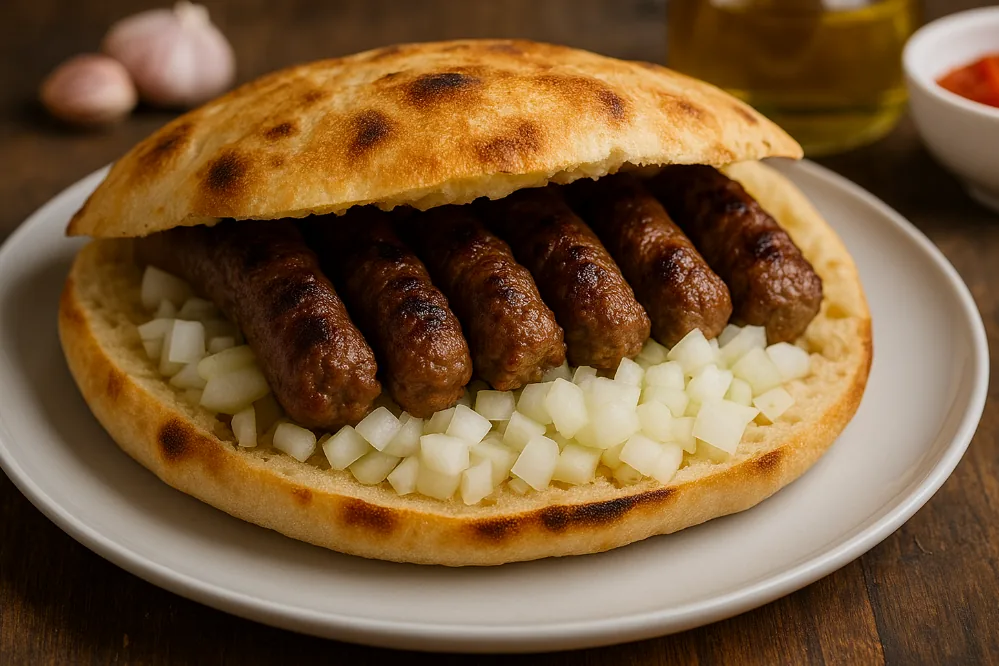
Bosnian Ćevapi
Bosnian ćevapi are small, juicy beef rolls with a browned exterior and a tender, springy bite. This simple home version uses ground beef and salt rather than eggs, breadcrumbs, or a long spice list. Warm somun and freshly chopped raw onion turn them into a satisfying meal, with ajvar or kajmak on the side if you like.
The short ingredient list puts the focus on technique. Choose beef with enough fat, mix it until the meat becomes slightly sticky, and keep it cold as you work. Two chilling stages help the mixture hold its shape, so the little rolls stay together when they meet the hot grill.
Plan for two hours of chilling plus about 40 minutes of hands-on preparation and cooking. A charcoal grill gives the meat a smoky edge, but a hot griddle or heavy grill pan also works. Shape the pieces evenly and leave space around them so they brown instead of steaming.
Bosnian Ćevapi
Ingredients
- 1 3/4 lb ground beef 18–20% fat; well chilled
- 1/2 oz fine salt weigh accurately
- 2 tbsp cold water for moistening hands only
- 1 tsp neutral oil only if needed to grease the pan
- Somun or lepinja optional; for serving
- Chopped raw onion optional; for serving
- Ajvar optional; for serving
- Kajmak optional; for serving
Equipment
- Mixing bowl Chill before mixing.
- Kitchen scale For the beef and salt.
- Tray and cover Keep raw and cooked meat separate.
- Grill or heavy grill pan Use a little oil only if necessary.
- Tongs Use clean utensils for cooked meat.
- Meat thermometer Check the center of a thick piece.
- Small bowl For cold water to moisten your hands.
Method
- Keep everything cold. Chill the mixing bowl and keep the beef refrigerated until you are ready to begin.
- Mix the beef and salt. Sprinkle the salt evenly over the cold beef. Knead, fold, and press for 5–7 minutes, until slightly sticky and cohesive. If the mixture warms up, refrigerate it for 15 minutes before continuing.
- Chill the mixture. Press into a shallow covered container and refrigerate for 90 minutes at 40°F (4°C) or colder.
- Shape the ćevapi. Divide into portions weighing about 0.9 oz (25 g) each. With lightly dampened hands, compact each portion and roll into a cylinder about 2½–3 inches (6–8 cm) long and ⅝–¾ inch (1.5–2 cm) thick. Use the water to moisten your hands; do not pour it into the meat.
- Chill the shaped pieces. Arrange on a clean tray with a little space between them. Cover and refrigerate for another 30 minutes.
- Preheat the grill. Heat a grill, griddle, or heavy grill pan thoroughly. Lightly oil the pan only if its surface needs it.
- Grill and turn. Cook with space between the pieces for about 8–10 minutes, turning several times to brown evenly. Work in batches if necessary, keeping uncooked pieces refrigerated. Lower the heat if the surface starts to burn.
- Check doneness and serve. Use a meat thermometer to check the center of a thick piece. Cook ground beef to 160°F (71°C). Transfer with clean utensils to a clean plate and serve immediately with warm somun, chopped raw onion, and optional ajvar or kajmak.
Nutrition
Notes
- Beef: Use ground beef with 18–20% fat. Very lean beef makes firmer, drier ćevapi.
- Salt: Weigh it accurately; the source ratio is 1.75% of the beef weight. US weights are rounded for kitchen use; select Metric to follow the source weights precisely.
- Texture: Thorough mixing and the two chilling stages provide the binding. No egg, breadcrumbs, onion, garlic, or baking soda is needed in this simple version.
- Timing: Cooking time is for one uncrowded batch; a small pan or a doubled recipe can take longer. Keep raw portions covered and refrigerated between batches.
- Nutrition: Estimated per serving for beef and salt only, using the WPRM calculator and the source metric weights. Optional pan oil, bread, onion, ajvar, and kajmak are excluded. Fat lost during cooking varies.
What Makes This Version Bosnian?
Ćevapi belong to a broad family of Balkan grilled meat dishes. Meat mixtures, seasonings, and shapes vary by region and household. This recipe follows a restrained Bosnian approach: beef, salt, individual rolls, and raw onion served alongside the cooked meat. It is a home recipe rather than an exact reproduction of a particular city’s traditional production method.
Garlic, paprika, baking soda, and mixed meats appear in other versions. They are not needed here. Keeping the seasoning simple lets the beef remain the main flavor, while the bread and accompaniments add contrast.
Sarajevo and Banja Luka have distinct traditions
Sarajevo-style ćevapi are individual small rolls, with beef and salt at the center of the regional preparation. The traditional production method also involves repeated grinding and a much longer refrigerated resting period. Sharing the short ingredient list does not make every home recipe an exact reproduction of that method.
Banja Luka is recognizable for its connected groups of four short rolls, often called pločice. Garlic and a longer, staged meat preparation distinguish that tradition as well. Simply pressing four of these unseasoned individual rolls together would change their shape without reproducing the full Banja Luka method. Household recipes vary, so this card is presented as a simple Bosnian beef version rather than one universal formula for every city.
Choose Beef with Enough Fat
Look for ground beef with about 18–20% fat. In a US grocery store, 80/20 ground chuck is a practical choice. Very lean beef tends to dry out quickly because each roll has plenty of surface exposed to the heat.
Keep the meat refrigerated until you begin. If it becomes warm and greasy during mixing, pause and chill it again. The mixture should become cohesive and slightly tacky, without turning into a warm paste.
Choose evenly ground meat without conspicuous tough sinew or large, isolated fat lumps. Ground chuck labeled 80/20 is a useful US starting point; the label describes the lean-to-fat ratio, not a special ćevapi grind. Adding water or oil is not a reliable substitute for the fat naturally distributed through the beef. Keep the onion outside the mixture in this recipe: chopped onion releases moisture and changes the clean, cohesive meat texture.
Mix, Chill, and Shape Evenly
Salt and thorough mixing help the meat proteins bind, which is why there is no egg or breadcrumb binder. Fold and press the mixture for 5–7 minutes, then refrigerate it before shaping. The second chill firms up the finished pieces.
Weighing each piece is more reliable than guessing. Aim for about 0.9 oz (25 g) per raw ćevap, then roll to a consistent thickness. Wet your hands lightly to prevent sticking; the measured water is for your hands, not an addition to the meat.
Recognize a bound mixture
At first the beef looks like separate loose granules. As you fold, press, and gather it with the salt, it should begin to move together as a cohesive mass and feel slightly tacky. A small portion should hold together when gently compacted instead of crumbling at the edges. Stop at that point; a warm, greasy smear is not a sign to keep kneading harder. Chill for the additional pause specified in the card if the mixture warms.
The salt quantity is 1.75% of the metric beef weight. Weigh it rather than estimating a spoonful, especially when changing batch size. Do not taste raw beef to judge seasoning. No egg, crumbs, baking soda, or baking powder is needed to repair a mixture that has simply not been mixed and chilled adequately.
Why this recipe uses two short chills
The mixture chills for 90 minutes before shaping, followed by another 30 minutes for the shaped pieces. They allow the mixed meat to firm and the shaped pieces to become easier to transfer. This is a different workflow from regional preparations that grind the meat twice and rest it under controlled refrigeration for a day or longer. Longer resting can change salt distribution and the development of the bound texture; two hours should not be described as producing an identical matured result.
Keep the same-day schedule here. Extending the rest is not an automatic quality upgrade for supermarket ground beef, and chilling never makes old meat safe again. Follow the package storage temperature and use-by instructions, keep the mixture covered at 40°F (4°C) or colder, and avoid leaving it on the counter between stages.
Keep the pieces uniform without crushing them
Compact each weighed portion just enough to close loose gaps, then roll with lightly damp hands. Aim for the card’s consistent length and thickness rather than tapered ends: very thin ends dry before the center is done. Firm pieces should transfer intact, but squeezing repeatedly into extremely dense logs is unnecessary. The shaping water is only for moistening hands; a wet, slippery surface browns less readily.
Grill Without Crowding
Preheat thoroughly and arrange the rolls with small gaps between them. Turn several times so different sides touch the cooking surface. If the pan fills with liquid or the meat looks gray rather than browned, cook fewer pieces at a time.
The usual cooking time is about 8–10 minutes, but thickness and heat matter more than the clock. Check a thick piece with a thermometer: USDA guidance for ground beef is 160°F (71°C). Move the cooked ćevapi to a clean plate with clean utensils.
Let the first side brown enough to release before trying to lift it, then turn gently with tongs. Do not press the rolls flat with a spatula or puncture them repeatedly to release juices. If fat causes flare-ups on a charcoal grill, move the pieces away from direct flames; blackened patches are not the goal. Reduce excessive heat while allowing the centers to finish.
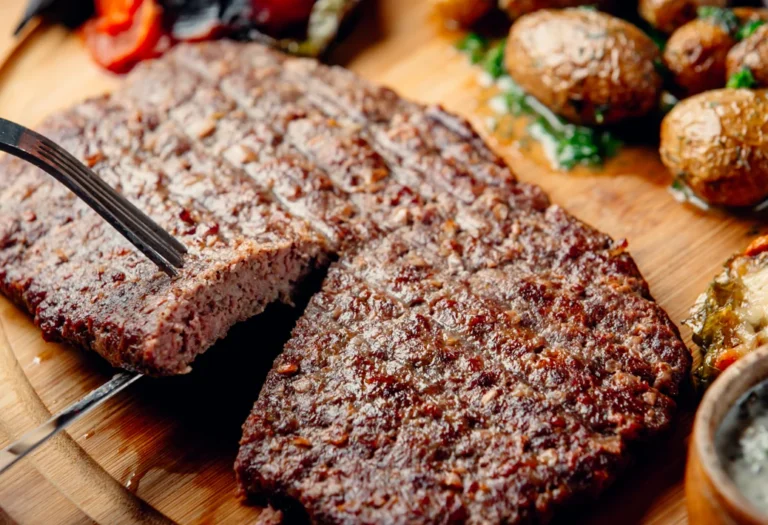
Check temperature from the side into the center of a thick roll, using a thin probe where possible. A browned exterior or a particular interior color cannot establish safety. Once the center reaches 160°F (71°C), serve promptly instead of continuing to cook simply to achieve darker grill marks. When cut for serving, the interior should hold together with a tender, springy bite rather than fall into loose ground-beef crumbs.
Troubleshooting Homemade Ćevapi
Loose rolls that break when turned
Check mixing, chilling, and shaping first. Loose meat particles need more binding before shaping; warm pieces need refrigeration. Also allow the browned surface to release rather than scraping fragile rolls off a barely warm pan.
Dry or rubbery centers
Very lean beef, thin pieces, pressing out juices, and cooking beyond the required endpoint all encourage dryness. Excessive compaction can make the bite dense. Start with the specified fat level, uniform pieces, and a thermometer rather than adding binders or extra liquid.
Gray meat or burned outsides
Gray surfaces and pooled juices often mean an overcrowded or insufficiently preheated pan. Use smaller batches. A dark exterior with an unfinished center calls for lower heat and continued cooking, not immediate serving. Keep waiting raw pieces refrigerated.
Serving and Preparing Ahead
Serve the ćevapi hot in or alongside warm somun or lepinja. Add freshly chopped raw onion, with ajvar for roasted pepper flavor or kajmak for a creamy accompaniment. These are serving options rather than ingredients in the meat mixture.
Prepare and chill the meat on the day you plan to cook it, following the package use-by date and storage instructions. Keep shaped raw portions covered in the refrigerator until the grill is ready. Freshly shaped pieces can also be frozen in a single layer, then packed once firm and thawed in the refrigerator before cooking.
Frequently Asked Questions
Are ćevapi and cevapcici the same thing?
Cevapcici is a name commonly used for the same family of small grilled meat rolls. Regional recipes still differ in their meat mixture, shape, and seasoning.
Why are my ćevapi falling apart?
The mixture may need more thorough mixing, more chilling, or firmer shaping. Mix until slightly sticky and cohesive, then complete both chilling stages before grilling.
Can I cook them without a grill?
Yes. A heavy grill pan or griddle works well. Preheat it fully, use a thin film of oil only if necessary, and cook in uncrowded batches.
Does scaling the recipe change the cooking time?
The individual rolls stay the same size, so their cooking time should be similar. A larger quantity may require extra batches. Keep the uncooked portions cold between batches.