Bosnian Homemade Bread Recipe – Domaći Hljeb
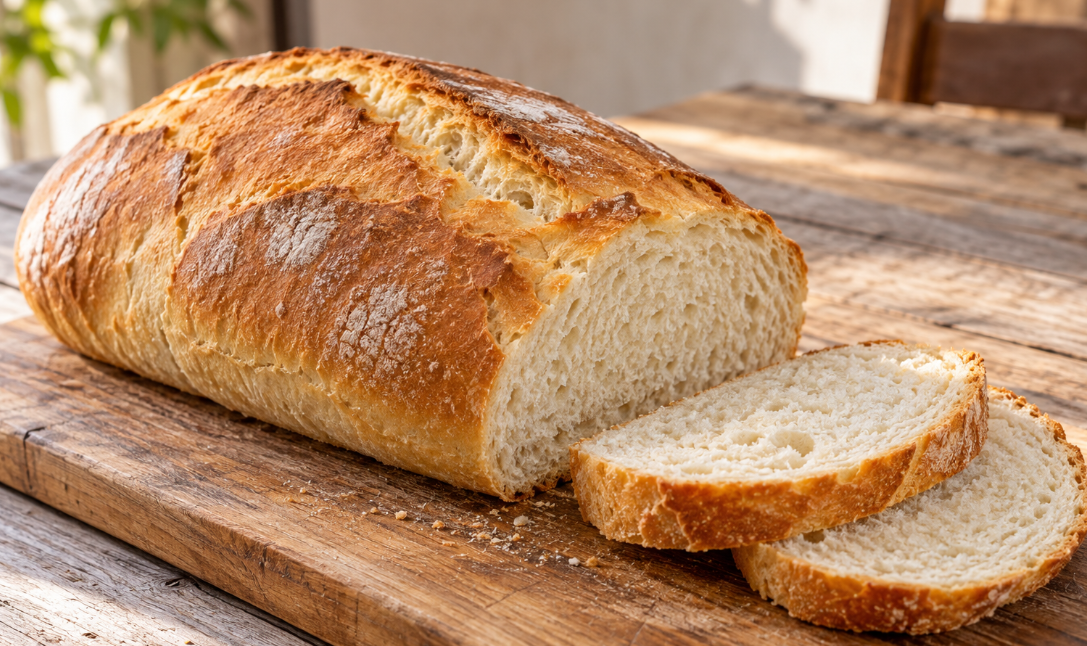
Domaći hljeb is an everyday Bosnian white yeast bread baked as a loaf and cut into slices. This Bosnian homemade bread recipe uses plain white flour, water, a little sugar, salt, yeast, and oil. Its soft center and golden crust make it useful at the table as well as for sandwiches the next day.
The dough has approximately 60% hydration: enough water for a soft, workable dough that holds a loaf shape. It is firmer than a wet flatbread dough. Kneading develops elasticity, and two rises give the shaped loaf time to expand before its longer bake.
This version makes a normal loaf in a 9 × 5-inch metal pan, with sunflower oil as the defined fat. Allow about 3 hours and 25 minutes from starting to slicing, including at least an hour of cooling. Larger batches make separate loaves of the same size, and the recipe card offers US and exact Metric quantities.
Bosnian Homemade Bread (Domaći Hljeb)
Ingredients
- 4 1/6 cups unbleached all-purpose flour spooned and leveled; weighing is recommended
- 2 1/4 tsp dry yeast one standard 7 g packet at 1x; active dry or instant, see notes
- 1 tsp granulated sugar approximately; use Metric for the defined weight
- 1 1/2 tsp fine table salt not kosher salt by equal volume
- 10.14 fl oz water lukewarm, for the dough; about 95–100°F (35–38°C)
- 2 tbsp sunflower oil neutral-tasting; the defined fat in this version
- water a very light brushing before baking only if the surface looks dry; not part of the dough water
Equipment
- Kitchen scale recommended for the flour and small ingredient weights
- Mixing bowl allow space for the first rise
- Stand mixer optional, with dough hook; hand-kneading also works
- Metal loaf pan 9 × 5 inches (23 × 13 cm); one pan per loaf
- Parchment paper rated for at least 390°F (200°C)
- Instant-read thermometer a secondary center-doneness check
- Wire rack for cooling the loaf out of its pan
Method
- Activate the yeast. Stir the dry yeast and sugar into the measured lukewarm dough water, about 95–100°F (35–38°C). Leave for about 10 minutes. Use fresh yeast within its date; the later rise must show clear expansion.
- Mix and knead. Combine the dough flour and fine salt, then add the yeast mixture and sunflower oil. Mix until no dry flour remains. Knead for about 8–10 minutes, until smooth and elastic, with a soft, slightly tacky surface that holds its shape. Avoid adding large amounts of flour to chase all tackiness away. Observe your mixer’s dough-capacity limit when scaling.
- Let the dough rise. Cover the bowl and leave in a comfortably warm, draft-free place for about 60 minutes, until substantially expanded and close to doubled. A cool room or slower yeast can take longer. Begin heating the conventional oven to 390°F (200°C) near the end of this rise, with a rack just below center.
- Shape equal loaves. Line a 9 × 5-inch (23 × 13 cm) metal loaf pan for each selected loaf with parchment rated for at least 390°F (200°C). Gently press out large gas bubbles. Divide the dough evenly according to the selected loaf yield, keeping each loaf the same size. Pat each portion into a rectangle about 8 inches (20 cm) wide, roll it snugly into a log, and pinch the seam closed. Tuck the ends and place seam-side down in its pan.
- Proof the shaped dough. Cover loosely and let rise for about 20 minutes, until visibly fuller and a light fingertip indentation returns slowly. Allow more time if needed. If the surface looks dry, brush very lightly with the optional finishing water, keeping it separate from the dough water.
- Bake the loaves. Bake for about 30–35 minutes, until golden brown, well risen, and firm enough to hold the loaf shape. An instant-read thermometer inserted into the center should read about 190–195°F (88–91°C), used alongside crust and structure checks. If the top browns early, tent loosely with foil and finish baking. At larger scales, leave space around separate pans and bake in additional batches if necessary; do not form a single oversized loaf.
- Cool before slicing. Rest in the pan for about 5 minutes, then carefully lift out, remove the paper, and cool on a wire rack for at least another 55 minutes, until the center is no longer hot. Allow longer if needed. Cutting a hot loaf can compress the soft crumb and make it seem gummy.
Notes
An everyday loaf, with its own dough
This bread is made to slice. The flour-and-water dough contains oil, with no milk, yogurt, eggs, or seed topping. It bakes at a standard loaf temperature rather than relying on the very hot, short bake used for flatbreads.
Our Bosnian somun has a wetter dough and a patterned flatbread shape. Lepinja is also a flatbread in its own recipe. The milk-based yeast dough of pogača is another separate preparation. These comparisons describe our particular recipes; this loaf does not replace any of them.
Flour, hydration, and the right dough texture
Unbleached American all-purpose flour is a practical match for plain white wheat flour. Absorption varies by brand, so weigh the flour when possible. For cups, fluff the flour, spoon it into the cup without packing, and level it; the conversion assumes 120 g per cup.
The defined Metric formula uses 500 g flour and 300 ml water, approximately 300 g, for about 60% hydration. Fine table salt is 1.8%, oil about 5.4%, and dry yeast 1.4% of the flour weight. Keep that balance rather than adding enough water to make the dough behave like somun.
Fine salt and kosher salt have different volume weights. The card’s salt conversion uses approximately 6 g per teaspoon of fine table salt. Sunflower oil is the neutral oil used for this version; two US tablespoons weigh about 27.2 g and are rounded to 27 g in Metric. The source’s melted-butter alternative is not combined with the oil.
The kneaded dough should feel smooth, elastic, and slightly tacky while holding a rounded shape. A little tackiness is different from a wet puddle. Before adding flour or water, knead long enough for the measured flour to hydrate; large unmeasured corrections can make the loaf dense or change the intended ratio.
Kneading and the two rises
Start with the measured water lukewarm, about 95–100°F (35–38°C), and stir in the sugar and dry yeast. Keep the ten-minute activation rest. Standard active dry or instant yeast can work in the measured amount, although instant normally needs no separate proofing and active dry may rise more slowly.
Mix the flour and salt before adding the yeast mixture and oil. Knead until the dough stretches and becomes more elastic. By hand this usually takes about eight to ten minutes; use your mixer’s instructions and capacity limit if using a dough hook.
Let the first rise bring the dough close to doubled. After shaping, the second rise should leave it visibly fuller, with a light fingertip indentation that returns slowly. The stated sixty and twenty minutes are guides. If a cool room slows the dough, give it time rather than baking a tight, under-risen loaf.
The 30-minute preparation allowance includes the activation rest, mixing, kneading, and shaping. Activation is not added a second time to the total. Oven preheating overlaps the later part of the rises.
Shape a loaf that bakes evenly
Use a 9 × 5-inch (23 × 13 cm) metal loaf pan lined with parchment rated for at least 390°F (200°C). Gently release very large bubbles, pat the dough into a rectangle about eight inches wide, then roll it into a log. Pinch the seam and tuck the ends; place it seam-side down.
Keep the shape even from end to end, without a thick center mound and thin tips. Cover loosely for the second rise. A very light brush of water is optional if the surface looks dry; that surface water is separate from the water measured into the dough.
Bake just below the center of a conventional 390°F (200°C) oven for about 30–35 minutes. Look for a golden, risen loaf with enough structure to hold its shape. A center reading around 190–195°F (88–91°C) is a useful additional check, not a substitute for judging the crust and loaf. Tent loosely with foil if the top colors before the center is ready.
At 2x and 3x, divide the dough into two or three separate loaves and use comparable pans. Leave air space around the pans or bake in batches. Individual loaf size, oven setting, and approximate baking time per loaf stay similar; total elapsed time can grow when the oven cannot hold all the pans.
Troubleshooting the crumb and crust
A dense but fully baked crumb often points to excess flour, insufficient kneading, or baking before the dough has expanded. Check the flour measurement and both rises before changing the recipe. A bowl of dough that barely grows may need a warmer location or fresher yeast.
A pale loaf may need more time or a check of the oven’s actual temperature. A deeply browned top with an underdone center needs protection with a loose foil tent while baking continues. Do not assume that a dark crust proves the middle is ready.
A wet seam or collapsed center after cooling can indicate incomplete baking. A hot loaf can also look gummy when sliced too soon because the knife compresses its still-soft crumb. Allow the loaf to cool on a rack before judging its finished texture.
After baking, let it settle in the pan for about five minutes, then lift it out, remove the paper, and cool for at least another fifty-five minutes. If the center remains hot, wait longer. The displayed total includes this cooling allowance rather than ending when the loaf leaves the oven.
Serving, storing, and making ahead
Slice for sandwiches or serve alongside Bosnian grah or kalja. A slice also goes well with a bowl of teleća bijela čorba. An even slice is easier to cut once the loaf has cooled, and a serrated bread knife helps protect the soft center.
Cool completely before wrapping airtight. Enjoy on the baking day or the next day at room temperature. For longer keeping, slice and freeze airtight in portions for up to three months for quality. Thaw only what you need, then toast or warm gently.
Freezing the baked loaf is the straightforward make-ahead choice. An overnight dough schedule has not been independently tested for this version. Do not taste raw dough, and discard bread showing mold rather than trying to trim away a small patch.
Nutrition assumes twelve equal slices from the base loaf, not a measured slice count or baked weight. The estimate uses checked USDA FoodData Central ingredient matches and includes the measured oil and salt. Your slice size, flour brand, and rounded US measures change the result. The recipe contains wheat; the method has been editorially reviewed, not independently kitchen-tested.