Pogača Recipe – Traditional Balkan Bread
Pogača is a round Balkan bread that belongs in the middle of the table, ready to slice or pull apart with a meal. This version uses a soft milk-and-yeast dough, a shallow crosshatched top, and a yolk-and-milk wash with sesame. A thin brushing of melted butter and a towel-covered rest soften the crust after baking.
This pogaca recipe keeps the preparation simple: activate the yeast in part of the measured milk, knead until elastic, and let the dough rise twice. It is a single round loaf baked in an 11-inch pan, rather than separate rolls or a flatbread cooked quickly on a hot surface. The dough should feel soft and slightly tacky, without becoming a wet batter.
Allow about two hours for the base recipe, including both rises and the ten-minute rest after baking. The loaf makes ten pieces. US measures are available in the card, but weighing the flour and using the Metric setting gives the closest match to the intended dough.
Pogača – Traditional Balkan Bread
Ingredients
- 17.6 oz unbleached all-purpose flour US adaptation of German Type 550; weigh for best results
- 2 1/4 tsp dry yeast a standard packet equivalent; activation method below
- 1 1/4 tsp granulated sugar US volume approximate
- 1 2/3 tsp fine salt table-salt density; weigh other salt types
- 1 1/4 cups whole milk lukewarm; US volume rounded; Metric is the reference
- 2 tbsp sunflower oil for the dough
- 1 tsp sunflower oil for coating the bowl and dough
- 1 egg yolk from a large US egg
- 1 tbsp whole milk for the egg wash
- 3 1/3 tsp sesame seeds US volume approximate; weigh for exact amount
- 3 1/4 tsp butter melted; US volume approximate
Equipment
- Kitchen scale
- Measuring jug
- Small bowl
- Mixing bowl
- Dough scraper
- Round baking pan 11 inches (28 cm); one per base loaf
- Parchment paper rated for at least 400°F; trim to fit the pan
- Sharp knife
- Pastry brush
- Kitchen towel
- Cooling rack
- Instant-read thermometer
Method
- Warm the milk. Warm the dough milk to 95–100°F (35–38°C). It should feel lukewarm, never hot; keep it below about 104°F (40°C). Reserve the separate egg-wash milk for later.
- Activate the yeast. Stir the yeast and sugar with about one-third of the lukewarm dough milk in a small bowl. Leave for about 5 minutes, until lightly foamy. If there is no sign of activity, check the yeast date and milk temperature before continuing; allow a little longer if needed.
- Mix and knead. Mix the flour and salt in a large bowl. Add the yeast mixture, remaining dough milk, and dough oil. Stir until no dry flour remains, then knead for 8–10 minutes until smooth, soft, and elastic. Slight tackiness is expected. Do not knead in extra flour simply to make the surface dry.
- Let the dough rise. Coat the mixing bowl with the bowl oil. Round the dough, place it in the bowl, and turn once to coat. Cover and leave in a warm, draft-free place for about 40 minutes, until noticeably expanded and nearly doubled. A cool room may require longer.
- Shape the round loaf. Line an 11-inch (28 cm) round pan with parchment rated for the baking temperature. Gently press out only very large air pockets, fold the dough edges toward the center, turn it over, and round it with your hands. Place in the pan and gently flatten to about 1¼–1½ inches (3–4 cm) thick. For scaled batches, divide into the same number of base-size loaves as the batch multiplier and use a separate comparable pan for each.
- Complete the second rise. Cover loosely and let the shaped bread rise for about 20 minutes. Meanwhile, preheat a conventional oven to 400°F (200°C). The loaf should look puffy, and a light fingertip indentation should spring back slowly.
- Score, brush, and sprinkle. Whisk the yolk with the egg-wash milk. Make shallow crossing cuts about 3/16 inch (5 mm) deep with a sharp knife. Brush gently and evenly with the yolk mixture, then distribute the sesame over the top. Divide the topping evenly among loaves when scaling.
- Bake until cooked through. Bake on the lower-middle rack for about 25 minutes, checking the color after 20 minutes. The surface should be richly golden and the underside set, with a hollow sound when tapped carefully. The center must not be wet or gummy; around 190°F (88°C) in the middle is a useful yeast-bread doneness guide alongside those signs. If the surface colors too quickly, tent loosely with oven-safe parchment within its rating or foil and finish baking. Check each loaf separately.
- Butter and rest. Melt the finishing butter gently and brush it thinly over the hot bread. Cover loosely with a clean kitchen towel and rest for 10 minutes. Lift the bread out of the pan and serve warm, divided into the number of pieces shown. Uncover and cool fully on a rack before airtight storage.
Notes
- This is the defined milk-and-yeast version of pogača, not a soda bread, yogurt bread, somun, or lepinja. US whole milk contains at least 3.25% milk fat and is a practical equivalent to the source's approximately 3.5% milk. Do not replace it with water within this formula.
- US measures are rounded. Ounces are weights, not fluid ounces. For flour, yeast, sesame, salt, and butter, use the Metric setting and a scale when precision matters. A standard dry-yeast packet is approximately 2¼ teaspoons; check the packet weight because specialty yeast packets can differ.
- The bowl oil coats the rising dough; the baking pan is parchment-lined. It is not an extra oil addition for both jobs. Use parchment labeled for at least 400°F and keep it away from heating elements.
- Rising and resting time comprises a first rise of about 40 minutes, a second rise of about 20 minutes, and a 10-minute rest after baking. The 2-hour total assumes the base batch; dough development matters more than the clock.
- For 2x, make two comparable loaves in two pans; for 3x, make three in three pans. Keep thickness similar. Allow oven space or bake sequentially, preventing waiting loaves from overproofing. Extra handling and baking batches can extend total time; do not make one oversized loaf.
- Cool completely before sealing. Keep airtight at room temperature until the next day; freeze portions airtight for about 2 months for best quality. Thaw and warm at 350°F (180°C) for roughly 5–8 minutes, longer for larger or colder pieces.
- Nutrition is an independent estimate per one-tenth of the full recipe. It uses King Arthur all-purpose flour's label and USDA composition for whole milk, dry yeast, sugar, yolk, sesame, sunflower oil, and unsalted butter. Milk is estimated at 1.03 g/ml, oil at 0.92 g/ml, and a yolk at 17 g. All oil, sesame, butter, and wash are counted; bowl residue, leftover wash, brands, and portion size affect actual intake. Accompaniments are excluded.
A Milk-and-Yeast Pogača, with Its Own Method
Pogača has regional and household variations, including breads made without yeast. This recipe follows the milk-and-yeast version with sesame, an egg wash, and a butter finish. Water-based, yogurt-based, and unleavened versions need their own formulas; they are not ingredient swaps within this card.
It also differs from Bosnian somun. Somun uses a wetter dough and strong initial heat for its characteristic flatbread shape and crumb. Here, kneading, two rises, a round pan, and a moderate-length bake build a soft loaf. The shallow cuts are made with a knife, rather than the fingertip grooves used on somun.
Choose Flour and Whole Milk for a Soft Dough
US flour for German Type 550
Unbleached US all-purpose flour is a practical adaptation for the source’s Type 550 wheat flour. German flour type numbers describe mineral content rather than guaranteeing the same protein level as a US brand. A flour suitable for ordinary yeast bread is a better starting point than cake flour or self-rising flour. Brands absorb milk differently, so expect small handling differences even when you weigh accurately.
The card gives flour by weight in both systems. King Arthur’s published reference is 120 grams per cup of its all-purpose flour, making this recipe a little over four cups under that convention. Other scooping methods can pack considerably more into the same cup. A scale avoids turning a soft dough into a stiff one before kneading even starts.
What whole milk means in a US store
Buy plain whole milk. Standard US whole milk contains at least 3.25% milk fat, making it a practical American equivalent to the approximately 3.5% milk in the source formula. It may produce a slightly different richness depending on the actual product, but it does not require adding cream or butter to the dough. Reduced-fat or skim milk would be a separate change.
Keep the dough milk separate from the small amount reserved for the egg wash. Warm the dough milk only to 95–100°F (35–38°C). Hot milk can damage yeast; the aim is gentle warmth rather than steaming liquid. This formula uses milk throughout, with no additional water for activating the yeast.
Activate the Yeast, Then Knead Until Elastic
Stir the yeast and sugar into about one-third of the lukewarm dough milk. That milk comes from the measured allowance. After about five minutes, look for light foam or visible activity. If nothing changes, check the yeast’s date and the milk temperature before committing the flour. Cooler milk can make activation slower, so a rigid five-minute deadline is less useful than checking what is happening.
A common US dry-yeast packet is 7 grams, approximately 2¼ teaspoons. Specialty packets can contain different weights, so read the label rather than treating every sachet as identical. Dry yeast types can also work at different speeds; judge the rises by expansion as well as time.
Mix flour and salt, then add the yeast mixture, remaining dough milk, and dough oil. Knead for eight to ten minutes until the surface becomes smooth and the dough feels elastic. It can cling lightly to your hands. Repeatedly adding flour until it feels completely dry changes the formula and is a common route to a dense, dry loaf.
Give Both Rises Time to Work
The separate bowl oil coats the rising bowl and the dough’s surface. Turn the dough once in the oiled bowl and cover it so it does not form a skin. Allow about forty minutes in a warm, draft-free place, until the dough is clearly larger and nearly doubled. A cool kitchen can extend that time.
After shaping, allow another twenty minutes under a loose cover. The shaped loaf should become puffy, and a gentle indentation should recover slowly. Skipping this second rise leaves the dough less aerated just before it enters the oven. Conversely, a loaf that has become fragile and collapses when touched may have gone too far; avoid holding a fully risen loaf while several other pans bake.
Shape, Score, and Brush the Round Loaf
Line an approximately 11-inch (28 cm) round pan with parchment rated for at least 400°F. The bowl oil has already done its job; there is no extra unmeasured oil added to the pan. Trim the liner to fit and keep paper away from heating elements. Wax paper is not the same product.
Gently release very large air pockets, fold the outer dough edges toward the center, turn the dough over, and round it with your hands. Set it in the pan and flatten it evenly to about 1¼–1½ inches (3–4 cm) thick. Avoid a thick mound in the middle surrounded by a thin rim, which can brown unevenly and delay the center.
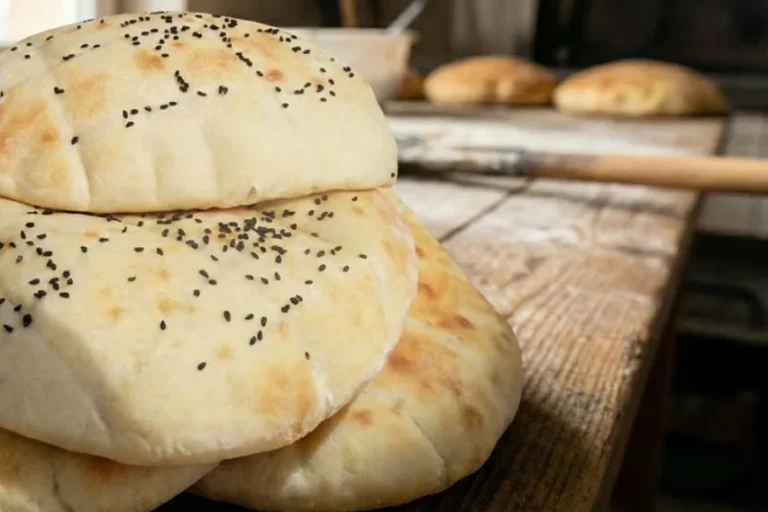
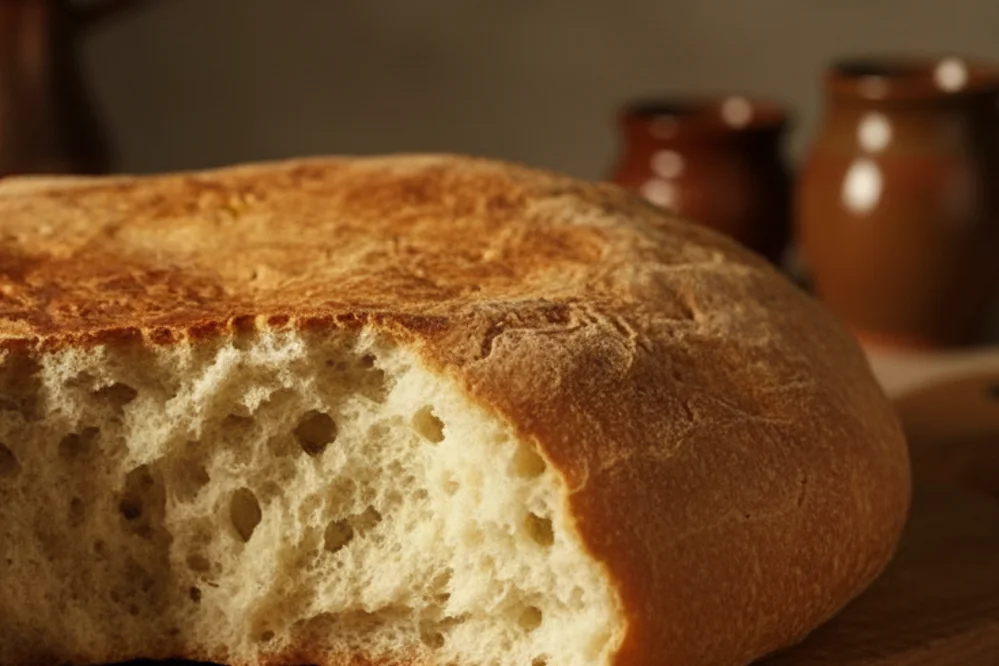
Once the second rise is complete, cut a shallow grid or diamond pattern about 3/16 inch (5 mm) deep. Do not cut through the loaf. Brush gently with the whisked yolk-and-milk mixture, then distribute the sesame. The serving photograph shows the crumb of a round bread; follow the card for this version’s sesame topping, wash, and scoring rather than using the photograph as a topping guide.
Bake the Center Before Softening the Crust
Bake in a fully preheated conventional oven at 400°F (200°C), a practical Fahrenheit rounding, on a lower-middle rack. Start checking the color after twenty minutes; the approximate bake is twenty-five minutes. Look for a rich golden top and a set underside that sounds hollow when tapped carefully.
An instant-read thermometer gives an additional check: around 190°F (88°C) in the center is a useful guide for a soft yeast loaf, as explained in King Arthur’s bread-doneness guidance. Use it alongside the crust and crumb signs, rather than extending baking just to darken an already cooked loaf. A wet, paste-like middle needs more baking; a towel rest cannot finish raw dough.
If the top darkens before the inside is ready, tent it loosely with foil or oven-safe parchment within its rating. Finish baking without pressing the cover onto the wash. Brush the hot loaf thinly with the melted finishing butter, then cover loosely with a clean kitchen towel for ten minutes. The trapped steam softens the crust. Uncover afterward and cool on a rack before sealing leftovers.
Making Two or Three Loaves
At 1x, make one loaf for ten pieces; at 2x, make two comparable loaves for twenty pieces; at 3x, make three for thirty pieces. Divide the dough and toppings evenly and use a separate 11-inch pan for each loaf. Do not press all the enlarged dough into one pan or make one giant loaf with an untested center-baking time.
Keep space around the pans for heat circulation. If they cannot bake comfortably together, plan sequential batches and stagger the final rises so waiting loaves do not overproof. More dough also means more handling time. The displayed two-hour total is for the base preparation, not a promise that every enlarged batch finishes on the same schedule.
Fixing Dry Dough, Weak Rises, and a Dense Middle
- The dough feels dry: check flour weight, packed cup measures, and whether all the dough milk was added. Knead for the full time before judging the texture; avoid repeatedly dusting flour into it.
- The dough barely rises: check yeast activity, milk temperature, kitchen warmth, and coverage. Give a cool dough longer. Baking an unrisen loaf does not recover the missing fermentation.
- The crumb is dense but baked: shortened rises, weak kneading, or forceful shaping may have reduced the air structure. Keep the loaf thickness even and handle the risen dough gently.
- The center is gummy: distinguish incomplete baking from a merely close crumb. Check the middle and underside before removing the pan, and avoid cutting immediately out of the oven.
- The crust is too dark: milk and egg wash brown readily. Use the lower-middle rack, check before the full estimated time, and shield the top while the interior finishes.
Serving, Keeping, and Rewarming Pogača
Serve warm with Bosnian grah, ćufte in tomato sauce, or another saucy stew. A piece with ajvar, cheese, or plain yogurt also makes a simple breakfast or snack. These accompaniments are separate from the bread’s nutrition estimate.
Let leftover bread cool completely, then seal it airtight and keep at room temperature until the next day. For longer storage, freeze portions airtight for about two months for best quality. Thaw and warm at 350°F (180°C) for roughly five to eight minutes; large or very cold portions need longer. The microwave warms quickly but can leave bread chewy as it cools.
The nutrition estimate divides all measured ingredients among ten pieces. It includes the bowl oil, wash, sesame, and finishing butter, using a US all-purpose flour label and USDA food-composition references. Some oil or wash may remain on utensils, and brands and slice sizes vary, so the values are an estimate rather than a measured finished-loaf analysis.