Kiflice Recipe – Soft Balkan Cheese-Filled Crescent Rolls
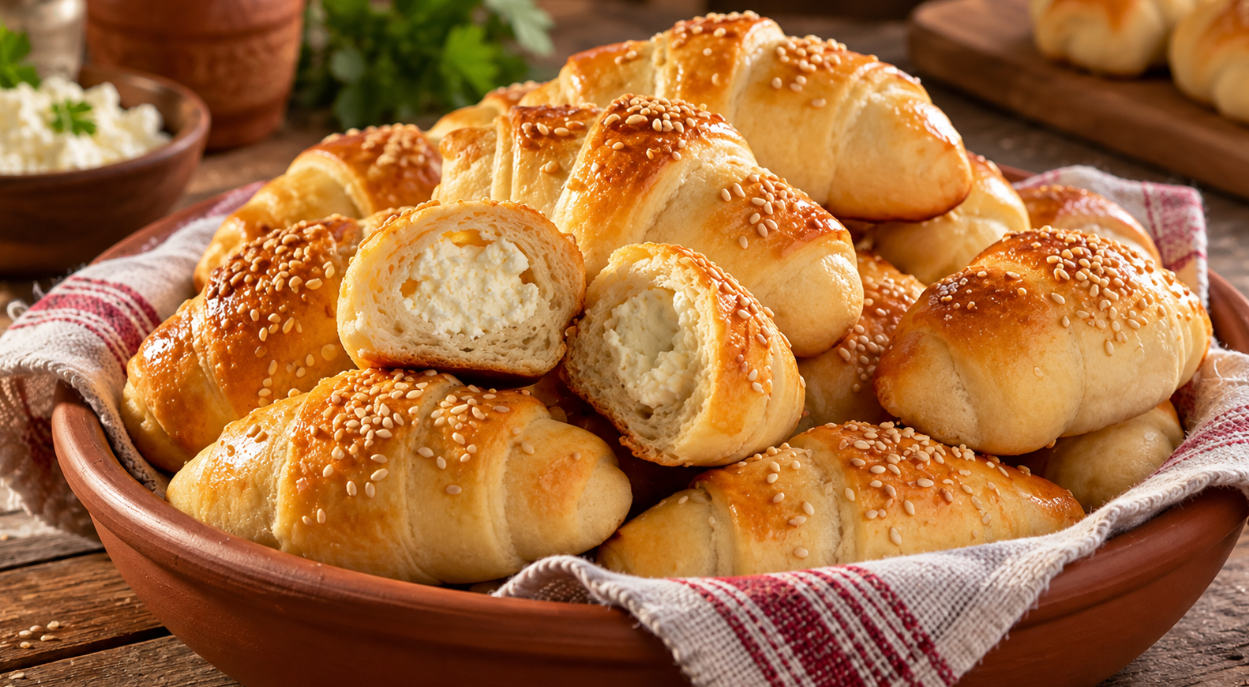
Kiflice are soft yeast rolls shaped into individual crescents, with a savory filling tucked inside each one. This kiflice recipe uses a milk, egg, and sunflower-oil dough wrapped around feta, egg, and a little Schmand. An egg wash, sesame seeds, and a thin butter finish give the rolls a golden surface and a tender bite.
The filling is part of this version’s identity. Thoroughly drained feta makes it flavorful without extra salt, while careful folding helps keep it inside the dough. These rolls have a soft bread crumb, rather than the flaky layers of puff pastry or a laminated croissant.
The base recipe makes sixteen medium rolls. Allow about three hours with two uncrowded US half-sheet pans baked one after the other, including both rises and the final towel rest. Weigh the flour and cheese, keep the dough, filling, and wash eggs separate, and check the Schmand label before starting.
Kiflice – Soft Balkan Cheese-Filled Crescent Rolls
Ingredients
- 4 1/6 cups unbleached all-purpose flour spooned and leveled; original uses German Type 550; weighing recommended
- 2 1/4 tsp dry yeast one standard 7 g packet at 1x; see yeast guidance
- 2 1/2 tsp granulated sugar weigh for the exact formula
- 1 1/2 tsp fine table salt not kosher salt by equal volume
- 8.45 fl oz whole milk for the dough; source uses 3.5% milkfat, US whole milk is commonly 3.25%
- 2.71 fl oz sunflower oil for the dough; do not replace with finishing butter
- 1 large egg for the dough; approximately 50 g without shell, matching the source’s medium egg
- 2 tbsp all-purpose flour measured allowance for the work surface; original uses Type 550
- 8.82 oz feta cheese full-fat block, thoroughly drained before weighing, then finely mashed; not cottage cheese
- 1 large egg for the filling; approximately 50 g without shell
- 1.06 oz Schmand cultured cream with 24% milkfat, by weight; see ingredient guidance for sourcing
- 1 large egg for the wash; approximately 50 g without shell
- 1 tbsp whole milk for the wash; source uses 3.5% milkfat
- 15 g sesame seeds by weight; part of this recipe’s topping
- 15 g unsalted butter melted, for brushing baked rolls
Equipment
- Kitchen scale for dough portions, drained feta, and small weight measures
- Small saucepan warm milk gently; melt finishing butter separately
- Mixing bowls keep the raw-egg filling separate and chilled
- Stand mixer optional, with dough hook; observe the manufacturer’s capacity
- Rolling Pin roll circles evenly
- Bench scraper for equal dough portions
- Pizza cutter or knife for cutting eight triangles from each circle
- Large baking sheets two US half-sheet pans for 1x; additional pans for larger yields
- Parchment paper rated for at least 375°F (190°C)
- Pastry brush wash thoroughly between raw-egg wash and cooked-roll finishing
- Food thermometer check the egg filling reaches at least 160°F (71°C)
- Kitchen towel and cooling rack 10-minute softening rest, then uncover for cooling
Method
- Warm the milk. Gently warm the dough milk to 95–100°F (35–38°C), not above 104°F (40°C). Put two-fifths of this milk into a small bowl and stir in the dry yeast and sugar. Leave for about 5 minutes; a large foam cap is not essential. Reserve the remaining milk for the dough.
- Mix and knead. Combine the dough flour and salt. Add the yeast mixture, remaining dough milk, sunflower oil, and dough egg. Mix until no dry flour remains, then knead for 8–10 minutes, until smooth, elastic, and soft, with slight tackiness. Do not add the separate rolling flour while kneading. Use separate mixer batches if the selected quantity exceeds your machine’s capacity.
- Let the dough rise. Round the dough, return it to the bowl, and cover. Leave at warm, draft-free room temperature for about 60 minutes, until close to doubled. Judge the expansion rather than forcing the dough to fit the clock.
- Mix the filling. During the first rise, mash the thoroughly drained feta finely with a fork. Mix in the filling egg and Schmand until thick and uniform. Do not add salt. Cover and refrigerate at 40°F (4°C) or below until needed. Do not taste the raw egg filling or dough.
- Prepare and divide. Line large baking sheets with parchment rated for the baking temperature. Keep the measured rolling flour separate for a light dusting only. Gently press out very large gas bubbles, then divide the dough into equal rounds of about 450 g (16 oz) each, keeping the same portion size when scaling. Each round will make eight rolls; cover the portions you are not working on.
- Roll and cut. Roll each round into an even circle about 12–12½ inches (30–32 cm) across and 3/16–¼ inch (5–6 mm) thick, using the measured dusting flour sparingly. Quarter the circle, then halve each quarter to make eight similar triangles. Repeat with the remaining dough rounds.
- Fill and shape. Distribute the filling evenly across the selected number of rolls, about 20–21 g (¾ oz) per triangle. Place it near the wide end, leaving a small border at the base and sides. Fold the side corners slightly inward over the filling, then roll from the wide edge toward the point without squeezing tightly. Place point-side down and bend gently into a crescent.
- Proof the rolls. Arrange on the prepared sheets with at least ¾ inch (2 cm) between rolls; use extra sheets rather than squeezing them together. Cover loosely and allow about 20 minutes, until visibly plumper. Preheat the conventional oven to 375°F (190°C), with a rack in the lower-middle position. For sequential batches, refrigerate later shaped trays, then allow them to complete their final proof before baking.
- Glaze and top. Whisk the separate wash egg with its measured milk. Gently brush the proofed rolls, distributing the wash across the full yield, and sprinkle with sesame seeds. Keep wash refrigerated between batches and discard leftover wash; do not reuse it as a finishing glaze.
- Bake through. Bake one tray at a time for about 20–22 minutes, checking the color around 17 minutes. If the tops brown early, tent loosely with foil and continue baking. Look for golden tops, a fully baked underside, and set, fluffy dough without a wet seam beside the filling. The egg-containing filling should reach at least 160°F (71°C) in the center of a roll; check representative rolls with a food thermometer. Color alone does not prove the center is cooked. Repeat with the other trays.
- Butter and rest. Melt the finishing butter gently during the last baking minutes. Brush it thinly over the hot rolls, sharing the measured amount across all batches. Loosely cover each batch with a clean kitchen towel for about 10 minutes. Serve warm, or uncover and cool on a rack, then refrigerate promptly as directed in the notes.
Nutrition
Notes
Choose the flour and dairy before mixing
Unbleached US all-purpose flour is a practical adaptation of German Type 550 wheat flour, although the two systems are not identical. Begin with the measured flour rather than adding more whenever the dough feels tacky. Kneading should build elasticity; extra flour can make the rolls dry.
Use plain feta in a block, preferably packed in brine, and drain it thoroughly before weighing. Look in the supermarket cheese or deli section, or a Greek or Balkan grocery. Avoid flavored feta and low-fat substitutes for this fixed recipe. Cottage cheese has a different moisture level, salt content, and texture and is not an interchangeable choice here.
Schmand is a thick cultured cream; this formula calls for 24% milkfat. Ordinary US sour cream and crème fraîche are different products. Ask a European specialty grocer about refrigerated Schmand and verify the fat percentage and label before buying; reliable US stock has not been confirmed. This recipe retains Schmand rather than offering an untested replacement.
The source milk has 3.5% fat. US whole milk, commonly 3.25%, is a small practical adaptation, and the nutrition estimate uses that US match. The sunflower oil stays in the dough; the separately measured butter is brushed on after baking. Neither replaces the other.
Keep the dough soft and give it both rises
Warm the dough milk gently, then use two-fifths of it for the yeast mixture and the rest in the dough. This fraction stays correct when the recipe is scaled. The source uses dry yeast with a five-minute rest; it does not identify a brand or a specific active-dry or instant formulation.
Standard active dry or instant yeast can be used in the measured amount, with the same initial hydration step retained here. Active dry may rise more slowly. At 95–100°F (35–38°C), the milk should feel mildly warm, not hot; avoid exceeding 104°F (40°C). A dramatic foam cap is not required, but the dough must visibly expand during its rise.
Knead for about eight to ten minutes, until the dough is smooth, elastic, and soft enough to bend without tearing. It can remain slightly tacky while holding its shape. Keep the separate rolling-flour allowance out of this kneading stage. Follow your mixer’s capacity limits when making larger quantities.
The first rise should bring the dough close to doubled. After rolling and filling, the crescents need another rise until visibly plumper. Skipping that final proof can leave a dense center or split seams. Times are estimates; cool dough and a cool room can extend them.
Roll equal triangles and contain the filling
Drain and mash the feta before adding the filling egg and Schmand. The mixture should be thick and spoonable, without a pool of liquid. Refrigerate it until you are ready to fill the rolls, and do not taste it while the egg is raw.
For the base batch, divide the dough into two similar rounds, roughly 450 g each. Roll each to a circle about 12–12½ inches across and 3/16–¼ inch thick. Quarter the circle and halve each quarter to get eight triangles. Similar triangles give rolls that finish baking at similar times.
Divide the filling evenly, about 20–21 g per roll. Put it close to the wide end with a little bare dough at the base and sides. Turn the side corners inward over the filling, then roll toward the tip without crushing the dough. Place the tip underneath the crescent to help stop it unrolling.
A small amount of visible cheese at an end can brown, but a large leak usually points to wet filling, too much filling in one roll, or open sides. Do not stretch a paper-thin triangle around a mound of cheese. Keep the dough covered between stages so its edges remain supple.
At 2x, make four dough circles and thirty-two rolls; at 3x, make six circles and forty-eight rolls. Each circle still produces eight triangles of the same size. The three egg lines also scale independently: dough, filling, and wash each use two eggs at 2x or three at 3x.
Bake the centers as well as the tops
Leave at least ¾ inch between rolls and use more trays when needed. This schedule uses two US half-sheet pans, baked sequentially in a conventional 375°F (190°C) oven. Refrigerate later shaped trays so they do not simply sit through every earlier bake; then allow them to finish proofing before they go into the oven.
Brush gently with the separate egg-and-milk wash and add sesame. Check browning at about seventeen minutes, with a typical bake of twenty to twenty-two minutes per tray. If the surface darkens too soon, cover loosely with foil and continue until the middle is done.
The bottom should be fully baked and the dough beside the filling should be set, with no wet seam. Check representative rolls with a food thermometer: the egg-containing filling needs to reach at least 160°F (71°C). A golden top alone is not a reliable center check.
Brush the cooked rolls lightly with the measured melted butter using a clean brush, then cover loosely with a clean towel for ten minutes. Uncover afterward so they can cool without becoming soggy. The towel softens the surface; it cannot correct underbaked dough.
The displayed three-hour estimate includes a five-minute activation rest, both rises, two baking batches, and the final towel rest. Oven heating and butter melting overlap other stages. A single genuinely large sheet with enough room for all the rolls can shorten the baking schedule; larger batches and chilled waiting trays can add time.
How kiflice differ from other Balkan breads
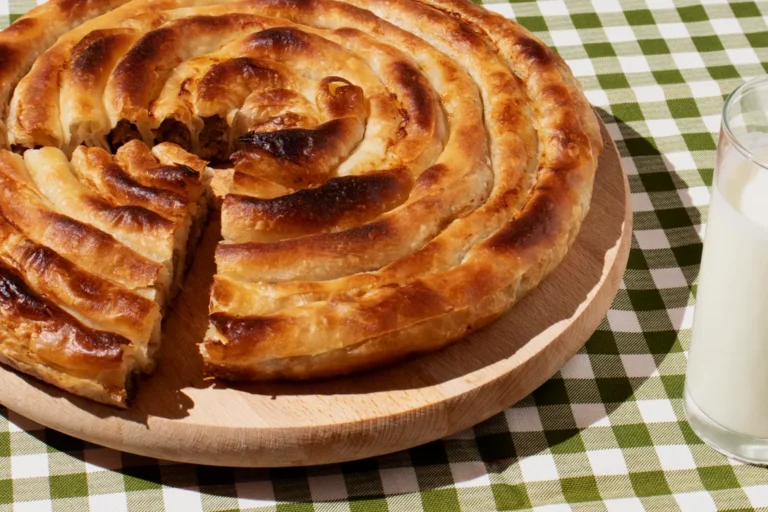
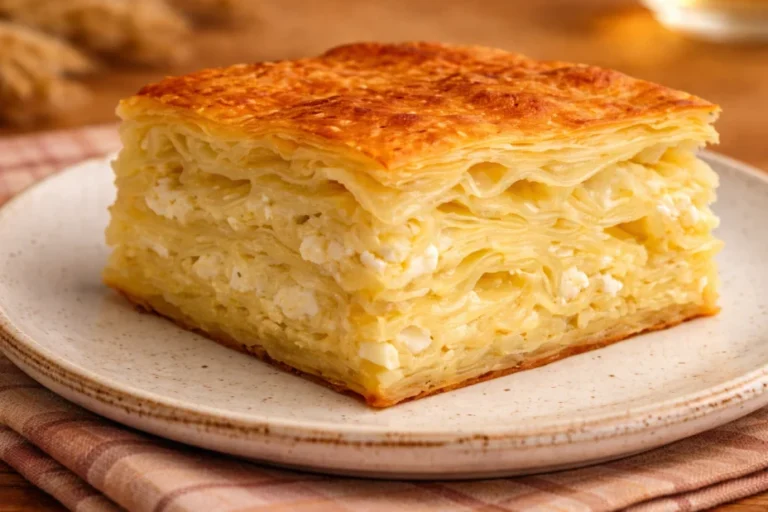
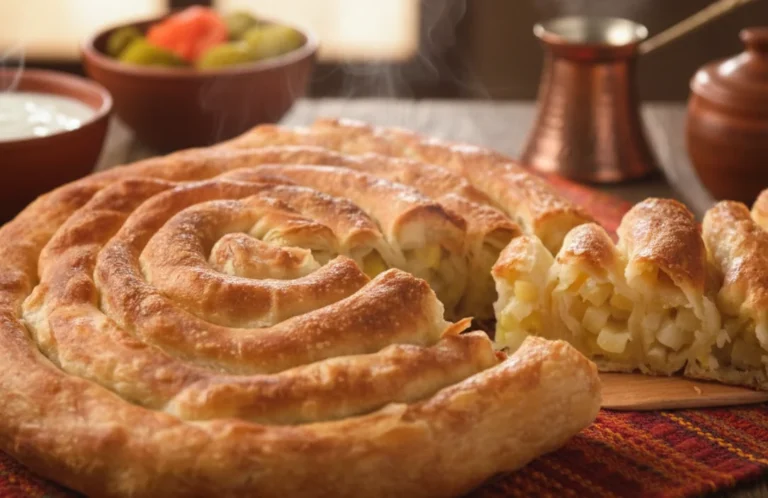
Kiflice are individually rolled and filled crescents. They are not miniature flatbreads or small pieces of a large loaf. The shaping, enclosed cheese mixture, and second proof give them their own method. Serbian gibanica, by comparison, bakes thin phyllo sheets and a cheese filling together as a large pie.
For another cheese-filled preparation, sirnica wraps cheese in thin pastry sheets rather than this milk-and-yeast dough. If you want a large soft loaf to slice, pogača offers a different shape and serving format. Neither method should be substituted into the kiflice instructions.
Serving, making ahead, and safe storage
Serve warm after the short towel rest, with sliced tomatoes or cucumber if you like. Their savory cheese filling already supplies plenty of flavor. For a gathering, put out small portions and replenish them rather than leaving the entire batch on the table for hours.
After the towel rest, uncover and cool on a rack. Refrigerate in shallow containers within two hours of baking, or within one hour when the surroundings are above 90°F (32°C); do not wait indefinitely for a large batch to cool. Keep at 40°F (4°C) or below and use within two days.
For longer storage, freeze baked rolls airtight in serving portions for up to two months for quality. Thaw in the refrigerator. Reheat at 340°F (170°C), starting with about eight minutes, and verify that the center reaches 165°F (74°C). Cold or larger batches can take longer; cover loosely if the surface dries before the middle warms.
Baking ahead, refrigerating, and reheating is the straightforward option here. An overnight raw-dough or filled-roll proof has not been tested for this version. Keep raw filling and egg wash chilled between shaping or baking batches, and discard unused wash after handling raw eggs.
The nutrition estimate is per finished roll. It uses checked USDA ingredient matches plus a manufacturer’s 24% Schmand label, and includes all the rolling flour, egg wash, sesame, oil, and finishing butter. Actual intake can be lower when flour or wash remains unused; feta brands and dairy fat also change the result. Contains wheat, milk, eggs, and sesame. The recipe has been editorially reviewed, not kitchen-tested.