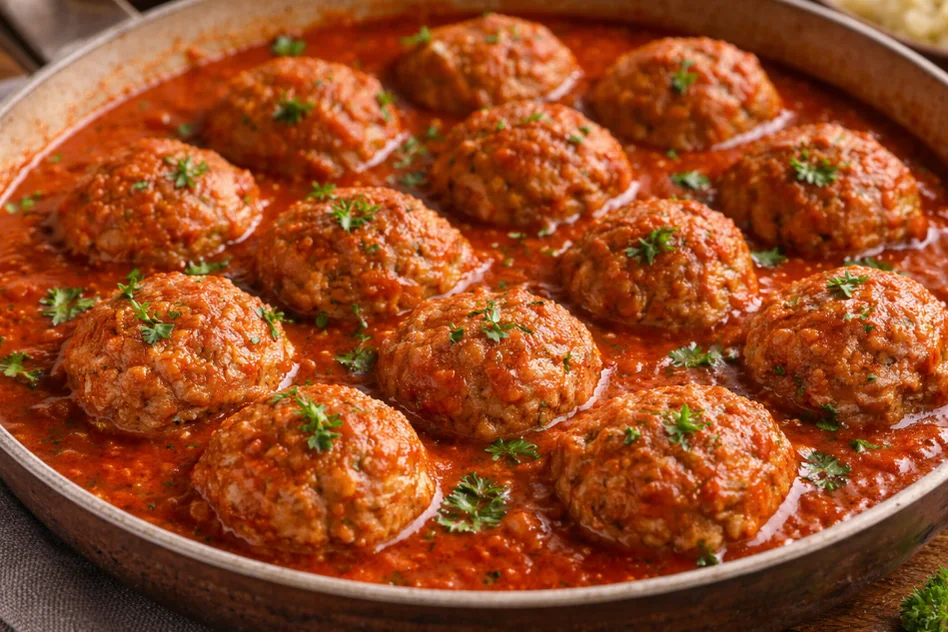
Ćufte Recipe – Balkan Meatballs in Tomato Sauce
Ćufte are round Balkan meatballs that are browned briefly, then gently finished in a mild tomato sauce. This version uses cold ground beef, finely cut onion, garlic, egg, plain breadcrumbs, sweet paprika, and a little ice water. The sauce should surround the tender meatballs without becoming a watery soup.
This cufte recipe keeps the beef at approximately 20% fat and includes a full thirty-minute chill before shaping. Browning develops flavor on the outside, but the covered simmer cooks the centers. A food thermometer, rather than the color of the meat, determines when they are ready to serve.
The base recipe makes sixteen meatballs for four servings, with four meatballs and an equal share of sauce per person. Plan for about one hour and forty-five minutes, including chilling. Larger batches need more browning rounds and enough pan space, so their elapsed time may be longer.
Ćufte – Balkan Meatballs in Tomato Sauce
Ingredients
- 21.2 oz ground beef 80/20; keep refrigerated
- 3.5 oz onion peeled; dice very finely, no larger than about 1/16 inch (2 mm)
- 1 3/4 tsp garlic peeled and finely grated; US volume approximate
- 1 egg US extra-large is closest; use Metric edible weight for precision
- 1.4 oz plain dry breadcrumbs fine-textured; not seasoned crumbs or coarse panko
- 3 1/3 tbsp ice-cold water for the meat mixture
- 1 2/3 tsp fine salt for the meatballs; weigh other salt types
- 1 1/3 tsp sweet paprika for the meatballs; US volume approximate
- 7/8 tsp ground black pepper for the meatballs; US volume approximate
- 28.2 oz passata plain strained tomatoes; not prepared pasta sauce
- 13 1/2 tbsp water for the sauce; US volume rounded
- 1.06 oz tomato paste concentrated tomato paste, separate from passata
- 3 1/3 tsp sunflower oil total allowance for browning; weight in Metric
- 5/6 tsp fine salt for the sauce; choose unsalted or low-sodium tomato products
- 1 1/3 tsp sweet paprika for the sauce; not hot or smoked
- 7/16 tsp ground black pepper for the sauce; US volume approximate
- 1 dried bay leaf remove before serving
Equipment
- Kitchen scale
- Knife and board
- Fine grater
- Mixing bowl
- Measuring jug
- Tray for raw and browned meatballs; keep separate from cooked-food dishes
- Deep skillet with lid large enough for a single layer; use additional pans for scaled batches
- Tongs
- Clean serving plate
- Food thermometer
Method
- Keep the beef cold. Keep the ground beef refrigerated until mixing. Dice the peeled onion very finely, no larger than about 1/16 inch (2 mm), and finely grate the garlic. Measure the meatball seasonings separately from the sauce seasonings.
- Mix the meatballs. Combine the cold beef, onion, garlic, egg, breadcrumbs, and meatball salt, paprika, and pepper. Add the ice-cold water in two additions. Mix with clean hands for about 3 minutes, just until evenly distributed and lightly cohesive, without squeezing into a hard paste. Do not taste the raw mixture.
- Chill the mixture. Cover and refrigerate for 30 minutes at 40°F (4°C) or below. Wash hands, utensils, and work surfaces after contact with raw beef. Keep the mixture cold while preparing the pan and sauce ingredients.
- Shape according to servings. Make four equal meatballs for every serving shown in the card. Weigh the mixture and divide it evenly so the meatballs stay about the same size at every batch setting, roughly 1.9 oz (54 g) each. Round gently with damp hands, pressing only enough to close large cracks. Place on the raw-food tray and refrigerate until browning.
- Brown in uncrowded batches. Preheat a deep skillet over medium-high heat for about 3 minutes. Divide the listed sunflower oil among the browning batches, using a little more for the first round if needed. Brown only as many meatballs as fit with space to turn, for 4–5 minutes per batch, carefully turning to color several sides. Keep waiting meatballs refrigerated. The centers are not cooked through yet. Transfer browned meatballs to the raw-food tray, which must not be used unwashed for the finished dish. Do not add another oil allowance for the sauce.
- Build the mild sauce. Reduce the heat to medium. Stir the tomato paste into the pan for about 1 minute. Stir in the sauce paprika for no more than about 10 seconds, then immediately add the passata and sauce water. Add the sauce salt, pepper, and bay. Stir and bring to a gentle simmer, then simmer uncovered for 5 minutes.
- Simmer the meatballs covered. Return the browned meatballs to the gently simmering sauce, preferably in a single layer. Spoon sauce over them, cover, and simmer gently over low to medium-low heat for about 25 minutes. Turn carefully after about 12 minutes. Avoid a rolling boil, which can break them. Reduce heat if sauce catches; do not add water automatically while enough liquid remains. For larger batches, divide meatballs and sauce among additional comparable pans.
- Verify the safe center temperature. Insert a clean food thermometer into the center of several of the largest meatballs, avoiding the pan bottom. Every checked center must reach at least 160°F (71°C), the USDA ground-beef minimum. Do not judge safety by color alone. If needed, cover and cook for another 3–5 minutes, then check again. Wash a probe that touched undercooked meat before rechecking cooked food.
- Finish and serve. Remove the bay leaf. If the sauce is still very thin, lift fully cooked meatballs onto a clean plate and simmer the sauce uncovered for 2–3 minutes, then return them. Serve four meatballs per person with an equal share of the prepared sauce. Use clean utensils and dishes that have not touched raw or partly cooked beef.
Notes
- Yield is four meatballs per serving: 1x makes 16 for 4 servings, 2x makes 32 for 8, and 3x makes 48 for 12. Keep individual size similar. In a pan that comfortably browns eight at once, those batches require two, four, or six browning rounds respectively; a smaller pan needs more. Total handling and cooking time can increase with extra rounds.
- Ounces are weights. US volumes for garlic, spices, and oil are rounded; the Metric gram weights preserve the formula. For the sauce water, the tablespoon measure avoids combining two fixed measures in a scaling field. Use a scale for the small spice amounts when precision matters.
- The egg amount in Metric is edible weight. Beat the egg before weighing if needed; a US extra-large egg is closer to the source's size than assuming every large egg has the same edible weight. The yield calculation divides the whole mixture rather than forcing an exact finished weight.
- Use only beef for this version, with approximately 20% fat. Keep the recipe's plain dry breadcrumbs, ice water, and 30-minute chill. No pork, wine, animal fat, stock, flour thickener, or unlisted seasoning is added.
- Passata means plain strained tomatoes; US cans labeled tomato puree vary in concentration. Avoid prepared marinara, tomato sauce with added seasonings, or replacing passata with concentrated paste. Prefer no-added-salt tomato products so the measured seasoning stays closer to the formula; salted brands change total sodium.
- Refrigerate cooked leftovers in shallow containers within 2 hours, or 1 hour above 90°F (32°C). Store at 40°F (4°C) or below and use within 2 days. Reheat meatballs and sauce throughout to 165°F (74°C). Freeze promptly chilled portions with sauce and thaw in the refrigerator before reheating.
- Nutrition is an independent ingredient-based estimate per serving of four meatballs and one equal share of sauce. It uses USDA SR Legacy composition for raw 80/20 beef, onion, garlic, whole egg, plain dry breadcrumbs, tomato paste, sunflower oil, paprika, and pepper; no-added-salt canned tomato puree is a stated composition proxy for passata. All beef fat and browning oil are counted as retained, the egg is calculated at its specified edible weight, and the removed bay leaf is excluded. Tomato concentration, brands, pan residue, and sauce portioning affect actual intake. Bread, rice, potatoes, and the photograph's herb garnish are excluded.
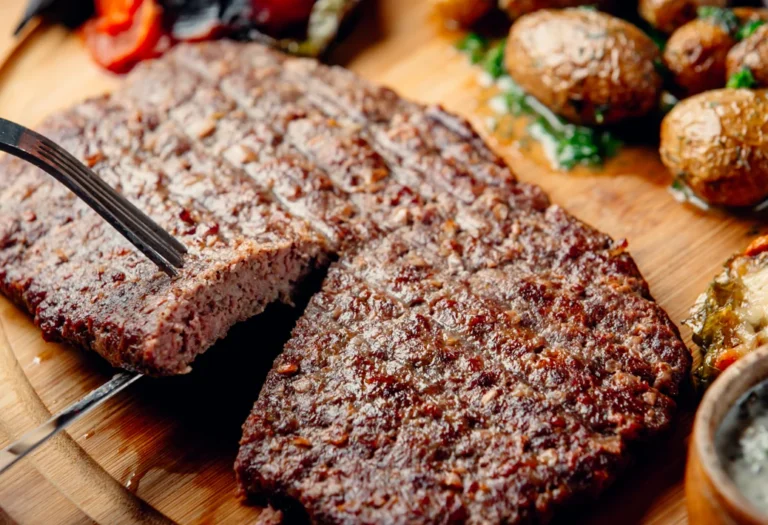
Ćufte, Ćevapi, and Pljeskavica Are Different Dishes
Ćufte in this preparation are round, bound with egg and breadcrumbs, and served in the tomato sauce in which they finish cooking. Their soft texture and sauce make them suitable for spooning over rice or mashed potatoes, or serving with bread.
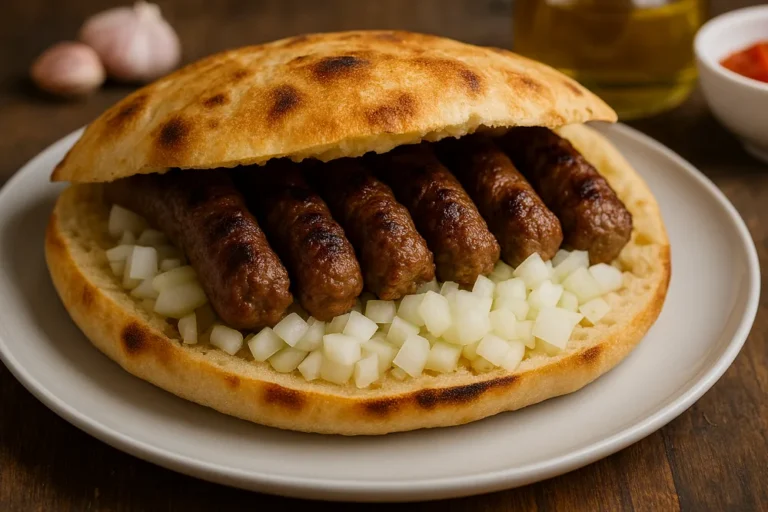
Bosnian ćevapi are small, finger-shaped grilled meat pieces, while pljeskavica is formed as a patty. Neither name is an interchangeable label for these sauced meatballs. Their shaping, seasoning, binding, and cooking methods belong to their own recipes.
Keep the Beef Cold and the Onion Very Fine
Choose ground beef labeled 80% lean and 20% fat. That is the intended fat level for this recipe, rather than extra-lean beef or an unspecified meat blend. Very lean beef can become drier after it reaches its safe internal temperature. Keep it refrigerated until you are ready to mix, and return waiting portions to the refrigerator rather than leaving the whole batch beside a hot stove.
Peel and weigh the onion, then dice it no larger than about 1/16 inch (2 mm). Large pieces interrupt the surface of a small meatball and can create weak points. Finely grate the garlic so its flavor spreads through the mixture without hard chunks.
Use fine, plain dry breadcrumbs. Seasoned crumbs bring extra salt and herbs; coarse panko and fresh soft crumbs absorb liquid differently. Weighing the dry crumbs is more dependable than assuming every spoonful or brand has the same density. The listed ice water moistens this particular mixture; it is not extra sauce water.
Choose Plain Passata and Separate Tomato Paste
Passata is a smooth strained tomato product, with skins and seeds largely removed. Look for plain strained tomatoes, preferably with no added salt, rather than prepared marinara or a heavily seasoned US tomato sauce. Products labeled tomato puree vary in concentration, so read the ingredients and texture description. Tomato paste is the separate concentrated ingredient used in a much smaller amount.
Shop by net weight. A 28-ounce container is about 794 grams, close to but slightly below the base recipe’s 800 grams. A 700-gram bottle is more noticeably short. Measure the amount you need rather than assuming that one bottle or can always matches the card. The US card uses ounces by weight for passata and paste.
The sauce contains its own measured water, salt, sweet paprika, black pepper, and bay leaf. The sunflower oil listed in that ingredient group is the total browning allowance, not an extra measure to pour into the sauce after frying. Keep the sauce and meatball seasonings separate so neither portion receives both salt allowances accidentally.
Mix Just Until Cohesive, Then Chill
Combine the beef, prepared onion and garlic, egg, breadcrumbs, and meatball seasonings. Add the ice water in two additions and mix for about three minutes, until evenly distributed and lightly cohesive. Stop before the mixture becomes a tightly worked paste. The goal is enough binding to hold a rounded shape, with a tender cooked texture.
The source egg amount is approximately 55 grams without its shell. A US extra-large egg is a closer practical match than assuming that every large egg has that weight. For precision, use the Metric setting and weigh beaten egg; the amount scales with the recipe. Do not compensate for a smaller egg by adding unmeasured water.
Cover and refrigerate the mixture for thirty minutes at 40°F (4°C) or below. This rest helps the binding and makes shaping easier. Do not taste raw beef mixture. Clean your hands, board, bowl rims, and utensils after handling raw meat, and keep them separate from cooked-food equipment.
Shape by Servings and Brown with Space
Make four similar meatballs for every serving shown: sixteen at 1x, thirty-two at 2x, and forty-eight at 3x. The base mixture produces meatballs of roughly 1.9 ounces (54 grams) before cooking. Keep individual size similar when scaling so larger batches do not become a smaller number of oversized balls with different cooking needs.
Round the portions with lightly damp hands, pressing only enough to keep them together and close large cracks. Place them on a raw-food tray and refrigerate until the pan is ready. Excessive squeezing can make the cooked meatballs compact.
Preheat a deep skillet over medium-high heat for about three minutes. Divide the measured sunflower oil among the browning rounds, allowing a little more for the first if necessary. Brown for four to five minutes per round, turning gently to color several sides. Do not crowd the pan or try to cook the centers completely at this stage.
If eight meatballs fit comfortably, the base recipe takes two rounds; the double and triple batches take four and six. A smaller skillet needs more rounds. Use the space in your pan as the limit, rather than treating eight as a fixed requirement at every scale. Keep unbrowned meatballs cold while they wait.
Transfer browned meatballs to the raw-food tray. They are still partly cooked, so that tray and its utensils must not touch the finished meal without thorough washing. Brown the meatballs and continue directly into the sauce-cooking stage rather than storing a partly cooked batch for later.
Build a Mild Sauce Without Scorching Paprika
Lower the heat to medium and stir the tomato paste in the pan for about one minute. Add the sauce paprika only briefly, for no more than about ten seconds, then immediately pour in the passata and sauce water. Letting paprika sit in hot fat can turn it bitter.
Add the sauce salt, pepper, and bay, stir well, and bring to a gentle simmer. Give the sauce five minutes uncovered before returning the meatballs. Water, rather than stock, keeps the seasoning and ingredients aligned with the formula. No wine, cream, flour thickener, or additional spices are needed for this version.
Finish Under a Lid and Check 160°F
Arrange the browned meatballs in the gently simmering sauce, preferably in one layer, and spoon sauce over the tops. Cover and cook over low to medium-low heat for about twenty-five minutes. Turn them carefully after about twelve minutes. Small, gentle bubbles are enough; a rolling boil can break their surfaces and reduce the sauce too quickly.
Check several of the largest meatballs with a clean food thermometer inserted into their centers, without touching the pan. Ground beef must reach at least 160°F (71°C), following the USDA safe-temperature chart. Color alone cannot establish safety. If a checked center is below that point, continue covered cooking for three to five minutes and check again. Wash a probe that contacted undercooked meat before using it on fully cooked food.
Remove the bay leaf before serving. If the sauce is still thin once the meatballs are fully cooked, move them to a clean plate and reduce the sauce uncovered for two to three minutes. Return them and serve with their share of sauce. If sauce starts catching while it is still sufficiently fluid, reduce the heat rather than automatically adding more water.
Scaling Without Overcrowding or Changing the Meatballs
Keep four meatballs per serving at every setting, and divide the sauce evenly with the meatballs. For larger batches, use additional comparable deep pans so the meatballs can simmer in a similar layer depth. One tightly packed pot changes heat circulation and makes gentle turning more difficult.
The thirty-minute chill remains a chill, not a time to multiply by the ingredient factor. Each browning round still takes approximately four to five minutes, but additional rounds extend the total. Check every simmering pan and several large meatballs rather than multiplying the covered cooking time or relying on a single pan’s result.
Troubleshooting Texture and Sauce
- Meatballs crack or fall apart: check the very fine onion cut, weighed egg and breadcrumbs, full chill, and gentle simmer. Turn carefully; do not chase a loose mixture with arbitrary extra crumbs.
- The texture is firm or dry: extra-lean beef, too many breadcrumbs, hard compression, or prolonged cooking can contribute. Keep the specified fat level and stop mixing once the mass is cohesive.
- The outside darkens too quickly: lower excessive heat and avoid cooking one surface for the entire browning round. Browning is followed by a covered simmer, so the meatballs need not be cooked through in the frying stage.
- The sauce tastes bitter: paprika may have scorched before the tomatoes were added. Shorten its hot-pan contact and have the passata ready. Extra seasoning cannot reliably remove a burned flavor.
- The sauce is watery: reduce it separately after the meatballs reach temperature, using a clean plate. Do not keep boiling fully cooked meatballs hard just to thicken the surrounding liquid.
Serving, Cooling, and Reheating
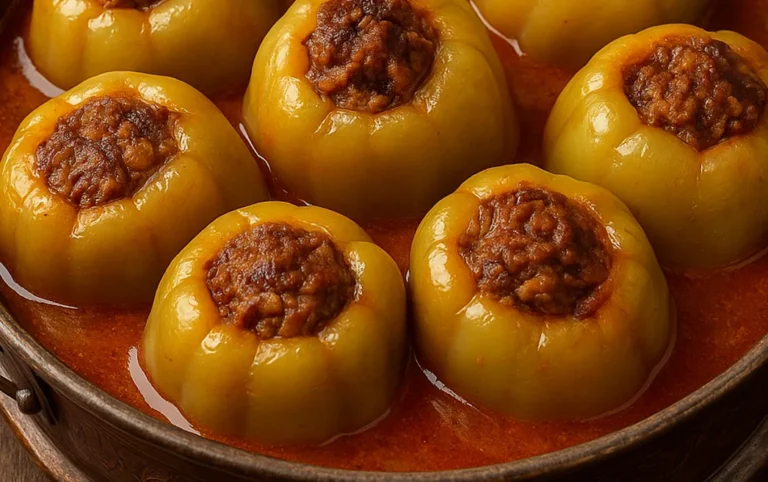
Serve with rice, mashed potatoes, or fresh bread such as pogača to take up the sauce. These are accompaniments, not ingredients included in the nutrition estimate. For another family meal built around a filling and mild tomato sauce, Punjene Paprike uses peppers filled with meat and rice, with its own method and proportions.
Refrigerate cooked leftovers promptly in shallow containers within two hours, or within one hour when the surroundings are above 90°F (32°C). Keep at 40°F (4°C) or below and use within two days. Do not leave a deep covered pan on the counter until completely cold.
Reheat meatballs and sauce throughout to 165°F (74°C), checking the center of large meatballs as well as stirring the sauce. Low heat helps protect the texture, but the thermometer determines when reheating is complete. Freeze promptly chilled portions with sauce for longer storage and thaw in the refrigerator before reheating.
The independent nutrition estimate covers four meatballs and one equal share of the full sauce per serving. It counts all beef fat and browning oil as retained, uses the specified edible egg weight, and uses no-added-salt canned tomato puree as a stated USDA composition proxy for passata. Actual tomato concentration, breadcrumb brands, pan residue, and serving size affect the result. Bread, rice, potatoes, and the photograph’s green herb garnish are excluded.