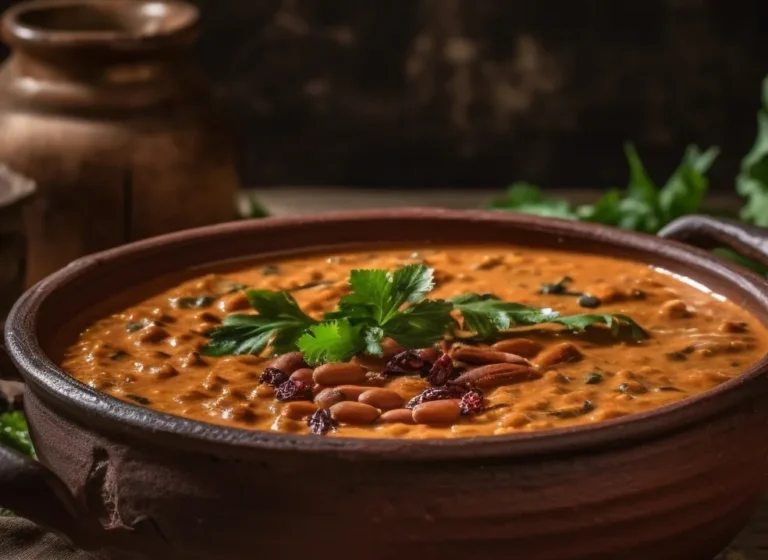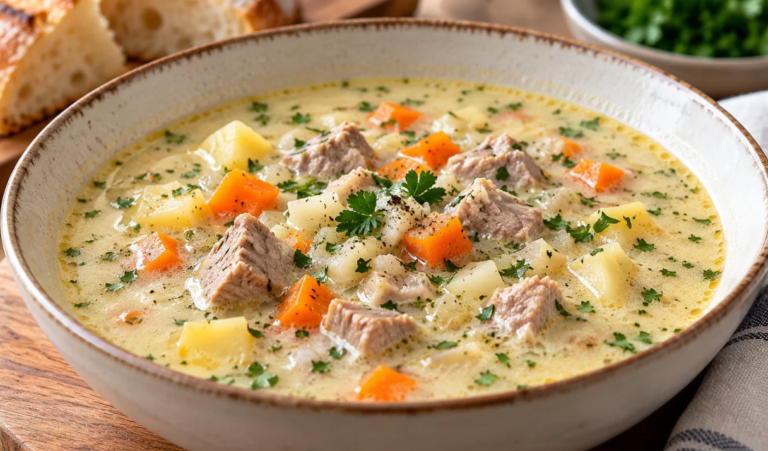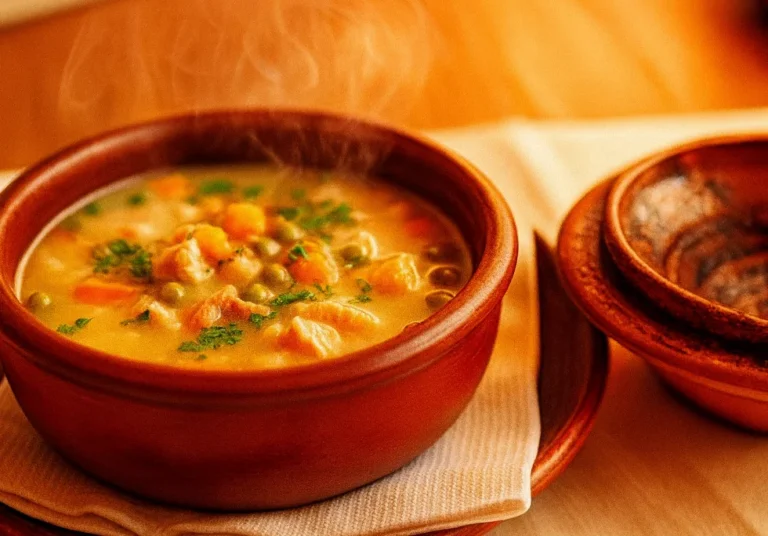
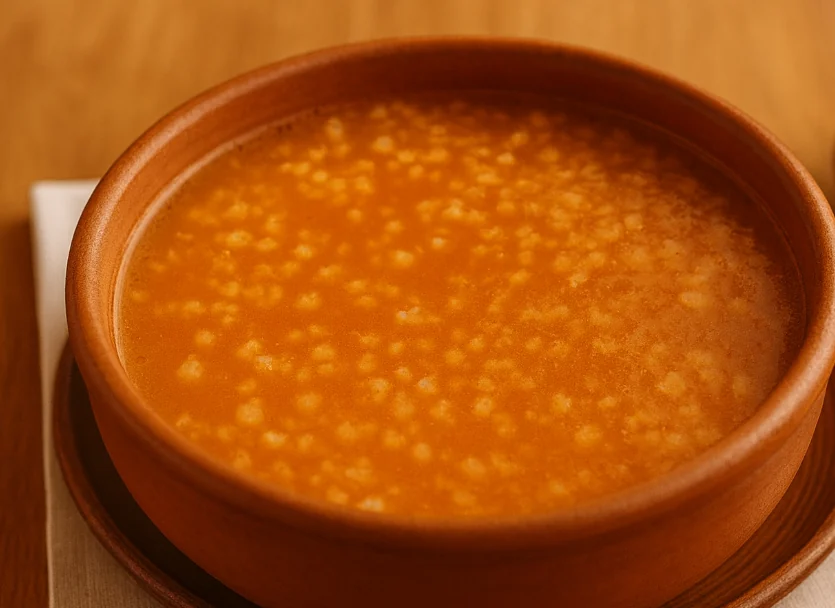
Bosnian Tarhana Soup Recipe – Traditional Tomato and Trahana Soup
Bosnian tarhana soup combines small dried dough granules with tomatoes, a pale butter-and-flour base, and beef broth. As the granules soften, they release starch and give the soup a lightly thickened texture. You may also see the ingredient spelled trahana; the coarse Bosnian granules are the essential starting point for this recipe.
Choose the product before you begin. Fine Turkish tarhana powder has a different composition and thickening behavior and cannot replace these granules one-for-one. This preparation keeps the soaking water, uses unsalted beef broth, and adds no yogurt, sour cream, lemon, or other extra acid.
A warm bowl suits chilly autumn or winter days, with a piece of pogača or somun alongside. The base recipe serves four and takes about an hour, including a fifteen-minute soak and five-minute final rest. Exact Metric weights sit alongside practical US measures in the recipe card.
Bosnian Tarhana Soup
Ingredients
- 3 1/2 oz dried Bosnian tarhana Coarse granular tarhana or trahana; not fine Turkish tarhana powder.
- 1 1/16 cups cold water For soaking; retain all of it.
- 1 3/8 tbsp unsalted butter
- 2 tbsp all-purpose flour Original flour: German Type 405.
- 1 1/3 tbsp tomato paste Choose a plain paste without added salt.
- 1 1/3 tsp sweet paprika Not hot or smoked paprika.
- 10 1/2 oz plain tomato passata Unsweetened and without added salt; see notes on US tomato puree.
- 4 cups unsalted beef broth Defatted; do not use salted broth with the same added salt.
- 1 1/2 tsp fine salt Divide between the broth and finishing; see broth note.
- 1/2 tsp ground black pepper US spoon measure is rounded.
Equipment
- Kitchen scale Use weight for the dry tarhana; granule sizes vary.
- Measuring cup
- Medium bowl For soaking the granules.
- Heavy soup pot At least 3 quarts for the base recipe; use a larger pot when scaling.
- Whisk
- Flat-edged spoon For stirring across the bottom and corners.
- Ladle
Method
- Measure and soak. Put the measured dry tarhana in the bowl, add the measured cold water, and stir well. Leave for 15 minutes, stirring twice so the granules moisten evenly. Keep all the soaking liquid.
- Make a pale roux. Once the soaking time is complete, melt the butter in the soup pot over medium-low heat. Sprinkle in the flour and whisk for about 2 minutes. Keep the roux pale rather than browned.
- Warm the tomato paste. Stir in the tomato paste and cook for about 1 minute, stirring constantly. Stir in the sweet paprika for no more than 10 seconds, then immediately add the passata to stop the paprika from scorching. Whisk smooth.
- Add the broth. Whisk in the beef broth gradually, starting with about one-third and adding the rest in two additions. Stir in most of the measured salt, reserving a little for finishing, and add the pepper. Bring to a gentle boil, then simmer the tomato base for 5 minutes.
- Add tarhana and its water. Stir the soaked granules again to lift any settled starch, then slowly pour the entire mixture into the simmering soup while whisking. Reduce the heat to a gentle simmer; do not boil vigorously.
- Simmer and stir. Cook gently for about 18–20 minutes, stirring at least every 2 minutes with the flat-edged spoon, including the bottom and the corners. Check a granule near the end: it should be tender but still recognizable, without a hard or floury center. Coarser products may need a little longer; follow their doneness cues.
- Finish and rest. With genuinely unsalted broth, stir in the reserved measured salt. If the broth or tarhana already contains added salt, taste first and use only what is needed. Remove from the heat, cover, and rest for 5 minutes. Stir again; the soup should be lightly thickened and easy to ladle, with visible tender granules.
- Serve. Divide the soup evenly among the selected number of servings and serve hot. Offer bread separately. Do not add yogurt, sour cream, lemon, or other acid to this fixed preparation.
Notes
Buy coarse Bosnian tarhana, not a powdered soup mix
Look for dry, small, irregular granules sold as Bosnian tarhana or trahana. Regional and commercial preparations vary: some are fermented wheat dough with a tangy flavor, while others are sold as egg-containing soup pasta and taste milder. The name alone does not establish the ingredient list or guarantee the same sourness.
Bosnian and Balkan grocery stores are the best place to ask. Specialist European-food retailers in the US also list Bosnian tarhana granules, sometimes under “small soup pasta” or “egg pasta.” Check the package photograph and description as well as the name. A seasoned instant soup sachet is a separate product.
Fine Turkish fermented tarhana powder often includes yogurt and vegetables. It disperses and thickens differently, so the same dry weight can produce a very different soup. Ordinary noodles, couscous, and bulgur also change the preparation; they are not interchangeable ingredients for this fixed recipe.
Read the allergen statement on your package
Wheat-based tarhana contains gluten. Some Bosnian products declare egg, and other versions or production facilities may introduce additional allergens. Read the complete ingredient list, “contains” statement, and any precautionary labeling on the package you actually buy. Do not infer that all products are dairy-free or egg-free from a generic description.
The butter in this soup adds milk. Check the broth and its flavorings too; an unsalted label does not establish allergen suitability. If you require halal ingredients, verify the beef broth and any relevant product certification. This recipe does not provide a gluten-free or dairy-free variation.
Keep the liquid and salt in balance
The original measured formula pairs 100 g dry granules with 250 ml soaking water and 950 ml unsalted beef broth. That is 1.2 liters of water and broth, plus the passata. Keeping the full soaking liquid preserves both the intended amount of liquid and the starch that has loosened from the granules.
Use defatted, genuinely unsalted beef broth. Reduced-sodium broth still contains sodium, and ordinary salted broth plus the full listed salt can make the soup too salty. If you have a salted product, withhold most of the recipe salt and season gradually after cooking. Do not change the broth and automatically keep the same salt addition.
Choose plain, unsweetened passata without added salt. Plain unsalted strained tomatoes or US tomato puree can work when the consistency is similar, although a concentrated puree can make a thicker result. Seasoned tomato sauce, tomato paste, and condensed tomato soup are different products. The paste in the ingredient list is a separate, smaller addition.
Build a pale base and protect the paprika
Melt the butter over medium-low heat and whisk in the flour for about two minutes. You want a smooth, pale roux, not the browned base used in some other soups. Stir in the tomato paste briefly before adding sweet paprika.
Paprika needs only a few seconds in the hot mixture. Add the passata immediately afterward so it does not scorch and turn bitter. Gradually whisk in the broth rather than adding it all at once; this helps disperse the roux without lumps. Let the tomato base simmer briefly before the soaked tarhana goes in.
Simmer until the granules are tender
Stir the soaking bowl once more before pouring everything slowly into the soup. Use a gentle simmer rather than a vigorous boil. Stir across the bottom at least every two minutes, reaching the corners where granules can settle and stick.
Begin checking after approximately eighteen minutes. A cooked granule should be tender, with its shape still visible and no hard, floury center. Eighteen to twenty minutes is a guide for the coarse product used in this method; thicker granules can need longer, while commercial products may soften sooner. Check the package guidance and the actual texture instead of relying on color.
After cooking, cover the pot off the heat for five minutes, then stir again. The soup should be slightly thickened and easy to ladle, rather than a firm porridge. It continues thickening as it stands, so do not add extra dry granules just because it initially looks loose. If necessary after the rest, loosen it gradually with a little hot water or unsalted broth.
Timing and larger batches
The full planning estimate is one hour and five minutes: ten minutes to measure and prepare, fifteen minutes for soaking, thirty-five minutes for the base and simmering, and five minutes of final rest. The written method keeps soaking separate from cooking, so the same minutes are not counted twice. Granule size and the time needed to bring the pot to a simmer can extend the estimate.
At 2x the recipe makes eight servings; at 3x it makes twelve. Choose a larger pot with enough headroom to whisk and stir safely. Maintain the same gentle simmer and check a granule for doneness. Heating more liquid takes longer, but the cooking time is not automatically doubled or tripled.
Serving and reheating the soup
Serve after the final rest, with bread separately. For another Bosnian soup with a different texture, try begova čorba, made with chicken and okra. For a more substantial bean-and-beef dish, there is Bosnian grah. For another Bosnian soup with a creamy veal-and-vegetable base, see teleća bijela čorba.
Move leftovers promptly into shallow containers and refrigerate within two hours, or one hour in temperatures above 90°F (32°C). Keep the refrigerator at 40°F (4°C) or colder and use the soup within two days. Do not leave a deep pot on the counter for hours while waiting for it to cool completely.
Reheat while stirring, adding a little water or unsalted broth as needed. Bring the soup to a boil and check that it reaches at least 165°F (74°C) throughout. The granules will usually be softer and the soup thicker than when freshly made. Reheat only the amount you plan to serve.
About the calorie estimate
The card gives approximately 187 calories per serving, excluding bread. This calculation uses a representative dry Bosnian tarhana value of 360 kcal per 100 g, defatted unsalted broth at 5 kcal per 100 ml, and checked food-composition values for the other ingredients. Unsalted tomato puree serves as the nutritional proxy for passata.
Tarhana, passata, and broth labels vary, so this is a disclosed model rather than a laboratory measurement. A complete matched nutrient profile for the exact brands was not verified; the card therefore shows a calorie estimate without invented additional nutrient figures.
Tarhana soup questions
Does this recipe need yogurt or lemon?
No. The tomatoes and, depending on the product, the tarhana itself provide the characteristic flavor. Yogurt, sour cream, and added acid are not part of this formula.
Why has my soup become very thick?
The granules and roux both bind liquid, and standing increases the effect. First confirm that you kept all the soaking water and used coarse granules. After the rest, add hot water or unsalted broth a little at a time. Fine tarhana powder cannot be corrected simply by assuming the same original proportions.
Can I use a cup measure for the dry tarhana?
Weigh it. Granule size and packing change its volume, so the US card uses ounces for the dry ingredient. The Metric selector provides the original gram weight.
Can I use salted broth?
Only with a deliberate salt adjustment. Hold back the listed salt, then season in small additions after the granules have cooked. “Reduced sodium” is still not the same as unsalted.