Begova Čorba Recipe – Bosnian Chicken and Okra Soup
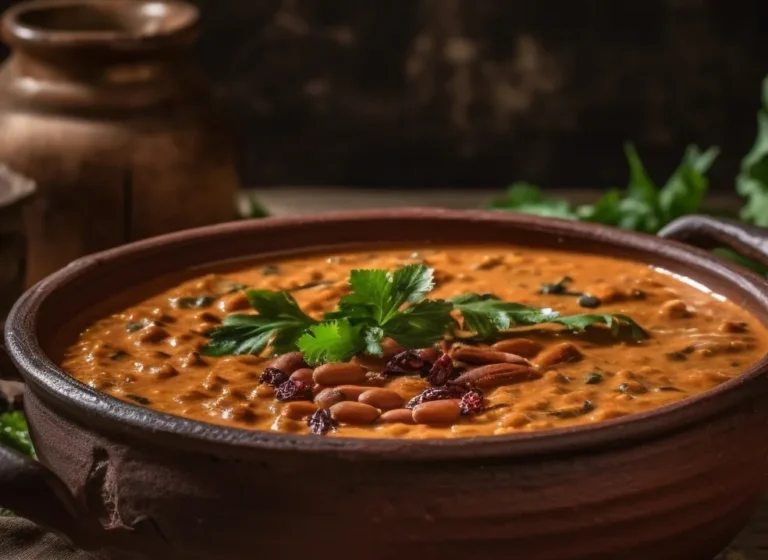
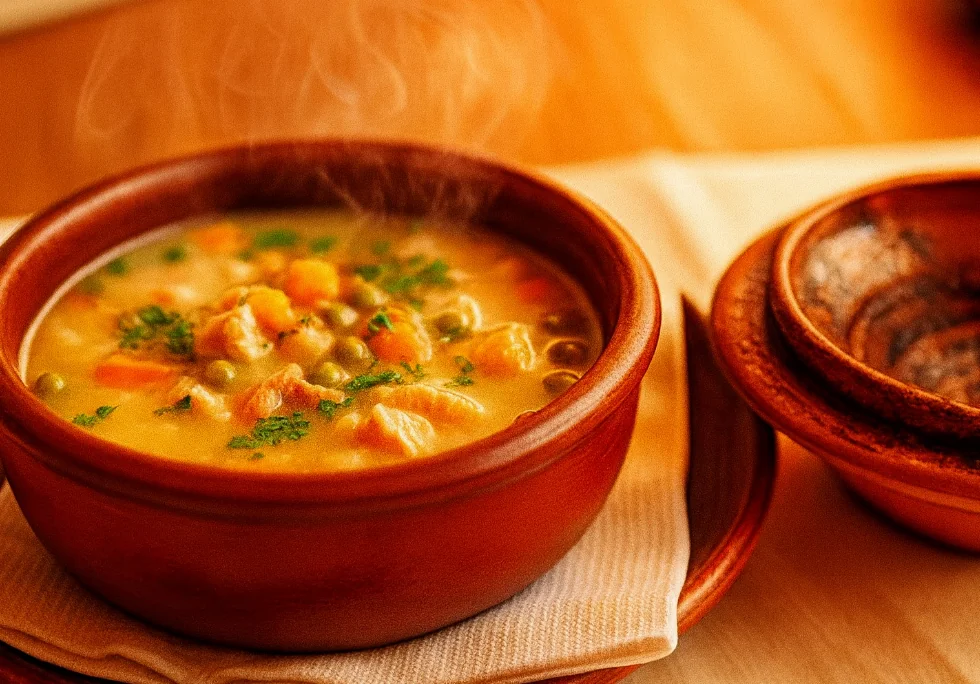
Begova čorba is a Bosnian chicken-and-okra soup with a gently thickened broth, tender shredded meat, finely diced root vegetables, and a little lemon. Dried okra gives it a character that an ordinary chicken soup does not have. A pale butter-and-flour roux adds body without turning the broth into a heavy cream soup.
This version uses boneless, skinless chicken thighs, plain dried okra, carrots, celeriac, and parsley root. The okra is soaked in hot water with lemon, drained and briefly rinsed, then cooked in the soup. The chicken and roots simmer first to make the broth; the meat is shredded and the roots diced before they return to the pot.
The card below gives one consistent preparation without cream, sour cream, egg yolks, or rice. After the recipe, you will find practical help with buying dried okra in the United States, removing its string, making a smooth pale roux, judging the finished texture, and storing the soup safely. Use Metric for the exact formula and US Customary for rounded equivalents.
Begova Čorba (Bosnian Chicken and Okra Soup)
Ingredients
- 2.8 oz plain dried okra small whole pods for cooking; dry weight without any string
- 3 1/4 cups hot water for soaking; not actively boiling; discard after soaking
- 4 tsp fresh lemon juice for soaking; discard with the soaking liquid
- 1.1 lb boneless skinless chicken thighs leave the pieces whole for simmering
- 6 1/3 cups cold water for the broth; separate from the soaking water
- 5.3 oz onion peeled and halved; remove after simmering
- 7.1 oz carrots peeled weight; cut into large pieces
- 3.5 oz celeriac celery root; peeled weight; cut into large pieces
- 2.8 oz parsley root peeled weight; cut into large pieces; not parsley leaves or parsnip
- 1 clove garlic peeled and lightly crushed; about 5 g per clove; remove after simmering
- 1 bay leaf remove after simmering
- 1 2/3 tsp fine salt US volume assumes fine table salt; weigh the Metric amount for other salt types
- 2 tbsp butter US volume rounded; use Metric weight for the precise amount
- 3 1/4 tbsp all-purpose flour spooned and leveled; US volume approximate
- 1/2 tsp freshly ground black pepper approximate volume; grind size affects measurement
- 2 tsp fresh lemon juice for the finished soup; separate from the discarded soaking juice
- 1/4 cup fresh flat-leaf parsley washed, dried, and finely chopped
Equipment
- Soup pot with a lid at least 4 liters for the base recipe; allow headroom and increase capacity or use comparable pots for larger batches
- Kitchen scale recommended for dried okra, roots, flour, butter, and salt
- Large heatproof soaking bowl for the dried okra
- Fine-mesh strainer and large heatproof bowl to strain and reserve the hot broth safely
- Whisk, slotted spoon, and ladle for the roux, lifting ingredients, and serving
- Instant-read food thermometer to check chicken and reheated soup
Method
- Soak the dried okra. Place the dried okra in a heatproof bowl. Add the soaking water while hot but no longer actively boiling, then add the soaking lemon juice. Keep the pods submerged and soak for 30 minutes.
- Drain and remove the string. Drain the okra into a strainer and discard all soaking liquid. Rinse briefly under cool running water and drain gently without squeezing the softened pods. If the okra was threaded, carefully slide every pod off and remove all pieces of string.
- Prepare the vegetables and chicken. Cut the peeled carrots, celeriac, and parsley root into large pieces. Halve the peeled onion and lightly crush the peeled garlic. Leave the boneless, skinless chicken thighs whole. Do not rinse raw chicken; keep its utensils separate from herbs and ready-to-eat foods, and wash hands and clean surfaces after handling.
- Start the broth. Place the chicken, onion, carrots, celeriac, parsley root, and garlic in a suitable soup pot. Add the bay leaf, broth salt, and cold broth water. Heat slowly over medium-high heat, skimming foam from the surface.
- Simmer and check the chicken. As the broth reaches a boil, reduce the heat and set the lid slightly ajar. Simmer gently for about 40 minutes, avoiding a rolling boil. Check the center of the thickest chicken piece with a clean thermometer: it must reach at least 165°F (74°C). Continue cooking if needed; the vegetables should also be tender.
- Reserve the broth. Lift the cooked chicken and the carrots, celeriac, and parsley root onto a clean plate. Discard the onion, garlic, and bay leaf. Carefully strain the broth into a large heatproof bowl and keep it hot. Briefly rinse and dry the soup pot.
- Shred and dice. Let the cooked chicken cool only enough to handle safely, then shred with two forks into bite-size pieces. Dice the cooked carrots, celeriac, and parsley root into roughly 1/4-inch (5–8 mm) pieces. Continue the preparation promptly.
- Make a pale roux. Melt the butter in the cleaned pot over low to medium heat. Whisk in all the flour and cook, stirring, for about 2 minutes. Keep the mixture pale; do not let it brown or scorch.
- Whisk in the broth. Add a small portion of the hot reserved broth while whisking continuously until smooth. Add another portion and whisk again. Continue gradually with the rest of the broth, then bring the smooth mixture back to a gentle simmer, stirring along the bottom.
- Cook the soaked okra. Add the drained okra to the thickened broth. Simmer gently for about 15 minutes, stirring carefully from time to time to prevent sticking. The pods should soften while retaining their shape. If still firm, continue gently and check again rather than assuming soaking alone cooked them.
- Return the chicken and roots. Add the shredded chicken and diced carrots, celeriac, and parsley root. Stir in the black pepper and heat gently for about 5 minutes, until everything is hot throughout. Avoid vigorous boiling or crushing the okra.
- Finish with lemon and parsley. Stir in the finishing lemon juice. Add about two-thirds of the chopped parsley and reserve the rest for serving. Taste the broth before making any further seasoning adjustment. The soup should be lightly thickened and gently tangy, not gluey or sharply sour.
- Serve and store safely. Divide the soup evenly into the listed servings and sprinkle with the reserved parsley. Refrigerate leftovers promptly in shallow containers within 2 hours, or within 1 hour above 90°F (32°C). Keep at 40°F (4°C) or below, use within 2 days, and reheat throughout to 165°F (74°C).
Notes
- Dried okra: Use plain, unseasoned whole dried pods intended for cooking, not fried snack chips. Fresh or frozen okra is not a same-weight replacement. Soak as directed, remove all string, discard the soaking liquid, rinse briefly, then cook the drained okra in the thickened soup. Do not combine this method with a separate preboiling step.
- Chicken and broth: The formula uses boneless, skinless thigh meat and cold water. Bone-in chicken, breast meat, or salted commercial stock changes the preparation or seasoning and is not an interchangeable instruction in this card.
- Roux: Keep the butter-and-flour mixture pale. Gradually whisk in the reserved broth before adding the okra. No cream, sour cream, egg yolk, potato, or rice is included in this version.
- Timing: The total is a conservative sequential allowance for preparation, soaking, and cooking. Some vegetable preparation can overlap the soak, but a shorter overlapping schedule has not been kitchen-tested here. Drying method and pod size can change the time needed for okra to soften.
- Portions: Divide the finished soup evenly into the listed number of servings. Final volume varies with evaporation; an exact milliliter yield has not been independently measured.
- US measures: US weights and volumes are rounded equivalents. The butter tablespoon measure and spice volumes are approximate; switch to Metric and weigh ingredients for the precise formula. Parsley root means the root vegetable, not parsley leaves or an automatic parsnip substitution.
- Food safety: Chicken must reach at least 165°F (74°C) at the center of the thickest piece. Refrigerate leftovers promptly in shallow containers within 2 hours, or within 1 hour above 90°F (32°C). Keep at 40°F (4°C) or below and use within 2 days. Reheat to 165°F (74°C) throughout. Do not wait for a deep pot to become completely cold on the counter.
- Nutrition: A complete estimate has not been supplied because a suitable verified composition record for the specific plain dried okra and retention from discarded aromatics and soaking liquid have not been established. Values for fresh okra, fried okra snacks, or the source recipe's calorie figure have not been substituted.
What makes this soup Begova čorba?
The name is commonly translated as “the bey’s soup,” reflecting the Ottoman influence on Bosnian food. Today it is served in Bosnian homes and restaurants, often as a warm first course for family meals and special occasions. Its recognizable combination is chicken, okra, mild root vegetables, and a lightly thickened broth.
There is no single formula shared by every household. Some versions finish with sour cream or egg yolks; this one does not. Its body comes from the okra and the pale roux. Adding rice, potatoes, a cream enrichment, or a different meat would create a variation rather than clarify the method given here.
It is also distinct from a clear chicken soup with noodles, a veal-and-okra bamija soup, and teleća bijela čorba, a white veal soup that may be enriched with sour cream and egg yolks. Sharing one ingredient or a pale color does not make these dishes interchangeable.
Choosing the chicken, roots, and dried okra
Keep the chicken thighs boneless and skinless
Use the edible weight of boneless, skinless thigh meat and leave the pieces whole while they simmer. Thighs suit this method because they can be shredded after the broth has developed. Cutting the raw meat into tiny cubes would expose more surface during cooking and change the final texture.
Chicken breasts are leaner and can become dry during a prolonged simmer. Bone-in pieces change the edible yield and require a different handling step. Neither is an automatic replacement for the thighs in this recipe. The broth begins with water, not commercial salted stock, so the seasoning remains tied to the stated formula.
Parsley root is not parsley leaves
Carrots, celeriac, and parsley root cook in large pieces first, then are diced and returned to the soup. Celeriac means celery root, not stalk celery. Parsley root is the pale root vegetable sometimes sold as Hamburg parsley. It resembles a parsnip but is a different ingredient; do not silently replace it with parsley leaves or assume the same weight of parsnip will produce the identical flavor.
US availability of parsley root varies. Check produce departments and European specialty grocers before starting. Buy enough to obtain the peeled weight in the card. The chopped flat-leaf parsley added at the end is a separate ingredient with a separate purpose.
Look for plain whole dried pods
Dried okra may be labeled bamija or kuru bamya. Turkish and Balkan specialty shops are useful places to ask, and plain dried pods are also sold by US-facing specialty retailers. Look closely at the ingredient list: the product should be dried okra intended for cooking, not seasoned fried okra chips, a ready-to-eat crunchy snack, or pickled okra.
Small dried pods are often sold on a string. Weigh the pods without the string. Drying concentrates the ingredient, so fresh or frozen okra cannot replace it at the same weight. This recipe does not give an untested fresh-to-dried conversion or a supposedly equivalent cooking time.
Soaking the okra and removing every piece of string
Put the dried pods in a heatproof bowl and pour over the hot soaking water and the soaking lemon juice. The water should be hot but no longer actively boiling. Keep the okra submerged for the 30-minute soak so it hydrates more evenly.
Drain it into a strainer and discard the soaking liquid completely. Briefly rinse under cool water, then let it drain without pressing or wringing the pods. If it was threaded, slide the softened pods carefully off the string and inspect them for any thread left behind. A final check is easier before the pods disappear into a full pot of soup.
This preparation deliberately uses a soak followed by cooking in the soup. It does not also preboil the okra in a separate saucepan. Combining both methods can over-soften the pods and makes the timing less predictable.
Okra naturally releases substances that thicken liquid; a little of that body belongs in Begova čorba. Draining the acidic soak and handling the pods gently helps control the final texture, but it does not remove every bit of okra’s natural thickening ability. Aim for a cohesive soup with recognizable pods, not an entirely clear broth.
Making a mild chicken broth without a hard boil
Place the whole thigh pieces, halved onion, large carrot and root pieces, lightly crushed garlic, bay leaf, and salt in the pot with the cold broth water. The broth water is separate from the soaking water, which has already been discarded. Heat gradually and skim the foam that rises.
Once the liquid reaches a boil, reduce the heat and leave the lid slightly ajar. A gentle simmer develops the broth without the rapid evaporation and cloudy appearance associated with vigorous boiling. Keep an eye on the heat rather than repeatedly stirring the vegetables into smaller pieces.
After about 40 minutes of simmering, check the center of the thickest chicken piece with a clean thermometer. It must reach at least 165°F (74°C); color and the clock alone do not establish safety. Continue cooking if needed. The roots should be tender enough to dice without a hard center.
Lift out the cooked chicken and the carrots, celeriac, and parsley root. Remove and discard the onion, garlic, and bay leaf, then strain and reserve the broth in a large heatproof bowl. Handle the hot liquid carefully and choose a bowl that comfortably holds it.
Let the chicken cool only enough to handle safely, then shred it with two forks. Dice the cooked roots into roughly ¼-inch (5–8 mm) pieces. This gives the finished soup a different texture from one containing large vegetable chunks or vegetables added raw at the end. Continue promptly rather than leaving cooked chicken on the counter while doing unrelated work.
A pale roux that stays smooth
Use the cleaned, dried soup pot to melt the butter over low to medium heat. Whisk in the flour and cook, stirring, for about 2 minutes. The mixture should remain pale. If the flour or butter browns heavily or scorches, it introduces a roasted or bitter flavor and changes the color of the soup.
Whisk in a small portion of the hot reserved broth until smooth, then another portion. Continue gradually until all the broth is incorporated. The important point is the sequence: smooth each addition into the roux before adding a large volume of liquid. The instructions use portions of the available broth so the method remains valid when the ingredient amounts are scaled.
Bring the bound broth back to a gentle simmer while stirring along the bottom. If lumps remain, strain this liquid before adding okra and shredded chicken; straining is much harder once the soup contains all its delicate solids. Do not sprinkle extra dry flour straight into the finished soup.
Cooking the okra and finishing with lemon
The drained, soaked okra cooks in the lightly thickened broth for about 15 minutes. Stir carefully now and then so the flour does not settle and catch on the bottom, but avoid vigorous beating that breaks the pods apart. Test a pod: it should be soft enough to eat while still holding its shape.
Different pod sizes and drying methods can change the time needed. If the okra is still firm, let it simmer gently a little longer and check again. A 30-minute soak is preparation, not proof that dried okra is fully cooked.
Return the shredded chicken and diced roots with the black pepper, then heat gently for about 5 minutes until everything is hot throughout. Add the finishing lemon juice and most of the chopped parsley, reserving the rest for the bowls. Taste before any additional seasoning. The lemon used in the soak was discarded; it is not the same addition as the juice used to season the finished soup.
The finished broth should lightly surround the meat and vegetables, sitting between a clear soup and a heavy stew. It should taste mild and gently tangy. More lemon can be offered at the table for individual preference without sharply acidifying the whole pot.
Common problems and practical corrections
The soup is sticky or the pods have fallen apart
Check whether the soaking liquid was discarded and whether the okra was squeezed, preboiled as well as soaked, boiled too strongly, or stirred aggressively. Some natural thickening is expected. Broken-down pods cannot be put back together; use gentler heat and handling for the next pot. A little hot water can loosen an overly thick soup, followed by a fresh seasoning check.
The okra stays tough
Make sure the pods were fully submerged during the soak and then actually simmered in the broth. Continue cooking gently until tender instead of relying on the printed time alone. Very large, old, or differently dried pods may behave differently from the small pods intended for this recipe.
The soup tastes floury or has lumps
Cook the flour briefly in the butter and allow the thickened broth its full simmering stage. Whisk the first broth additions thoroughly. A short rest alone will not reliably correct raw flour, and adding more flour directly to the pot usually creates more lumps.
The broth is too thin or too thick
For a slightly thin soup, allow a little more gentle uncovered simmering, remembering that it thickens as it cools. Watch the salt as liquid evaporates. For a thick soup, stir in hot water a little at a time; do not immediately pour in enough to wash out the flavor. This version does not need cream to establish its texture.
The chicken is dry, or the soup is too sour or salty
Use thigh meat, keep it whole during the first simmer, and avoid a hard boil or an unnecessarily long final cooking stage. If the soup is too sour, a little unsalted liquid can soften the balance, although it also changes concentration. Sugar is not a required correction. Excess salt is easier to prevent by using water and weighing the fine salt than to repair after the broth has reduced.
Serving and variations
Serve warm with the reserved parsley. As a first course it needs little accompaniment; with bread it can make a light meal. Somun, pogača, or a plain white bread works well with the broth. Keep rich sour-cream or egg-yolk finishes clearly identified as other versions rather than ingredients missing from this one.
For a multicourse meal, adjust the portion size to the rest of the menu. Divide the finished pot evenly according to the servings shown in the card. The final volume depends on evaporation, so a precise measured bowl volume has not been claimed here.
Making ahead, cooling, and reheating safely
The broth, cooked chicken, and cooked roots can be prepared ahead, then cooled promptly and refrigerated separately for finishing later. Use shallow containers rather than leaving a deep stockpot on the counter until completely cold. Keep raw chicken away from bread, herbs, and other ready-to-eat foods; do not wash raw poultry.
Refrigerate cooked soup or its prepared components within 2 hours, or within 1 hour if the surrounding temperature exceeds 90°F (32°C). Keep the refrigerator at 40°F (4°C) or below. For this recipe, use refrigerated leftovers within 2 days. Advance preparation does not restart the storage time of previously cooked chicken.
Reheat with careful stirring and check that the soup reaches 165°F (74°C) throughout, including the chicken pieces and the center of the container. A hot edge or steaming surface alone is not a complete check. Add a little water if the chilled soup has thickened, and recheck the seasoning.
Portions can be frozen and thawed in the refrigerator, but the okra may become softer and the thickening less even. Gentle reheating and careful stirring can improve consistency; no personally tested freezer-quality period is claimed. Reheat only what you need so the whole pot is not repeatedly cooled and warmed.
Frequently asked questions
Can I use fresh or frozen okra?
Not at the same weight as the dried pods. Water content, preparation, and cooking time differ. No validated substitution quantity for this exact formula is supplied.
Does the recipe need cream, egg yolks, or rice?
No. The pale roux and okra provide the intended body. Those additions belong to different versions and would change both the method and any nutrition calculation.
Can I replace parsley root with parsley leaves?
No. The root vegetable cooks with the broth and is diced into the soup. Chopped parsley leaves are already included separately as a finishing herb.
Why are no calorie values shown?
A complete verified calculation for the particular plain dried okra has not been established, and some ingredients are discarded after flavoring the water or broth. Values for fresh okra or oil-coated snack chips would not be appropriate substitutes. The source recipe’s calorie figure has not been copied.