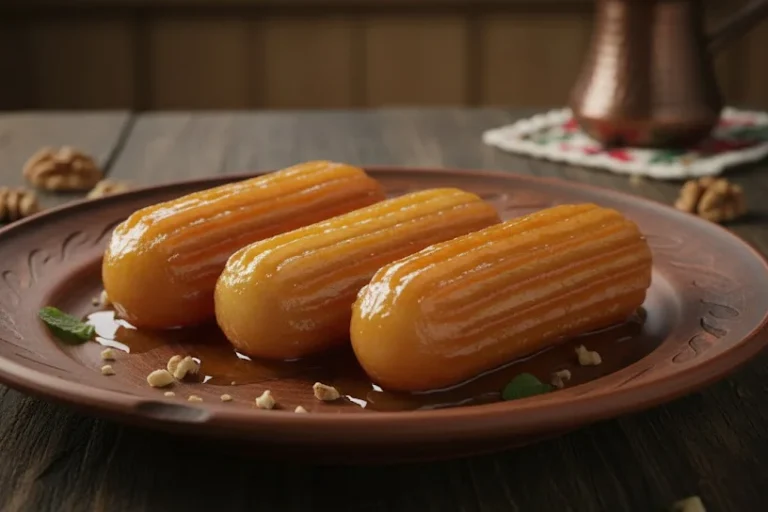
Tufahije – Bosnian Walnut-Stuffed Poached Apples
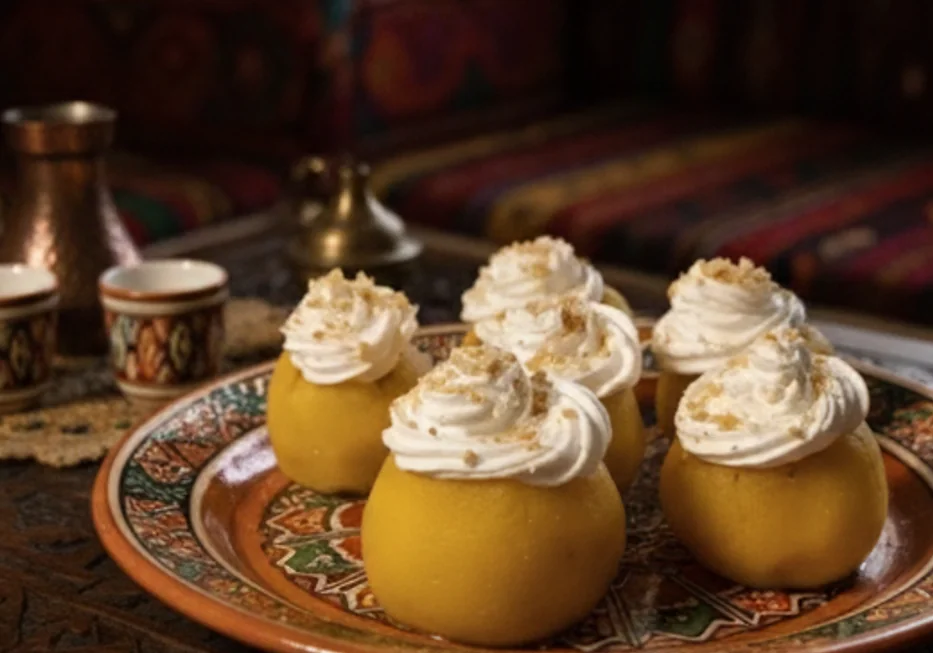
Tufahije are peeled apples gently poached in a lemon-scented sugar syrup, filled with ground walnuts, and served cold. The contrast is the point: tender fruit that still holds its shape, a moist walnut center, a little syrup in the bowl, and a cool whipped-cream topping.
This Bosnian dessert starts with firm, tart apples rather than soft baking apples. A quiet simmer and careful coring matter more than elaborate equipment. The apples need enough flesh left around the cavity to support the filling, and they should leave the pot before they become fragile.
The recipe below keeps the poaching syrup separate from the amount actually used to finish the dessert. A measured portion goes into the walnuts, another goes around the cooled apples, and the rest stays out of the serving dish. Allow at least two hours of refrigerator time after assembly, and add the whipped cream just before serving.
Tufahije – Bosnian Walnut-Stuffed Poached Apples
Ingredients
- 6 firm tart apples Granny Smith; about 170–190 g each before peeling and coring
- 4 1/4 cups water
- 1 cup granulated sugar for the poaching syrup; not all of this syrup is served
- 1 packet vanilla or vanillin sugar 8 g per packet; weigh the required amount if your package is a different size
- 2 tbsp fresh lemon juice measured; reserve the zest separately for finishing
- 7 oz English walnuts finely ground, not processed into walnut butter
- 3 1/4 tbsp granulated sugar for the filling
- 5/8 cup heavy whipping cream pasteurized, cold and unsweetened; whip just before serving
- 6 walnut halves for garnish; about 2.5 g each
- 1 tsp finely grated lemon zest from a washed, unwaxed lemon, yellow part only
Equipment
- Wide pot with lid About 9½ inches (24 cm) wide for the base recipe; apples must fit upright in one layer with syrup reaching at least two-thirds of their height. Use additional similar pots for larger batches.
- Small paring knife and apple corer Remove the center carefully without pushing through the base.
- Slotted spoon For lifting tender apples without pulling on the cavity.
- Liquid measuring cup For dividing the prepared syrup; metric markings are useful.
- Shallow dish and small bowls For cooling components separately and holding filled apples upright.
- Hand mixer and chilled bowl For the cream topping.
Method
- Prepare the lemon. Wash and dry the lemon. Finely grate the zest without the bitter white pith, cover it, and refrigerate until serving. Measure the lemon juice separately for the syrup.
- Dissolve the syrup. Combine the water, poaching sugar, vanilla or vanillin sugar, and lemon juice in the wide pot. Bring to a boil, stirring until the sugar dissolves, then reduce the heat for a quiet poach.
- Peel and core. Wash and peel the apples. Remove the cores carefully with a small knife or corer to make cavities about 1–1¼ inches (2.5–3 cm) across. Leave an intact base and substantial walls so the apples hold their filling. Do not push a corer straight through.
- Poach gently. Lower the prepared apples into the syrup promptly. Arrange upright in one layer; the syrup should reach at least two-thirds of their height. Cover and maintain a very gentle simmer, not a rolling boil. Turn the apples carefully every 2–3 minutes so they cook evenly. For larger batches, use additional suitable pots rather than crowding one.
- Check the fruit. Begin checking around 10 minutes; poaching commonly takes 10–12 minutes, with very firm apples sometimes needing another 1–2 minutes. A thin skewer should enter the flesh with slight resistance while the apple still holds its shape. Check individual apples if they entered the pot at different times. Lift each out as soon as ready; they continue to soften while cooling.
- Lift without breaking. Support each apple from underneath with a slotted spoon. Set upright in a shallow dish and let excess syrup drain away. Avoid gripping the softened walls or stacking the apples.
- Divide the prepared syrup. Measure a total of 1.25 cups (300 ml) of syrup from the poaching pot. Set aside 0.25 cup (60 ml) while warm for the filling and 1 cup (240 ml) for cooling and serving. These portions are taken from the original syrup, not added on top of it. The metric volumes are the precise reference; cup measures are rounded.
- Mix the filling. Combine the ground walnuts and filling sugar. Stir in the reserved warm filling portion of syrup gradually, using the measured amount. The mixture should be moist and moldable, with no puddle of syrup. Let it cool before placing it in the apples.
- Cool the components. Let the apples and filling cool until no longer warm, and cool the reserved serving syrup completely in a separate shallow container. Allow approximately 30 minutes for initial cooling; actual time varies. An ice bath around the syrup container can speed this up. Refrigerate shallow containers promptly if cooling takes longer; do not leave the components out for more than 2 hours, or 1 hour above 90°F (32°C). Keep the cream refrigerated.
- Fill the apples. Divide the cooled walnut filling among the cooled apples, packing gently into each cavity and leaving a small mound on top. Arrange upright in a shallow serving dish or individual bowls. Pour the fully cooled reserved serving syrup around the apples, keeping the filling above the liquid.
- Chill thoroughly. Cover and refrigerate at 40°F (4°C) or below for at least 2 hours, until the apples, filling, and syrup are thoroughly chilled. Keep refrigerated until serving; this step follows the initial cooling period.
- Whip the cream. Just before serving, whip the cold heavy cream in a chilled bowl until it holds firm peaks. Stop before it becomes grainy. Do not add cream to the walnut filling in this version.
- Finish and serve. Divide the whipped cream over the apples. Top each serving with its walnut-half garnish and a little reserved lemon zest. Serve cold with the measured serving syrup divided among the portions. Refrigerate leftovers promptly.
Notes
- Apples: Use firm, tart Granny Smith apples weighing about 170–190 g each before peeling and coring. Fruit condition controls poaching time; check tenderness rather than cooking to a fixed clock.
- Shared syrup: The measured filling and serving portions come from the original poaching pot. Do not make extra syrup or count these portions again as new water and sugar. The instruction quantities adjust with the serving multiplier.
- Vanilla sugar: Use an 8 g packet of vanilla or vanillin sugar, or weigh 8 g from a larger package for the base recipe. U.S. and imported packet sizes vary. No untested extract substitution is specified.
- Timing: The total includes approximately 30 minutes for initial cooling and at least 2 hours in the refrigerator. Cooling may take longer; use shallow containers and an ice bath for the syrup if needed, and refrigerate promptly rather than waiting at room temperature.
- Storage: Keep covered at 40°F (4°C) or below and use within 2 days as a conservative quality guideline, not a tested shelf life. Add the cream just before serving. Refrigerate perishables within 2 hours, or 1 hour above 90°F (32°C). Freezing is not recommended for the intended fruit-and-cream texture.
- Scaling: One serving is one filled, decorated apple. Use additional pots and shallow dishes for larger batches; do not crowd the apples or automatically multiply poaching time.
- Nutrition limitation: A complete numeric nutrition panel is intentionally withheld. The edible apple yield, final syrup concentration, and sugar absorbed during poaching have not been measured. Counting all poaching sugar as eaten would overstate consumption; counting only the reserved syrup would ignore unknown absorption. The walnuts, filling sugar, cream, and garnish are included in the main recipe, not optional nutrition exclusions.
What makes tufahije different from baked stuffed apples?
Tufahije are associated with Bosnian dessert traditions and the wider Ottoman culinary influence in the region. The name is plural; one filled apple is a tufahija. Versions differ in the sweetness of the syrup, the walnut mixture, and the finishing touches. This version uses a clearly measured walnut filling and whipped cream as the final topping, without claiming to be the only traditional formula.
The apples are poached, not baked. That means the outside stays pale and moist rather than browning in an oven. There is no pastry shell, and the filling is added after cooking. Do not expect the texture of apple pie or a hot baked apple: the finished fruit should be cool, tender, and sturdy enough to lift with a spoon while keeping its shape.
Choose firm apples that can hold a filling
Granny Smith is a practical choice in U.S. supermarkets. Its tartness balances the syrup and walnuts, and firm, sound fruit is easier to poach without collapsing. Choose medium apples of similar size, approximately 170–190 g each before peeling and coring. Similar sizes help them cook at similar rates; they do not guarantee that every apple will finish at exactly the same moment.
Avoid overripe, mealy, bruised, or already soft apples. A sweet variety changes the balance of the dessert, and a soft one may break before the center is tender. Even with Granny Smith, age and storage condition affect cooking. Buy a little extra fruit if you are learning to core apples, but prepare the number of servings shown in the recipe card.
Vanilla sugar in an American kitchen
Use vanilla or vanillin sugar for the syrup. These are flavored sugars sold in European groceries and by U.S. retailers carrying imported baking products. Vanillin sugar is flavored with vanillin; vanilla sugar may use vanilla-derived flavoring. Check the label rather than treating the two names as a guarantee of identical ingredients.
The precise base amount is 8 g. Imported sachets are often that size, but packages sold in the United States vary, so one packet is only the right measure when its label says 8 g. Weigh the required amount from a larger package. This recipe does not specify an improvised dose of vanilla extract, which would change both the flavoring and the sugar contribution.
Walnuts, cream, and lemon
Use English walnuts with a fresh, clean flavor. Taste a small piece before grinding: stale or rancid nuts will carry through the whole filling. Grind finely enough to make a cohesive mixture while leaving a little texture. Stop before the nuts turn oily and begin to resemble walnut butter.
Heavy whipping cream is the practical U.S. topping here. Use cold, pasteurized liquid cream, not a frozen whipped topping, and leave it unsweetened; the apples and filling already contain sugar. The cream belongs on the chilled apples at serving time, not in the walnut filling. Wash and dry an unwaxed lemon, grate only the yellow zest, and measure the juice separately. White pith can make the finish bitter.
Peel and core without weakening the apple
Peel the apples, then remove the core carefully with a small paring knife or a corer used with controlled depth. The aim is a cavity about 1–1¼ inches (2.5–3 cm) across with an intact base. A corer pushed straight through the fruit creates an escape route for the filling. A cavity carved too wide leaves thin walls that can split during poaching.
Work gradually, remove the seeds and tough core, and check the depth as you go. Keep substantial flesh beneath and around the cavity. If you accidentally pierce the base, hold that apple upright in an individual bowl when filling it; it will be less convenient to move, even if it remains usable.
Have the syrup and equipment ready before preparing the fruit, and work promptly to limit browning. The lemon juice is part of the measured poaching syrup. There is no separate lemon-water soaking bath in the main formula. Lower the prepared apples into the syrup gently rather than dropping them and splashing hot liquid.
Poach quietly and judge the flesh
For the base recipe, a wide pot around 9½ inches (24 cm) across is a useful starting point. The apples should fit in one layer, with syrup reaching at least two-thirds of their height. Pot shape and apple size matter: an excessively broad pot spreads the measured liquid too thin, while a cramped pot makes turning and lifting difficult.
Dissolve the sugars and lemon juice in the water, bring the syrup to a boil, then reduce the heat. Once the apples are in, maintain a very gentle simmer under a lid. A rolling boil batters the fruit and can split the softened walls. Turn the apples carefully every 2–3 minutes so the exposed surfaces also contact the hot syrup.
The difference between tender and falling apart
Begin checking around 10 minutes. A typical poaching window is 10–12 minutes, although very firm apples may need another minute or two. Slide a thin skewer or the tip of a small knife into the flesh, away from the cavity. It should enter with slight resistance. The apple should still support itself and keep its outline.
A hard, chalky center needs more gentle cooking. Flesh that slumps, tears easily, or separates from the cavity has gone too far. The apples continue softening as they cool, so do not wait until a skewer passes through with absolutely no resistance. Check individually, especially if the apples entered the pot at different times, and lift each one when ready.
Use a slotted spoon to support the apple from underneath and let excess syrup drain back into the pot. Do not pull it out by the cavity or squeeze the sides with tongs. Set the apples upright in a shallow dish, with room around them so they can cool without being stacked.
Divide the prepared syrup only once
For the base recipe of six servings, measure a total of 300 ml of the prepared poaching syrup. Of that amount, 60 ml goes into the walnut filling and 240 ml is cooled for the serving dish. In rounded U.S. measures, that is about 1¼ cups total, divided into ¼ cup and 1 cup. Metric markings are preferable for this division.
Those amounts are taken from the original pot. They are not extra water, extra sugar, or an additional batch of syrup. The recipe card adjusts all three instruction amounts when you change the serving multiplier. Another way to remember the relationship is one-fifth of the reserved syrup for the filling and four-fifths for cooling and serving.
Keep the filling portion warm long enough to mix into the nuts, and cool the serving portion separately. The unused poaching syrup does not automatically belong in the finished bowls. Adding it all would drown the filling, change the sweetness, and make any portion-based nutrition estimate misleading.
Make a moist walnut filling that stays in place
Mix the finely ground walnuts with the filling sugar. Add the measured warm filling portion of syrup gradually, stirring thoroughly so dry pockets disappear. Warm syrup helps distribute the sugar and moisture through the nuts. The finished mixture should hold a small mound on a spoon, with no free liquid pooling underneath.
The target is a moist, moldable center, not dry walnut crumbs and not a flowing nut sauce. The grind matters: very coarse nuts do not bind in the same way, while overprocessed nuts release oil. Use the full measured filling portion in the main recipe, incorporating it gradually rather than pouring it into one spot.
Let the filling cool before packing it into the cooled apples. Divide it evenly among the servings, pressing gently into each cavity and leaving a small mound on top. Forceful packing can break the walls. The whipped cream will be added later; it is not needed to bind the walnuts in this version.
Cool, assemble, and chill in that order
Cool the apples, walnut mixture, and serving syrup separately. The apples and filling should no longer be warm when assembled, and the serving syrup should be fully cooled before it goes around them. Pouring hot syrup over a cooled apple starts warming it again and can weaken its structure.
Allow roughly 30 minutes for initial cooling as a planning guide, not a verified cooling time for every kitchen. Use shallow containers. An ice bath around the syrup container can speed cooling without diluting the measured syrup. If the components are taking longer, refrigerate them promptly in shallow containers rather than extending their time on the counter until they feel completely cold.
Arrange the filled apples upright in a shallow serving dish or individual bowls. Pour the cooled serving portion around them, keeping the walnut mound above the liquid. Cover and refrigerate at 40°F (4°C) or below for at least two hours. This refrigerator rest follows the initial cooling period and helps the dessert become evenly cold.
Add the cream just before serving
Whip cold heavy cream in a chilled bowl until it holds firm peaks, then stop. Grainy cream has been whipped too far. Divide the cream over the chilled apples, finish each with a walnut half and a little reserved lemon zest, and serve with the measured syrup divided among the bowls.
Whipped cream is part of the main recipe here. Serving the apples without it is a distinct lighter variation, not an instruction to stir it into the filling. Prepare the apples ahead if useful, but wait to whip and add the topping so it looks and feels fresh at serving time.
Troubleshooting tufahije
The apple splits or collapses
Check the fruit first: soft, overripe apples are difficult to keep intact. Then check the cavity and heat. Thin walls, a pierced base, a rolling boil, and overcooking all make breakage more likely. Use sound fruit, core conservatively, turn gently, and remove each apple as soon as it reaches slight resistance.
The outside is soft but the middle is hard
Keep the simmer gentle and allow another short cooking interval, checking the flesh rather than the hollow core. Unequal apple sizes and irregular turning can produce uneven results. Do not increase to a violent boil to hurry the center; the outside will suffer first.
The filling is dry, loose, or oily
Confirm that the filling portion of syrup was measured from the pot and mixed throughout the walnuts. Dry pockets can remain when syrup is poured in all at once without thorough stirring. Coarse nuts make a looser filling; finely ground nuts bind better. Oily paste points to overprocessing or stale nuts rather than a need for more cream.
If a batch still needs a texture correction, treat added nuts or liquid as a recipe change and record it; those additions affect the ingredient totals and sweetness. The main formula does not call for an unlimited spoonful of extra syrup. Do not cover a puddling filling with cream and call the texture corrected.
The dessert tastes too sweet or the filling gets washed out
Use tart apples, the measured lemon juice, and unsweetened cream. Check that only the reserved serving portion went into the bowls. Pour syrup around the apples, not directly over the walnut mounds. Extra poaching liquid is the most obvious place to look if the fruit is floating or the filling is dispersing.
The cream softens immediately
The apples or syrup may still be warm, or the cream may have been insufficiently chilled or whipped. Chill the assembled dessert thoroughly and add freshly whipped cream at the end. Cold cream on a warm apple is not a substitute for the required refrigerator rest.
Serving, making ahead, and storing
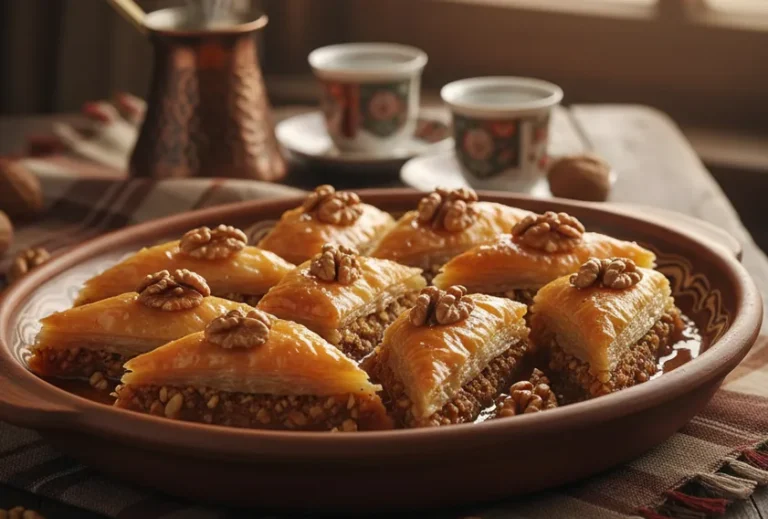
Serve one filled, decorated apple per person with its share of syrup. Small bowls keep the syrup contained and support the fruit. Unsweetened Bosnian coffee is a natural accompaniment. Tufahije offer a fruit-centered contrast to walnut pastry desserts such as baklava; they should still taste of apple rather than only sugar syrup.
You can prepare, fill, and chill the apples the day before serving. Keep them covered in the refrigerator, and add the cream and garnish shortly before they go to the table. Use within two days for the intended quality; this is a conservative handling recommendation, not a measured shelf-life study.
Keep the dessert at 40°F (4°C) or below. Refrigerate perishable components within two hours, or within one hour when the surrounding temperature is above 90°F (32°C). The sugar syrup does not make the walnut-and-cream dessert suitable for room-temperature storage. Return leftovers promptly to the refrigerator.
Freezing is not recommended for the intended presentation. Thawing can leave the poached apples softer and watery, and whipped cream may lose its texture. There is no tested freezing-and-thawing method supplied for this recipe.
Scaling and nutrition: what the numbers can tell you
The card scales the ingredient amounts and the divided syrup portions together. When doubling or tripling, use additional pots that keep the same practical apple arrangement and syrup depth. Poach in manageable groups, use enough shallow cooling space, and judge each apple individually. A larger batch does not mean multiplying the poaching time by the same factor.
A complete numeric nutrition panel is withheld rather than assigning all of the poaching sugar to the finished dessert. The measured serving and filling portions account for some syrup, but the apples can also absorb sugar while cooking. Their edible weight after peeling and coring and the final concentration of the syrup have not been measured.
The walnuts, filling sugar, cream, and garnish are real contributions and belong in any future calculation. A defensible full estimate also needs stated edible apple weights, final syrup yield or concentration, and an explicit assumption for absorbed sugar. Without those inputs, a precise calorie figure would imply more certainty than the recipe supports.
Frequently asked questions
Can I use sweet apples?
The main recipe is designed around firm, tart apples such as Granny Smith. A sweet apple changes the flavor balance, and a soft variety changes the cooking behavior. If you choose another firm variety, monitor it individually and treat the result as a variation rather than assuming the same time will work.
Do I need to use all the poaching syrup?
No. Reserve only the amount specified in the recipe card, divide it between filling and serving, and keep the remaining poaching liquid out of the finished dish. The filling and serving quantities are portions of the same syrup, not separate recipes.
Can I serve tufahije warm?
This main method serves them chilled, after at least two hours in the refrigerator, with whipped cream added at the end. Warm stuffed apples would be a different presentation and do not replace the chilling step here.
Can I skip the whipped cream?
Yes, as a clearly marked variation. The main recipe includes it as a topping. Leaving it off changes the richness and any nutrition calculation; it does not require adding cream or milk to the walnut filling.