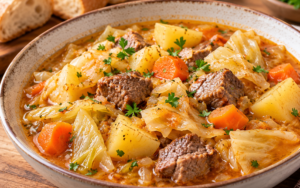
Kalja – Bosnian Beef and Cabbage Stew
Ingredients
Meat and vegetables
- 24 3/4 oz boneless beef shoulder trim thick outer sinew, then weigh; cut into 1¼–1½-inch (3–4-cm) pieces
- 35 1/4 oz fresh green cabbage prepared weight after removing damaged leaves and the hard core; cut into 1½–2½-inch (4–6-cm) pieces
- 15 7/8 oz Yukon Gold potatoes peeled weight; cut into about 1¼-inch (3-cm) pieces
- 6 3/8 oz yellow onion prepared weight; finely diced
- 5 5/8 oz carrots prepared weight; cut into thick slices
- 10 g garlic peeled and finely chopped; weigh this small quantity in either system
- 1 1/2 tbsp tomato paste US spoon measure is approximate; Metric preserves the exact weight
- 20 g flat-leaf parsley washed, dried, and chopped; weigh this small quantity in either system
Browning oil
- 3 1/3 tsp sunflower oil for the first beef batch; US spoon measure is approximate
- 2 1/4 tsp sunflower oil for the second beef batch; separate from the first portion
Aromatic base and first simmer
- 1 1/3 tsp sweet paprika not smoked or hot; US volume is approximate
- 2 1/8 cups hot water first addition, for the beef; US volume is rounded
- 1 1/6 tsp fine table salt first addition; not an equal-volume kosher-salt substitution
- 1 g ground black pepper weigh for the closest match in either system
- 2 bay leaves remove before serving
Cabbage and potato stage
- 1 1/4 cups hot water second addition; keep separate from the first; US volume rounded
- 2/3 tsp fine table salt second addition; separate from the first measured salt
Equipment
- 1 Heavy lidded pot at least about 6½ quarts (6 L) for 1x; enough headroom for the raw cabbage
- 1 Kitchen scale weigh trimmed meat and prepared vegetables
- 2 Cutting boards separate raw meat from vegetables
- 1 Chef’s knife cut sturdy, even pieces
- 1 Measuring tools keep the two water, salt, and oil stages separate
- 1 Tongs and clean plate handle browned beef
- 1 Wooden spoon and ladle check the bottom gently and portion the stew
- 1 Food thermometer check leftovers reach 165°F (74°C) when reheating
Method
- Prepare the ingredients. Pat the trimmed beef dry without rinsing it and cut into 1¼–1½-inch (3–4-cm) pieces. Remove damaged cabbage leaves and the hard core, then weigh the prepared cabbage and cut into large 1½–2½-inch (4–6-cm) pieces. Cut peeled potatoes into about 1¼-inch (3-cm) pieces, finely dice onion, slice carrots thickly, and chop garlic and parsley. Keep raw-meat tools separate from washed vegetables.
- Brown the beef in batches. Heat the first measured oil portion in a heavy pot over medium-high heat. Brown a comfortable single layer of beef for about 4 minutes, then transfer to a clean plate. Add the second oil portion and brown the remaining beef in comparable uncrowded batches. At the base scale this is about two batches; larger recipes need additional batches and suitable pots. Do not cook all the meat through at this stage.
- Build the aromatic base. Lower the heat to medium. Soften the onion and carrots in the pot for about 6 minutes, scraping up browned bits without burning them. Stir in garlic for 30 seconds, then tomato paste for about 1 minute. Stir in the sweet paprika for only a few seconds before adding liquid so it does not scorch.
- Give the beef a head start. Return the browned beef and its collected juices. Add the first-stage hot water and salt, black pepper, and bay leaves. Bring just to a boil, reduce the heat, and simmer gently for about 50 minutes with the lid slightly ajar. The shoulder should be starting to soften before the vegetables are added.
- Add cabbage and potatoes. Place the potatoes over the beef, then add the large cabbage pieces in manageable portions. Add the separately measured second-stage water and salt. Cover for about 5 minutes so the cabbage begins to collapse, then combine gently once without tearing the leaves. Keep the heat controlled and check that the bottom is not catching.
- Simmer until truly tender. Continue at a gentle simmer for about 35–40 minutes. Keep the pot mostly covered, leaving a small gap if needed to prevent a strong boil. Check the bottom gently with a spoon two or three times; avoid vigorous stirring. Beef should separate easily with a fork, potatoes should have no firm center, and cabbage should be fully tender while recognizable. If the meat resists, continue gently in about 10-minute increments; time alone does not establish doneness.
- Finish and rest. Remove the bay leaves, fold in the parsley, and take the pot off the heat. Rest covered for 10 minutes. Divide beef, vegetables, and cooking liquid evenly among the main portions shown. Serve hot in deep bowls.
Notes
Formula and texture: This version uses fresh cabbage, boneless beef shoulder, potatoes, and a modest amount of water. The cabbage releases additional liquid. Do not replace it directly with sauerkraut or turn the dish into a broth-filled soup. No flour roux or prepared stock is part of this formula.
US measurements: Ounce weights and household volumes are rounded practical approximations. Metric retains the exact source amounts. One ounce is 28.35 g; one US cup is 236.59 ml. Fine table salt uses approximately 6 g per teaspoon. Sunflower oil uses approximately 4.5 g per teaspoon, sweet paprika approximately 2.3 g per teaspoon, and tomato paste approximately 16 g per tablespoon. Small garlic, parsley, and pepper quantities stay weighed in grams in either system. Weigh ingredients with Metric selected for the closest match; coarse or kosher salt has a different volume density.
Time: Allow about 2 hours 30 minutes: 25 minutes preparation, approximately 115 minutes cooking, and 10 minutes covered rest. The cooking allowance covers about 8 minutes browning at the base scale, about 8 minutes building the aromatic base, 50 minutes pre-simmering the beef, 5 minutes wilting cabbage, 35–40 minutes finishing, and a little time returning to a simmer. Tougher shoulder or extra browning batches take longer. This corrects the shorter cooking allowance in the source rather than treating it as a doneness guarantee.
Scaling and equipment: Six main portions at 1x, twelve at 2x, and eighteen at 3x. Keep the same meat and vegetable sizes. A heavy pot of at least about 6½ quarts (6 L) is a starting size for 1x; leave room to handle the raw cabbage. Use comparable separate pots or larger suitable equipment for larger batches, and increase browning batches rather than crowding. Individual simmer intervals do not automatically double or triple; larger quantities need more time to heat.
Storage: Transfer leftovers into shallow containers and refrigerate within 2 hours, or within 1 hour when the surrounding temperature exceeds 90°F (32°C). Keep at 40°F (4°C) or below and use within 2 days. Reheat the portion needed throughout to 165°F (74°C), stirring gently. Thaw frozen portions in the refrigerator; potatoes and cabbage may soften after freezing.
Nutrition: No nutrient values are displayed because a checked calculation for the specific beef-shoulder cut and trimming has not been completed. The source calorie estimate has not been copied. Bread and other accompaniments are separate. This is an editorial adaptation of the source, not a claim of independent kitchen testing.