Mekike Recipe – Fluffy Balkan Fried Flatbreads
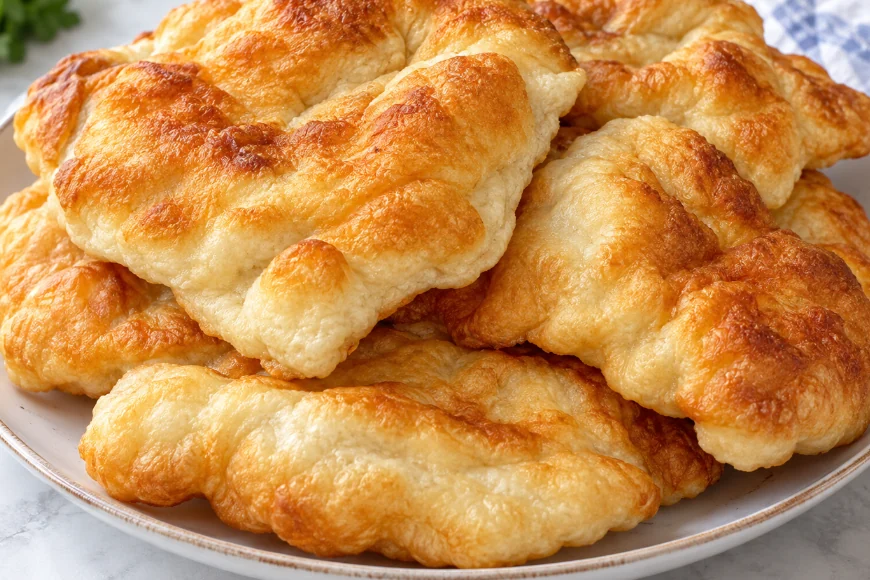
Mekike are soft Balkan fried flatbreads made from yeast dough, pulled gently into irregular rounds and fried until golden. The edges develop a light crust while the inside stays tender and airy. This mekike recipe uses flour, water, yeast, a little sugar, salt, and sunflower oil; there is no yogurt, milk, or egg in the dough.
Allow time for a proper rise and a short rest after dividing. The dough should feel soft and slightly tacky, and oiled hands make it easier to stretch without adding flour. A thermometer helps keep the oil hot enough for steady frying without browning the surface before the middle cooks.
Serve them warm for a family breakfast or a relaxed weekend brunch, with cheese, a quick kajmak substitute, jam, or honey on the side. The base batch makes eight large flatbreads, or four substantial servings. Use the Metric selector for the original measured formula; the US volumes are convenient rounded equivalents.
Mekike – Balkan Fried Yeast Flatbreads
Ingredients
- 4 1/6 cups all-purpose flour Spoon into the cup and level; German Type 550 is the original flour.
- 1 1/3 cups water Lukewarm, about 90–95°F (32–35°C); US volume is rounded.
- 2 1/4 tsp active dry yeast
- 2 tsp granulated sugar
- 1 2/3 tsp fine salt Not kosher salt; weighing is more precise.
- 1 tbsp sunflower oil For the dough.
- 1-2 tbsp sunflower oil For a thin coating on the bowl, work surface, and hands; use only as needed.
- 3-3 3/4 cups sunflower oil Approximate frying supply, depending on the pot. Maintain safe depth and headroom; this is not the amount absorbed.
Equipment
- Kitchen scale Recommended for the flour and small dry ingredients.
- Large mixing bowl
- Dough scraper
- Deep heavy pot About 8–9 inches wide, with enough depth to keep the oil below one-third full.
- Deep-fry thermometer
- Slotted spoon Or heat-safe tongs.
- Wire rack Set over a tray; paper towels also work.
Method
- Activate the yeast. Stir the yeast and sugar into about one-third of the measured lukewarm water. Leave for 5–10 minutes, until bubbly. If it shows no activity, check the yeast before continuing.
- Mix and knead. Add the yeast mixture, remaining water, dough oil, and salt to the flour. Mix until no dry flour remains, then knead for 8–10 minutes until elastic. Keep the dough soft and slightly tacky; do not work in extra flour just to make it dry.
- Let the dough rise. Use a little shaping oil to coat the bowl, cover, and leave in a warm, draft-free place for about 60 minutes, until noticeably expanded and airy. A cool kitchen may need longer.
- Divide and rest. Lightly oil the work surface and hands. Ease the dough out without punching it down. Make two equal pieces for every serving selected above, keeping each piece about 3.8 oz (107 g). Round loosely, cover, and rest for 15 minutes.
- Heat the oil safely. During the short rest, heat the frying oil in the deep pot to 340–350°F (170–175°C), checking with a thermometer. Aim for about 1 inch of oil while keeping the pot no more than one-third full. Keep water away, use dry utensils, and stay beside the stove.
- Stretch by hand. With lightly oiled hands, gently pull one piece from the center outward into an irregular flatbread about 5–5½ inches (12–14 cm) across. Keep the middle thinner than the rim without tearing it. Do not use a rolling pin. Shape the next pieces as space becomes available.
- Fry in small batches. Lower the dough gently into the oil away from your body. Fry only one or two flatbreads at a time, about 60–90 seconds per side, until golden and puffed. Keep the oil at 340–350°F (170–175°C), allowing it to recover between batches. More dough requires more batches, not a deeper pot of oil.
- Check and drain. Lift out and drain briefly on a rack or paper towels. Let the first flatbread cool enough to handle and open it: the center must have a set, airy crumb with no wet or gummy dough. If it browns before the center cooks, reduce excessive heat and stretch the next pieces more evenly. Do not taste raw dough.
- Serve warm. Finish frying the remaining pieces in small batches and serve promptly, allowing them to cool briefly before eating. Offer cheese, kajmak, ajvar, jam, or honey separately; toppings are not included in nutrition.
Nutrition
Notes
Mekike and uštipci: two different preparations
Regional names and family recipes overlap, so one distinction does not cover every Balkan household. In this preparation, mekike are larger pieces of yeast dough that rise before being stretched by hand. Our Bosnian uštipci use yogurt, egg, and baking powder and are dropped from spoons as smaller fritters.
The two doughs require different handling. Do not add baking powder to speed up these mekike, and do not roll them flat with a rolling pin. For an oven-baked bread to slice and share, try pogača instead.
Flour, yeast, and measuring in a US kitchen
The original flour is German Type 550 wheat flour. Ordinary US all-purpose flour is a practical match for this dough, although the grading systems are different and absorption varies between brands. Avoid self-rising flour, which brings its own leavener and salt. Weighing the flour is the most reliable approach; the cup conversion assumes 120 g per cup, spooned in and leveled.
Use active dry yeast and activate it in part of the measured water with the sugar. The water should be lukewarm, about 90–95°F (32–35°C). After five to ten minutes it should show bubbles. Keep the remaining water for mixing; the activation liquid is part of the total, not an extra addition.
Fine salt measures differently from coarse kosher salt. The spoon quantity assumes approximately 6 g per teaspoon, so weighing avoids differences between brands. The dough oil is separate from the thin coating used while shaping and from the larger frying supply.
Recognize a soft, properly risen dough
The original formula has 64% water relative to flour weight. After eight to ten minutes of kneading it should be elastic and soft, with some tackiness remaining. Adding flour until it no longer sticks at all can produce heavy flatbreads. Use a scraper and a lightly oiled surface to handle it instead.
Give the covered dough approximately an hour in a warm, draft-free place. Look for clear expansion and airiness; a cooler room may need longer. Ease it onto the work surface without punching it down, divide gently, and allow the pieces another fifteen minutes to relax.
The working estimate is about one hour and fifty-five minutes: twenty minutes of preparation, seventy-five minutes of rising and resting, and twenty minutes of frying. Heat the oil during the final rest. The clock is a guide; a slower rise or frying one piece at a time can extend the total.
Stretch gently and control the frying oil
Pull each rested piece outward with lightly oiled hands until it is roughly 5–5½ inches (12–14 cm) across. An irregular outline is normal. Keep the middle thinner than the puffy rim, and avoid a thick central lump that will take longer to cook. A rolling pin presses out the air you have spent time developing.
Use a deep, heavy pot with about an inch of oil and ample empty space above it. Never fill it beyond one-third full. The listed oil amount is an approximate supply for a suitable pot, rather than a requirement to pour every drop into any pan. Monitor 340–350°F (170–175°C) with a thermometer, and fry one or two pieces at a time with room to float.
Lower dough close to the oil, away from your body, using dry utensils. Stay at the stove and keep water away. Keep a fitting lid nearby; if a small pan fire starts and it is safe to act, turn off the heat and slide the lid over the pan. Do not move the pan or use water. Let the oil cool completely before handling it afterward.
Check the middle, then adjust the next batch
Frying usually takes about sixty to ninety seconds per side. After the first piece cools briefly, open it to check for a set, airy crumb without wet or gummy dough. Golden color alone is not proof that the center is cooked, and raw dough should not be tasted.
A dark exterior with an undercooked middle points to excessive heat or uneven thickness. Check the thermometer and stretch the next pieces more evenly. If frying becomes sluggish or greasy, give the oil time to recover before adding more dough. Drain the cooked flatbreads briefly and avoid stacking them under a tight cover while they are steaming.
Making a larger batch
At 2x, make sixteen flatbreads for eight servings; at 3x, make twenty-four for twelve servings. Keep each piece roughly the same size. More dough needs more frying batches, so the cooking time increases. The same pot should keep the same safe oil depth and headroom even when the ingredient selector multiplies the approximate oil supply.
The displayed nutrition is a model, not a measurement of the finished frying batch. It includes the dough oil and assumes another 50 g of oil is retained from shaping and frying across the base batch. Most of the oil remains in the pot. Actual absorption changes with technique, so calories and fat are approximate; toppings are excluded.
Serving, storage, and reheating
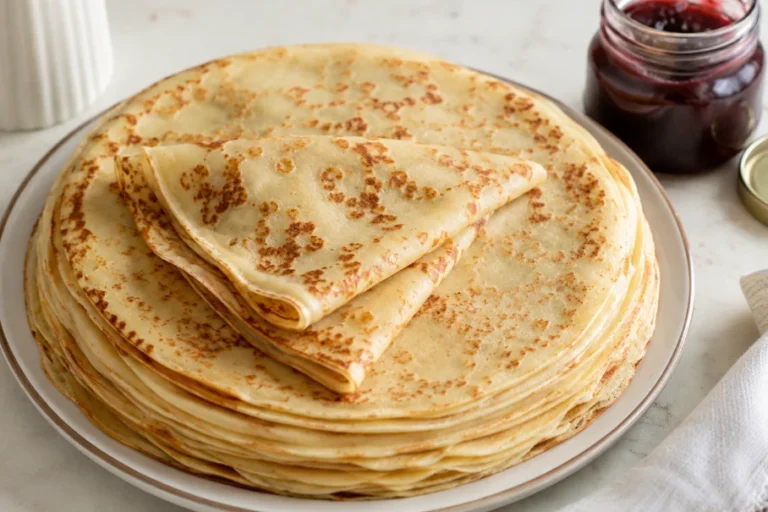
Serve mekike shortly after frying, once they have cooled enough to eat comfortably. Mild white cheese, kajmak-style spread, or ajvar make savory accompaniments. Jam and honey suit the same lightly seasoned dough without changing the recipe. Jam-filled palačinke are another Balkan breakfast choice, made with a pourable batter cooked thin in a skillet rather than mekike’s fried yeast dough.
For leftovers, cool promptly and refrigerate in a closed container within two hours, or one hour if the room is above 90°F (32°C). Use within two days for best quality. Reheat in a 350°F (175°C) oven for about six to ten minutes, checking for 165°F (74°C) throughout. A microwave softens the crust.
Freeze cooled flatbreads for up to a month for best quality, then thaw in the refrigerator and reheat. They will be softer than freshly fried mekike. Store cheese and other perishable accompaniments separately.
Mekike questions
Can I add yogurt or eggs?
Those ingredients appear in other versions, but they change this water-based dough. Keep the formula as written for these mekike rather than adding dairy or eggs without adjusting the whole recipe.
Can I skip the second rest?
The short rest relaxes the dough so it stretches more easily. If a piece keeps springing back, keep it covered and give it a little more time instead of forcing it thin.
Can these be baked instead of fried?
The dough can be baked, but the crust and texture will be different. The puffed surface and tender fried crumb of this preparation depend on the oil bath.