
Cicvara Recipe – Cornmeal with Kajmak and Cheese
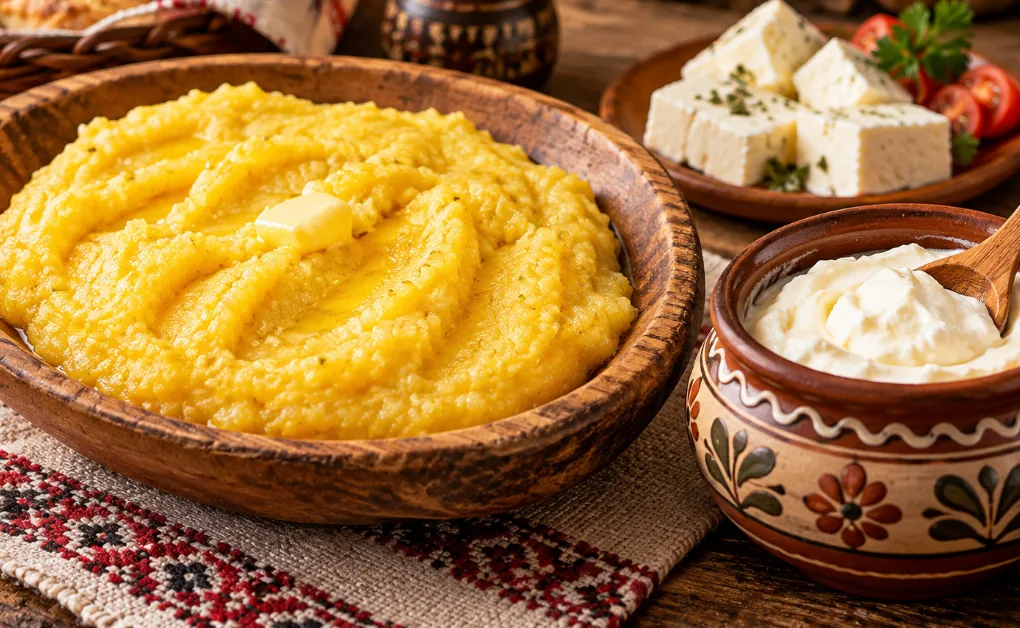
Cicvara is a rich western Balkan cornmeal dish cooked with milk and water, then worked with kajmak, butter, and mild white cheese. It should be thick enough to spoon onto a plate yet creamy enough to relax slowly rather than sit as a dry lump. A light gloss and small streaks of dairy fat are characteristic of the finished dish.
This version keeps the corn, liquid, and dairy proportions together: finely ground corn flour cooks first, kajmak is added in portions, and the butter and crumbled cheese follow. Gentle heat and firm stirring matter throughout. The goal is tender corn and a cohesive, creamy mass, not simply a pot that has become thick.
Serve cicvara immediately as a substantial breakfast or simple main dish, with cool plain yogurt or cultured sour milk if desired. The recipe makes four servings. For US shopping, choosing the correct corn product and a suitable dairy kajmak is essential; neither cornstarch nor a generic cream-cheese spread is an automatic substitute.
Cicvara
Ingredients
- 2 1/8 cups water US volume rounded
- 1 2/3 cups whole milk pasteurized whole milk; standard US whole milk is suitable
- 7.75 oz finely ground corn flour plain milled corn or fine cornmeal, not cornstarch or masa harina
- 6.4 oz kajmak commercial Balkan dairy kajmak; see ingredient guidance
- 4.25 oz mild young white cheese or mild white brined cheese, drained and coarsely crumbled
- 1 3/4 tablespoons unsalted butter
- 1/3 - 2/3 teaspoon fine salt to taste; begin at the low end and finish seasoning after the dairy is incorporated
- 5.3 oz plain yogurt or cultured sour milk served separately; use plain unsweetened yogurt or a cultured sour-milk product, not spoiled milk
- 1.75 oz mild young white cheese additional serving cheese, optional
Equipment
- Heavy saucepan about 3 quarts (3 liters) for the base quantity; use a larger pot with ample stirring room when scaling
- Whisk for adding the corn flour
- Sturdy wooden spoon for working the thick mixture
- Kitchen scale and measuring jug
- Small bowl and fork for crumbling the cheese
- Large serving spoon and warmed bowls
- Food thermometer for checking reheated leftovers
Method
- Warm the milk and water. Combine the measured water and whole milk in a heavy saucepan. Heat gently over medium heat. While it warms, weigh the corn flour, kajmak, butter, and cheese and prepare your utensils.
- Salt lightly. Add only the low end of the listed salt range at first. Kajmak and white cheese may already be salty, so reserve further seasoning until the end.
- Whisk in the corn flour. When the liquid reaches a gentle simmer, reduce to low to medium-low heat. Sprinkle in the corn flour slowly in a thin stream while whisking constantly. Do not dump it in as one mound.
- Smooth the mixture. Keep whisking firmly for 2–3 minutes, until no dry flour pockets remain and the mixture begins to thicken.
- Cook the corn base. Switch to a sturdy wooden spoon as the mixture thickens. Cook over low heat for about 10 minutes, stirring frequently and firmly across the bottom and around the sides so the milk and corn do not catch.
- Work in the kajmak. Add the kajmak in three or four portions. Stir each portion completely into the hot corn mixture before adding the next. Keep the heat low rather than boiling the dairy hard.
- Melt in the butter. Add the butter and stir until completely melted and incorporated.
- Crumble and add the cheese. Coarsely crumble the mild white cheese with a fork, then stir it into the cicvara. Small soft pieces may remain; it does not need to disappear completely.
- Finish over low heat. Continue cooking and stirring firmly for another 8–10 minutes. Scrape across the bottom and the edges regularly. The fine corn should become tender and lose its raw, gritty character; a coarser product may take longer.
- Check the texture. Look for a thick, creamy, glossy mass that briefly leaves a spoon trail, begins to pull away from parts of the pot as you stir, and shows small shiny streaks of fat. It should slowly relax when spooned onto a plate, not be dry or crumbly. Fat sheen alone is not a doneness test.
- Adjust and season. If too stiff, stir in a little hot milk at a time, using only as much as needed to restore a creamy texture. Taste once the corn is cooked and the dairy is incorporated, then add any remaining salt only as needed.
- Serve immediately. Spoon the hot cicvara into warmed shallow bowls or plates. Offer the optional cool yogurt or cultured sour milk and extra young cheese separately. The dish firms as it cools and is best served directly from the pot.
Notes
- Corn flour. Use finely ground whole-corn flour or fine cornmeal made from plain corn. This is not cornstarch, masa harina, self-rising cornmeal mix, or instant polenta. Fine polenta can be used if it is plain finely ground corn; coarser meal needs longer cooking and may require texture adjustments not established here.
- Kajmak. Use a commercially prepared, properly refrigerated Balkan dairy kajmak with the rich cream character intended for savory cooking. Check its ingredients and salt level. Products bearing the name may be cheese-and-oil spreads and are not automatically equivalent. No tested cream-cheese, sour-cream, or butter replacement is specified, and this recipe does not depend on a homemade kajmak method.
- Cheese. Use a mild young white cheese or mild white brined cheese, drained of free brine. Very dry or salty feta can dominate the dish; it is not a neutral automatic swap.
- US measures and salt. Ounces are weights; the water and milk volumes are rounded. Fine salt volume assumes about 6 g per teaspoon. Metric preserves the source amounts, including the 2–4 g salt range. Begin at the low end and season only after the kajmak and cheese are incorporated.
- Timing and scaling. The 10-minute prep estimate includes warming the milk-water mixture while weighing the dairy ingredients. About 25 minutes of active cooking follows the corn flour addition; actual time depends on grind, pot, heat, and batch size. There is no planned resting stage. At 2x or 3x, use a larger heavy pot, maintain gentle heat, and judge the corn texture instead of multiplying time mechanically.
- Texture. The finished cicvara should be thick but creamy, leaving a brief trail behind the spoon and slowly relaxing on the plate. Small glossy fat streaks are typical, but neither a fat sheen nor pulling away from the pot proves that coarse grains are cooked. Check tenderness as well. For a mixture that becomes too stiff, add hot milk a little at a time; small adjustment amounts are additional to the fixed formula.
- Storage. Serve fresh. Divide leftovers into shallow containers and refrigerate promptly, within 2 hours (1 hour above 90°F/32°C); keep at 40°F/4°C or below and use within 2 days. Do not cool the entire deep pot on the counter. Reheat gently with a little milk or water, stirring until hot throughout and reaching 165°F/74°C.
- Nutrition pending. A defensible complete-recipe estimate requires the actual kajmak and cheese labels, whose fat, moisture, and salt content vary widely. Numerical nutrition has been left blank rather than assigning a generic value to an unverified dairy product. Optional yogurt and serving cheese would need to be calculated separately.
Where cicvara fits in western Balkan cooking
Cicvara belongs to the rural and mountain cooking traditions of several parts of the former Yugoslavia. It is particularly associated with Montenegro, eastern Herzegovina, parts of Serbia, and the Krajina. Household preparations differ in their liquids and dairy ingredients, so one fixed list should not be presented as the universal regional formula.
Some versions cook the corn in water alone and gain most of their richness from kajmak or skorup. Others include milk, young cheese, or cultured dairy. Here, milk and water form the cooking liquid, with both kajmak and young white cheese incorporated afterward. For a different Balkan breakfast, Bosnian uštipci are quick yogurt fritters rather than a cornmeal dish. It is a deliberately rich dish; the dairy is part of the preparation, not just a topping added to plain porridge.
Choose the right finely ground corn
Corn flour, fine cornmeal, and cornstarch
Look for plain finely milled whole corn: a fine corn flour or fine cornmeal with corn as its ingredient. In US stores, corn flour can mean a finely ground corn product, while in some English-language contexts the same term is used for cornstarch. Read the ingredient list and texture description rather than relying on the name alone. White, powdery cornstarch is isolated starch and will not produce this dish.
Fine plain polenta can also be suitable when it is finely ground corn. Coarse polenta or coarse grits need longer to become tender and give a more granular texture. Do not apply the same timing to a coarse product and assume that thickening means it has cooked through. Instant polenta, self-rising cornmeal mix, and masa harina are different products and are not the specified ingredient.
The source allows a fine to medium grind, with a finer grind producing the smoothest result and a medium grind a more rustic texture. This card specifies the fine option to match the intended cooking sequence. Weigh the corn flour; the packing and density of different corn products make cup conversions less dependable.
Kajmak, young cheese, milk, and butter
Kajmak supplies the characteristic dairy richness
Kajmak gives cicvara much of its cream character and rich flavor. Buy a commercially prepared Balkan dairy kajmak from a reputable chilled or frozen supply, follow its storage and thawing instructions, and check the ingredient label. American specialty markets sell products with different formulations under the same name. A label saying kajmak does not by itself establish that the contents are traditional cream-based kajmak.
Some commercial versions are mixtures of cheese and vegetable-fat blends. Their flavor, fat level, salt, and behavior in the pan can differ substantially from the dairy product intended here. Cream cheese, sour cream, heavy cream, butter, and mascarpone are not individually interchangeable with the specified kajmak. This recipe does not provide a tested replacement blend. If you cannot identify a suitable product, resolve that ingredient before beginning rather than changing the formula mid-cook.
This preparation uses purchased kajmak and does not require making it at home. Keep it refrigerated as directed and bring only the measured amount to the stove. A cooking step does not make poorly handled dairy an appropriate ingredient.
Use mild young white cheese
Choose a mild young white cheese or a mild white brined cheese, drained of loose brine and crumbled with a fork. It adds a lightly tangy, salty dairy flavor and some body. Small soft pieces can remain in the finished cicvara; the cheese does not have to dissolve into a perfectly featureless sauce.
Very dry, strongly aged, or highly salty feta can dominate this amount of corn and milk. A product sold as white cheese should still be checked for age, saltiness, moisture, and ingredients. The recipe allows mild brined cheese, but that does not make every feta-style product an equal match. Taste the dairy products when safe and appropriate, then season the whole dish cautiously.
Check the milk fat rather than assuming
Buy pasteurized whole milk. In the United States, standard whole milk contains at least 3.25% milkfat and is suitable for this recipe. The source uses milk with at least 3.5% fat; a higher-fat whole milk can give a slightly richer, fuller texture, but you do not need a specialty milk or added cream. Keep the listed milk quantity unchanged.
The listed butter remains separate from the kajmak. It is stirred in after the kajmak has been incorporated. Use ordinary unsalted butter so that additional salt stays under your control; there is no clarification step.
Start with warm liquid and add the corn gradually
Use a heavy-bottomed saucepan with enough room to stir vigorously. A roughly 3-liter, or 3-quart, pot suits the base quantity. Combine the measured water and milk and warm them gently while weighing the other ingredients. This overlap is part of the ten-minute preparation estimate.
Add only the low end of the salt range initially. The kajmak and cheese may already contain substantial salt, and their effect is easier to judge once they are fully incorporated. Starting with the upper end would leave less room for correction.
When the liquid reaches a gentle simmer, lower the heat and sprinkle in the corn flour in a thin stream, whisking continuously. Dumping it in at once can leave dry centers sealed inside lumps. Continue whisking for two to three minutes so that no dry flour pockets remain, then switch to a sturdy wooden spoon as the mixture thickens.
Cook the corn base before adding the dairy
Cook the thickened base over low heat for about ten minutes, stirring frequently and firmly. Sweep across the bottom and into the edges rather than circling only through the center. Milk and fine corn can catch on the pot before the surface looks particularly dry.
This first cooking stage allows the corn to absorb liquid and begin becoming tender before the rich dairy is added. Do not treat it as finished simply because it resists the spoon. A coarse grind can become thick while still feeling gritty and needing more cooking time.
The twenty-five-minute cooking estimate covers the active corn-cooking stages, including the later eight to ten minutes after the dairy is added. Actual time depends on grind, heat, pot, and quantity. The recipe has no planned resting or setting stage; it is intended to go from the stove to the table.
Work in kajmak, butter, and cheese in order
Add the kajmak in three or four portions, stirring each into the hot corn mixture before adding the next. This makes it easier to distribute evenly through the dense base. Keep the heat low; a hard boil is not needed to combine it.
Stir in the butter until melted, then add the coarsely crumbled young cheese. Continue working the mixture firmly over low heat for another eight to ten minutes. Scrape the bottom and edges regularly, using a spoon strong enough for the increasing resistance. Small, soft cheese pieces are acceptable, while dry corn pockets are not.
As the corn cooks and the dairy is distributed, the mass becomes more cohesive and glossy. This steady stirring is part of the technique rather than an occasional finishing gesture. Raising the heat to hurry it risks scorching the milk, corn, and cheese against the bottom.
Recognize properly cooked cicvara
Finished cicvara is thick and creamy, with tender corn and a glossy surface. Drawing the spoon through it leaves a trail briefly, and portions of the mass begin to pull away from the pot as you stir. On a plate, a spoonful should slowly relax rather than spread like soup or remain as a dry, crumbly mound.
Small shiny streaks of fat are a typical sign in this rich preparation. They are not a reason to keep adding fat, and a sheen alone does not prove that the corn is tender or the dish has cooked sufficiently. Check the texture as well as the appearance. A large greasy pool with a stiff underlying mass is different from a light gloss.
If the cicvara becomes too stiff, stir in a little hot milk at a time, only until it is creamy again. The source suggests small spoonfuls, not an unrestricted pour. Adjustment milk is additional to the measured starting formula and will vary with the corn and evaporation. Taste for salt only after the corn is cooked and the kajmak and cheese are incorporated.
Cicvara compared with other corn and dairy dishes
Kačamak and belmuž
Regional names are not perfectly uniform. The potato-based Montenegrin smočani kačamak preparation, however, begins with cooked potatoes and cornmeal that are worked together and enriched with dairy. This cicvara has no potatoes; the corn is cooked directly in its liquid before the dairy is incorporated.
Eastern Serbian belmuž is another distinct preparation, centered on a large quantity of very young melted cheese, with corn flour serving primarily to bind that cheese mass. Sharing corn and dairy does not make the dishes interchangeable or justify transferring their ratios to this recipe.
Polenta, proja, and popara
Plain polenta is generally corn cooked with water and salt, although enriched variations certainly exist. In cicvara, substantial dairy and fat are integral to the dish. Proja uses corn flour in a baked preparation with a bread-like crumb, while cicvara stays a soft stovetop dish. Popara starts with already baked, often day-old bread softened in warm liquid and dairy rather than with corn flour.
Troubleshooting cicvara
Lumps or persistent grit
Lumps are easier to prevent than remove: add the corn slowly while whisking and break up any dry pockets early. Persistent gritty texture may indicate a coarser product or insufficient cooking. Check the package and grain texture rather than simply stirring in more kajmak to disguise it.
Scorching or a bitter bottom
Use a heavy pot, gentle heat, and strokes that reach the entire bottom and sides. High heat and long gaps between stirring encourage catching. If the bottom scorches, do not scrape the burnt layer into the rest of the dish. Adding extra butter does not reverse a burnt flavor.
Too thin, too stiff, or overly greasy
A thin mixture may still need time for the corn to absorb liquid, or the initial liquid may have been mismeasured. A dry, stiff mixture can be loosened gradually with hot milk. Check tenderness first, and make small adjustments rather than repeatedly alternating large additions of corn flour and milk.
A slight fat gloss is expected; pronounced separation calls for checking heat, stirring, and the actual kajmak formulation. Adding more fat is not the default solution. Do not use gloss alone as a signal to stop if the corn remains gritty.
Too salty or firm after standing
Kajmak and brined cheese are the main reasons to delay final seasoning. Start low and taste near the end; this recipe does not give a reliable quick fix for a heavily oversalted pot. Cicvara also thickens as it cools, so serve promptly instead of leaving it to set while preparing unrelated dishes.
Serve hot and store dairy-rich leftovers promptly
Spoon cicvara directly into warmed shallow bowls or plates. Cool plain yogurt or cultured sour milk provides a fresh contrast to the richness; cultured sour milk means a food intentionally fermented for eating, not milk that has spoiled. Offer the optional extra young cheese separately. The dish is already substantial, so heavy starch accompaniments are generally unnecessary.
For leftovers, divide the mixture into shallow containers and refrigerate promptly, within two hours of cooking or one hour if the surroundings exceed 90°F (32°C). Do not wait for a deep pot to cool completely on the counter. Keep refrigerated at 40°F (4°C) or below and use within two days, following any earlier limit on the dairy ingredients.
Reheat slowly over low heat with a little milk or water, stirring across the bottom and through the center until evenly hot. Check that reheated leftovers reach 165°F (74°C). Cold cicvara firms substantially; loosening it is a reheating adjustment, and its texture may differ from a freshly cooked batch. No tested freezing schedule is specified for this formula.