Krempita Recipe – Balkan Vanilla Custard Slices
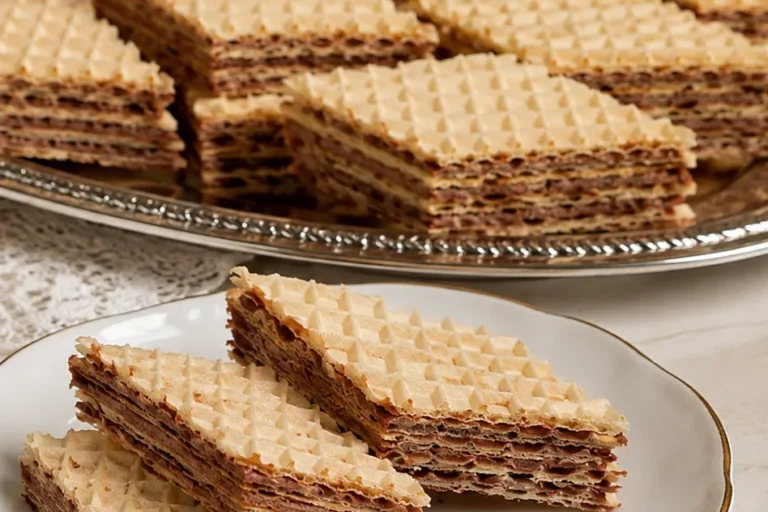
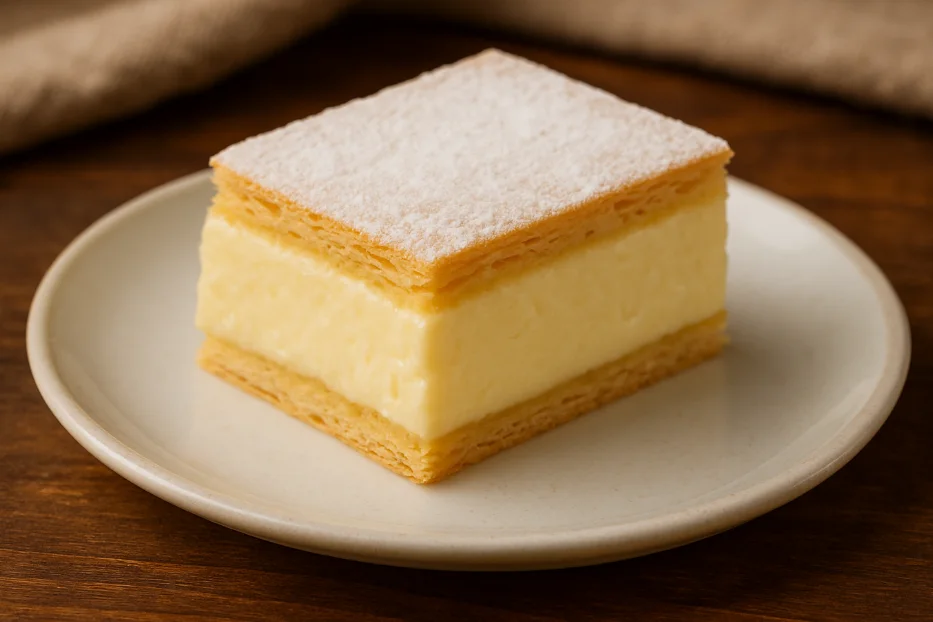
Krempita is a Balkan custard slice with a tall vanilla filling between two separately baked sheets of puff pastry. This version gets its airiness from egg-white foam that is heated before whipping and folded into cooked yolk custard. It has neither gelatin nor a separate layer of whipped cream.
The practical details matter: bake the pastry flat between trays, cut the top into serving pieces before assembly, and cook the starch-thickened custard fully. The recipe uses a specific 30 × 20 cm pan so the filling has the intended height, rather than spreading it thinly across a larger baking dish.
Plan for about seven hours and thirty-five minutes, including at least six hours of refrigerator chilling, with extra time if cooling or pastry batches take longer. This krempita recipe includes US ingredient guidance and a monitored rapid-cooling procedure. Refrigeration time alone cannot establish safe cooling; check central temperatures as directed.
Krempita – Balkan Vanilla Custard Slices
Ingredients
- 17.64 oz puff pastry thawed but cold; no alcohol or pork fat; weigh rather than count packages
- 0.71 oz powdered sugar for dusting just before serving
- 4 1/4 cups whole milk US volume rounded; divide one-fifth cold and four-fifths for heating
- 6 large eggs US adaptation of German medium eggs; separate whites and yolks
- 5.29 oz granulated sugar custard portion
- 2.47 oz granulated sugar egg-white portion
- 3.53 oz cornstarch pure starch, not cornmeal
- 1.76 oz all-purpose flour US adaptation of German Type 405; not self-rising
- 0.56 oz vanilla sugar additional to the granulated sugar; weigh the product
- 1 vanilla bean split; seeds and pod used for infusion, pod removed
- 1/6 tsp fine salt US volume approximate; a small-quantity scale is more precise
Equipment
- Kitchen scale
- Metal cake pan 30 × 20 cm; at least 6 cm deep; leakproof
- Two baking sheets
- Parchment paper oven-rated for 400°F
- Rolling Pin
- Fork
- Serrated knife
- Heavy saucepan
- Heatproof bowl
- Small saucepan
- Hand mixer
- Whisk
- Silicone spatula
- Offset spatula
- Fine sieve
- Food thermometer
- Larger basin for ice-water cooling below the cake-pan rim
- Cooling rack
Method
- Prepare the pan. Line the specified metal pan with parchment, leaving lifting overhang on two sides. Preheat a conventional oven to 400°F (200°C). Set out a larger basin and ice for prompt cooling later. At enlarged settings, use one base-size pan per multiplier and work in separate base-size batches.
- Bake both pastry sheets. Divide the pastry equally into a bottom and a top for each cake. Roll each portion to about 12⅝ × 8⅝ inches (32 × 22 cm) on oven-rated parchment. Prick densely with a fork, cover with another parchment sheet, and weight with a second oven-safe baking sheet or rack. Bake each sheet for about 16–18 minutes until golden and fully baked, then cool completely on a rack. Repeat for the other sheet; allow extra baking rounds when scaling.
- Trim and pre-cut the top. Trim the cooled sheets to the pan's 30 × 20 cm interior. Put one whole sheet in the pan. Cut each matching top into a 3-by-4 grid before assembly; this gives one top piece per serving for a base-size cake. Keep the pieces in order. Do not mix trimmings into the custard.
- Separate and heat the whites. Separate the eggs individually. Put yolks in one bowl and whites in a completely grease-free heatproof bowl. Add the egg-white sugar and salt to the whites. Set over gently simmering water without the bowl touching it. Whisk continuously, sweeping the whole mixture, until a food thermometer registers at least 160°F (71°C) throughout; do not rely on appearance or the old lower-temperature criterion. Remove from heat and beat immediately to firm, smooth, glossy peaks. Do not continue heating into scrambled whites. Keep only briefly while finishing the custard.
- Infuse the milk. Reserve one-fifth of the milk cold. Split the vanilla bean and scrape its seeds into the remaining milk with the pod. Heat gently until just below boiling, then remove the pod.
- Make the yolk slurry. Whisk the yolks with the custard sugar and vanilla sugar for about 2 minutes. Add the cornstarch and flour, then gradually whisk in the reserved cold milk until smooth, with no dry pockets. Do not add dry starch directly to hot milk.
- Cook the custard fully. Slowly whisk the hot infused milk into the yolk mixture, then return everything to the heavy saucepan. Cook over medium heat, whisking across the base and corners, until thick and bubbling throughout. Reduce the heat and keep it gently bubbling for 2 minutes while stirring continuously. Check that the well-stirred custard has exceeded 160°F (71°C); thickening alone is not the egg-safety check. Remove from heat and immediately sieve out small lumps if needed, before adding foam.
- Fold and assemble promptly. Whisk about one-third of the heated egg-white foam into the still-hot cooked custard to lighten it. Fold the rest in two additions with a broad spatula, stopping when no large white patches remain. Immediately spread over the bottom pastry without pressing out the air. Set the pre-cut top pieces lightly in their original arrangement.
- Cool with temperature checks. Begin active cooling immediately in the prepared clean ice-water bath, keeping water below the leakproof pan rim and away from the cake. Refresh the ice and check the warmest central custard with a cleaned thin probe. Transfer promptly to a refrigerator at 40°F (4°C) or below, with space around the pan and only a loose protective cover. Starting the clock at assembly, reach 70°F (21°C) within 2 hours and 41°F (5°C) or below within 6 hours total; aim for 40°F (4°C) storage. Do not leave it on the counter for a fixed cooling rest. Discard if limits are missed or cooling history is uncertain. See the monitored-cooling notes.
- Chill and slice. Allow at least 6 hours in the refrigerator for the filling to set, in addition to meeting the cooling checks. Dust with the measured powdered sugar just before serving. Cut through the cream along the top-piece gaps, then saw gently through the base with a sharp knife. Wipe the blade between cuts and refrigerate remaining portions promptly.
Notes
- Use a leakproof metal pan measuring 30 × 20 cm (about 11¾ × 7⅞ inches), at least 6 cm (2⅜ inches) deep. Do not use a larger US 9 × 13-inch pan for the same amount. At 2x use two identical pans; at 3x use three. Prepare and cool each base-size custard batch separately rather than heating one oversized pot.
- The ingredient rows split the original granulated sugar between custard and egg whites so both portions scale. Vanilla sugar is additional; retain both it and the vanilla bean. Do not substitute liquid vanilla extract without separately adjusting the sugar and aroma. US ounces are weights; rounded volumes are approximate. Metric preserves the reference formula.
- Six US large eggs are a practical adaptation of six German medium eggs, approximately 300 g edible egg in the nutrition calculation. Separate carefully, with no yolk in the whites. The heated whites must reach 160°F (71°C) throughout before beating; raw foam is not made reliably safe merely by folding into hot custard.
- Start active cooling as soon as the cake is assembled. Use a leakproof metal pan in a clean ice-water bath below its rim, without wetting the pastry, and refresh the ice. Check the custard's warmest central area with a cleaned thin probe. Move promptly to a refrigerator at 40°F (4°C) or below, loosely covered and with space around the pan. Do not wait for room temperature or seal hot cake tightly.
- Using the FDA Food Code cooling benchmark, reach 70°F (21°C) within 2 hours after the center falls to 135°F (57°C), then 41°F (5°C) or below within 6 hours total from that point. For simpler conservative tracking, start the clock at assembly. Aim for storage at 40°F (4°C) or below. If a cooling limit is missed or the history is unknown, discard; a longer texture chill does not repair unsafe cooling.
- Chill at least 6 hours in the refrigerator for texture as well as meeting the measured cooling limits. The 7-hour-35-minute total is a base planning estimate; pastry cooling, active cooling, and extra pans can lengthen it. This exact tall cake's cooling curve and the heated foam have not been validated in a Balkan Feast kitchen trial. Confirm actual cooling by thermometer rather than assuming the timing guarantees it.
- Keep covered at 40°F (4°C) or below and use within 2 days as a conservative recipe limit, not a guaranteed shelf life. Keep total serving time outside refrigeration under 2 hours, or 1 hour above 90°F (32°C). Freezing is not recommended for the custard and pastry texture.
- Nutrition is an independent estimate per one-twelfth. It counts all measured pastry before trimming, all dusting sugar, milk at 1.03 g/ml, and 300 g edible whole egg. USDA composition is used for milk, eggs, and sugars; King Arthur all-purpose flour and Bob's Red Mill cornstarch labels are used. Campbell's Food Service Canada puff pastry data (390.7 kcal/100 g) is an explicit pastry proxy, not a claim about every US brand. Vanilla sugar is approximated as granulated sugar; the removed bean pod and its trace seeds are not quantified. Trimmings not eaten with the cake, brand fat levels, and portion sizes change intake.
Two Pastry Layers and One Airy Vanilla Filling
Krempita and related kremšnita appear in different regional and household forms. Here the defining structure is one continuous custard layer: yolks, milk, sugar, cornstarch, and flour provide the base, while separately heated whites lighten it. Calling every cream slice the same recipe hides meaningful differences in thickener, pastry, and added cream.
This is a different dessert from syrup-soaked Bosnian baklava. Its crisp layers are puff pastry, not phyllo, and the filling is a refrigerated egg-and-milk custard rather than walnuts and syrup. Keep the ingredients and method together instead of borrowing a whipped-cream layer or gelatin from another version.
Buy Puff Pastry by Weight
Use 500 grams, about 17.64 ounces, of plain puff pastry for the base batch. A common US 17.3-ounce box is approximately 490 grams, so it is slightly short; other products have different sheet sizes and weights. Weigh the dough and divide it evenly instead of assuming that one box or two sheets always supply the same amount.
Choose a product without pork fat or alcohol, checking the current ingredient label. Butter-based and vegetable-fat pastries can have different richness and baking behavior. Thaw according to the manufacturer while keeping the dough cold enough to handle. Do not replace it with phyllo or ordinary pie crust.
Roll each half a little larger than the pan, about 32 × 22 cm. Pastry shrinks and edges distort during baking, so trim only after it is fully baked and cool. The trimmings are separate snacks, not a thickener to stir into the filling. Nutrition conservatively counts all the starting pastry, although the served cake may not include every trimming.
US Milk, Flour, Cornstarch, and Vanilla Sugar
Plain US whole milk, with at least 3.25% milk fat, is a practical adaptation of the source’s approximately 3.5% milk. Do not add cream to compensate. Keep one-fifth of the measured milk cold for the yolk slurry; the rest is heated with the vanilla bean.
German Type 405 is a light wheat flour. Ordinary US all-purpose flour is the practical choice in this cooked custard; the type number does not promise an identical protein level. Use plain flour, not self-rising flour or a seasoned mix. Cornstarch means the fine white starch sold for thickening, not yellow cornmeal or masa.
The vanilla sugar is additional to the granulated sugar, and the whole vanilla bean is also intentional. Imported vanilla sugar is available through European grocery suppliers and baking sections. Packets differ, so measure the listed weight rather than assuming every sachet is eight grams. Use an alcohol-free product suitable for your requirements.
Do not silently replace the vanilla sugar with extract: that removes sugar and changes both aroma and liquid. This card retains the specified vanilla sugar and bean. The granulated sugar is shown in two separate rows for the custard and whites so their portions scale correctly. US ounces mean weight, not fluid ounces.
Bake Flat Sheets and Pre-Cut the Top
Dock the dough densely with a fork, sandwich it between oven-rated parchment and baking sheets, and bake at 400°F (200°C) until golden and cooked through. The source estimates sixteen to eighteen minutes per sheet. Check the underside as well as the top; a pale, flexible sheet can become soggy quickly against warm custard.
Once cool, trim both layers to the pan’s exact interior. Leave the bottom whole, but cut the top into a three-by-four grid for each base-size cake. Keep the pieces in order so they fit back together. Cutting one firm, unbroken top after chilling would push down on the soft filling and squeeze it sideways.
Cook the Yolks and Heat the Whites Separately
Separate the eggs carefully, keeping the whites free of yolk and grease. Six US large eggs are a practical adaptation of six German medium eggs; the nutrition estimate assumes about 300 grams of edible egg. Egg sizes vary, and the foam’s performance has not been independently kitchen-tested for this adaptation.
Whisk the whites with their sugar and salt over a gentle water bath, with the bowl above rather than touching the water. Stir the whole mixture continuously and check with a food thermometer until it reaches at least 160°F (71°C) throughout. Remove and beat immediately to firm, glossy peaks. Stop heating before the whites turn into cooked curds; excessive direct heat works against usable foam.
The USDA egg-safety guidance uses 160°F for egg mixtures. Folding raw whites into hot custard is not a dependable substitute for measuring their own temperature. Fresh-looking eggs alone do not remove the need for this step.
For the custard, whisk starch and flour into the yolk-and-sugar mixture with the cold reserved milk before tempering with hot vanilla milk. Return it to the saucepan and whisk across the full base and corners. Once it bubbles throughout and thickens, reduce the heat and continue gentle bubbling for two minutes. Verify that the stirred yolk custard has exceeded 160°F; the boiling stage also develops the starch structure.
Fold While Warm, Then Start Cooling Immediately
If the cooked custard has small lumps, pass it through a heatproof sieve before folding in the foam. Whisk in about one-third of the foam to loosen the heavy base, then fold in the rest in two additions. Stop once the large white streaks disappear. Prolonged stirring removes the air, while trying to fold into cold, set pudding leaves an uneven filling.
Spread the still-warm filling into the prepared pan immediately and place the pre-cut top pieces lightly over it. Do not compact the cream. Have the cooling setup ready before starting the custard, rather than leaving the finished cake on the counter while finding space in the refrigerator.
A Six-Hour Chill Is Not a Cooling Safety Test
A tall pan of warm dairy custard can stay warm in its center after the outside looks cool. Use a leakproof metal pan, a clean ice-water bath below the rim, fresh ice as needed, and a clean thin-probe thermometer. Keep water out of the cake and avoid glass thermal shock. Transfer promptly to a refrigerator at 40°F (4°C) or below, with space around the pan and only a loose protective cover during cooling.
The FDA rapid-cooling guidance uses a fall from 135°F to 70°F within two hours, then to 41°F or below within six hours total. For a simpler, more conservative clock here, start timing at assembly. Check the warmest central custard rather than the surface. Aim for storage at 40°F or colder. If the limits are missed or the cooling history is unknown, discard the cake; additional refrigeration does not undo unsafe cooling.
This is a monitored procedure based on published safety principles, not a measured cooling curve for this exact cake. These steps have not been validated in a kitchen trial for this exact cake; do not assume a tall pan reaches the limits without measurements. Even when temperature limits are met, allow at least six hours in the refrigerator for clean slicing. The original fixed counter rest is not used as a safety control.
Troubleshooting the Custard and Foam
Lumps: smooth the dry thickeners with cold milk first and add hot milk gradually. Whisk continuously while cooking. Sieve small cooked lumps before adding foam; sieving afterward would flatten the filling.
Loose cream: confirm ingredient weights, full bubbling, and the two-minute cook. A short texture chill may also leave a soft center. Do not improvise extra raw starch or gelatin in an already assembled cake.
Whites will not whip: check for yolk, grease, dirty beaters, or overheating into curds. Use a completely clean bowl and gentle indirect heat. Do not replace a failed heated foam with raw whites.
The slice collapses: check chilling and cooling records first, then the custard cook, gentle folding, and pan size. Cut through the gaps in the top rather than pressing through a whole pastry sheet. A larger dish produces a lower layer and changes the intended structure.
Scaling, Serving, and Refrigerated Storage
At 1x, make one cake and twelve slices. At 2x, make two matching cakes and twenty-four slices; at 3x, make three and thirty-six. Keep each pan at 30 × 20 cm and prepare the custard in base-size batches. Extra pastry rounds, handling, and refrigerator space can extend the total time. Do not stack warm pans or put the full scaled filling into one deeper container.
Serve cold, dusting with powdered sugar just before cutting. A cup of Bosnian coffee is a natural accompaniment. For a fruit-based dessert with a different structure, tufahije uses poached apples and walnuts rather than a tall custard layer.
Once safely cooled, cover and keep at 40°F (4°C) or below. Use within two days as a conservative recipe limit, not a guarantee independent of handling. Take out only what will be served and keep cumulative time outside refrigeration below two hours, or one hour above 90°F (32°C). Freezing is not recommended here because the custard can release water and the pastry softens.
Nutrition is an ingredient-based estimate rather than a laboratory analysis or a copied source calorie count. It includes the full starting pastry and powdered sugar; pastry fat, milk composition, uneaten trimmings, and actual slice size affect the result. The recipe notes state the reference foods and approximations.