Makovnjača Recipe – Croatian Poppy Seed Roll
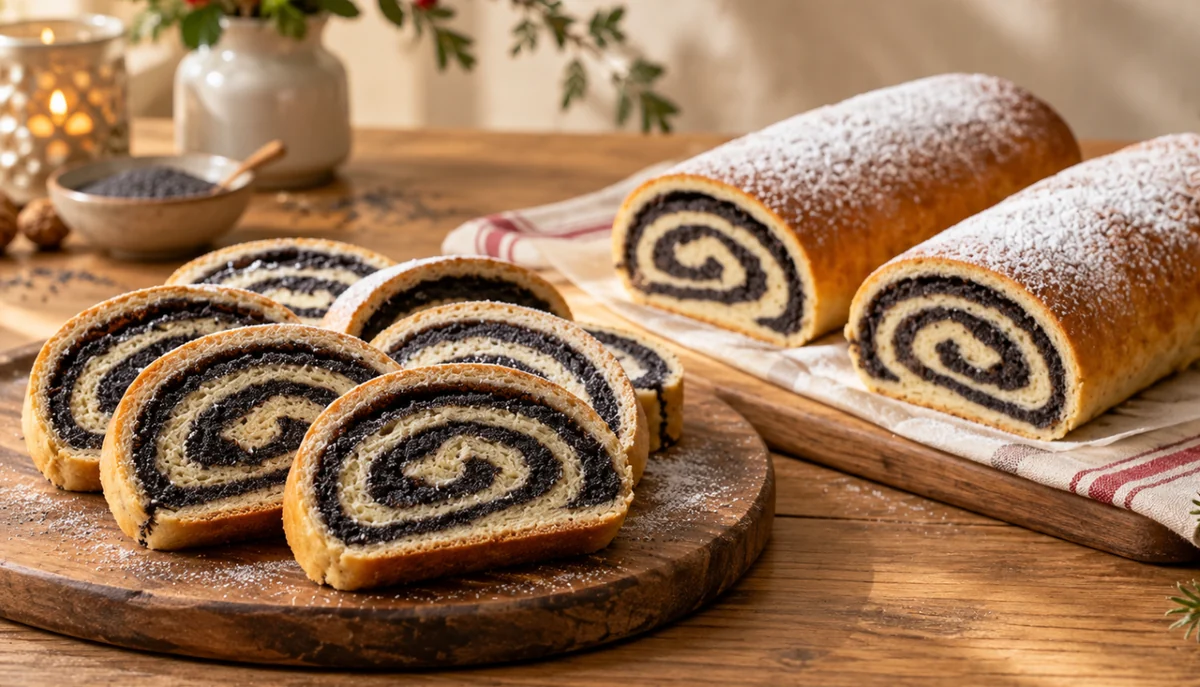
Makovnjača is a sweet Croatian poppy seed roll with soft yeast dough and a dark, generous spiral of filling. It is especially at home on a Christmas, New Year’s, or family celebration table, but it is equally suited to a slice with afternoon coffee. This version keeps the milk-and-butter dough, fresh yeast, lemon zest, and cooked ground-poppy-seed filling of the original recipe.
The filling is more than a scattering of whole seeds. Finely ground culinary poppy seeds are cooked briefly with milk, sugar, butter, vanilla sugar, and soft-wheat semolina, then cooled until spreadable. That combination helps the filling stay moist and contained while the dough expands around it.
The base batch makes two medium rolls, estimated at about 24 slices altogether. Plan for both rises and complete cooling before cutting: the schedule below allows approximately 4 hours 5 minutes, with filling preparation overlapping the first rise. The serving unit is one assumed slice, not a whole roll or a guaranteed portion weight.
Makovnjača – Croatian Poppy Seed Roll
Ingredients
- 17 1/2 oz all-purpose flour plain, not self-rising; practical US adaptation of German Type 405; weigh for best results
- 8 1/2 fl oz whole milk lukewarm, about 90°F (32°C); source whole milk, with US 3.25% milkfat a practical match
- 3/4 oz fresh compressed baker’s yeast refrigerated cake yeast, not the same weight of active dry or instant yeast
- 2 3/4 oz granulated sugar use a small portion to activate the yeast, then the remainder in the dough
- 2 3/4 oz unsalted butter melted and cooled until just lukewarm
- 1 large egg approximately 50 g without shell; practical US match for the source medium egg
- 1 large egg yolk approximately 17 g; for the dough
- 1/3 tsp fine table salt coarse or kosher salt has a different volume weight
- 1/2 lemon, finely grated zest only scrub the peel; avoid the bitter white pith
- 10 1/2 oz finely ground culinary poppy seeds plain and unsweetened, not whole seeds or a prepared sweet filling
- 8 1/2 fl oz whole milk for the filling
- 4 1/4 oz granulated sugar for the filling
- 3 1/2 tbsp unsalted butter for the filling
- 8 g vanilla sugar weighed because packet sizes vary; keep as sugar, not liquid extract
- 30 g fine soft-wheat semolina Weichweizengrieß; weighed for reliable thickening, not durum pasta semolina
- 1/2 lemon, finely grated zest only for the filling
- 1 large egg yolk separate from the yolk in the dough
- 1 tbsp whole milk for the egg wash
Equipment
- 1 Large baking sheet An 18 × 13-inch rimmed half-sheet can hold the base batch’s two rolls, about 14 inches long, with a generous gap. Use more sheets or baking batches if they do not fit without touching.
- 1 Kitchen scale Especially useful for seeds, flour, yeast, thickener, and matching dough/filling portions.
- 1 Mixing bowl
- 1 Small bowl For dissolving fresh yeast.
- 1 Saucepan For melted butter and the cooked filling.
- 1 Rolling Pin
- 1 Pastry brush and fork For egg wash and gentle steam vents.
- 1 Cooling rack
- 1 Food thermometer Check dough near the center, not just the filling.
- 1 Serrated knife
Method
- Activate the fresh yeast. Melt the dough butter over low heat and let it cool until lukewarm. Stir the crumbled fresh yeast and a small portion of the dough sugar into the lukewarm dough milk, about 90°F (32°C). Rest for 10 minutes. This sugar and milk come from the measured dough ingredients, not extra additions.
- Knead the soft dough. Combine the flour, remaining dough sugar, and salt. Add the whole egg, dough yolk, dough lemon zest, cooled melted butter, and yeast milk. Knead for 8–10 minutes until smooth, elastic, and soft, with no heavy sticking. Avoid adding enough work-surface flour to make the dough stiff.
- Give the first rise. Cover the bowl and let the dough rise in a comfortably warm place for about 60 minutes, until approximately doubled. Prepare and cool the filling during this rise.
- Cook the filling. Heat the filling milk, filling sugar, filling butter, and vanilla sugar in a saucepan, stirring until the butter melts. Stir in the finely ground poppy seeds, soft-wheat semolina, and filling lemon zest. Cook gently over low heat, stirring, for 2–3 minutes until slightly thickened. Transfer to a shallow heatproof bowl and cool completely. It should spread easily without running or releasing a puddle of milk.
- Divide and roll. Line a large rimmed baking sheet with parchment rated for the oven temperature. Gently deflate the risen dough and divide into equal roll-size portions, approximately 500 g (about 1 lb 2 oz) each; divide the cooled filling evenly to match. Roll each dough portion on a lightly floured surface into an even rectangle about 12 × 14 inches (30 × 35 cm). Keep the other portions covered. The dough should be thin and even, not paper-thin.
- Spread and shape. Spread a filling portion evenly over each rectangle, leaving a ½–¾-inch (1½–2-cm) clean border. Avoid thick mounds and bare gaps. Roll from a long side with enough support to enclose the filling, without stretching the dough tightly. Place seam-side down on the baking sheet with room between rolls.
- Proof the shaped rolls. Cover with a clean towel and rise for another 30 minutes. Use more comparable baking sheets when scaling rather than making larger rolls or crowding a tray. During this final rise, preheat a conventional oven to 355°F (180°C), with a rack in the middle.
- Brush and vent. Whisk the separate wash yolk and wash milk together. Brush the proofed rolls lightly and evenly, then gently prick the surface at several points with a fork so steam can escape. Discard wash left after contact with raw dough.
- Bake through the dough. Bake on the middle rack for about 35–40 minutes, until golden and structurally firm. If browning too quickly, tent loosely with foil for the last part of baking. Check a dough portion near the middle of a roll, not only a pocket of filling: about 190°F (88°C) is a useful secondary bread-doneness guide, alongside no raw or gummy dough. Bake longer if necessary; color alone is insufficient.
- Cool before slicing. Rest on the baking sheet for 10 minutes, then transfer carefully to a rack. Allow about 60 more minutes, or longer if needed, until completely cool before cutting. The cooling allowance is an estimate, not a guarantee for every kitchen. Refrigerate promptly within 2 hours, or within 1 hour if the surroundings are above 90°F (32°C); if still warm, finish cooling in the refrigerator before wrapping tightly.
- Slice and serve. Cut with a sharp serrated knife without pressing down hard. Each roll gives approximately 12 slices, depending on thickness; the serving unit is one assumed slice, not one whole roll. Serve plain; optional powdered sugar is outside the fixed ingredient and nutrition calculation.
Notes
A poppy seed roll with its own dough and filling
Makovnjača is closely associated with Croatian and wider regional festive baking. Its defining feature here is the rich poppy seed filling enclosed in a soft, enriched yeast dough. It is related to other filled rolls, but orahnjača’s walnut filling and individual potica recipes should not be treated as interchangeable with this cooked poppy mixture and its dough proportions.
The source formula gives roughly a kilogram of raw dough and three-quarters of a kilogram of filling before cooking losses. That is enough filling for a clear spiral without trying to pack an unmeasured extra layer into the dough. Keep the full amount of poppy seeds and divide both dough and filling evenly among the rolls.
Buying and grinding culinary poppy seeds
Choose plain food-grade poppy seeds intended for baking. Look for unsweetened, finely ground poppy seeds at European grocery stores or baking suppliers. A ready-made canned or sweetened poppy filling already contains other ingredients and moisture; it cannot simply replace the seed weight in this formula.
If grinding your own seeds, use a poppy-seed mill or a small grinder whose manufacturer specifically permits oily seeds. Work in small batches, pause so the seeds do not overheat, and unplug the machine before loosening material stuck to the chamber. A coarse mixture of intact seeds will not give the same smooth, cohesive filling; grinding them into a warm oily paste is not the goal either.
The thickener is fine soft-wheat semolina, sold as Weichweizengrieß. Imported Diamant soft-wheat semolina is one option available through US European grocers. Ordinary durum pasta semolina, hard-wheat farina, and flavored instant breakfast cereals should not be assumed identical. Keeping this small ingredient weighed is more useful than forcing a loose cup conversion.
Milk, flour, and fresh yeast for a soft dough
Plain American all-purpose flour is a practical adaptation of German Type 405, with weights preferred because absorption and cup packing vary. Do not use self-rising flour. The dough should become smooth, soft, and elastic after kneading, without needing a heavy addition of work-surface flour.
The main formula uses fresh compressed baker’s yeast. Red Star offers refrigerated cake yeast in limited US markets, often seasonally, so ask at a bakery or a grocery dairy case. The ounce amount refers to fresh yeast, not a packet of dry yeast. Active dry and instant yeast have different concentrations and handling; a dry-yeast adaptation requires the manufacturer’s conversion rather than a gram-for-gram swap.
Use lukewarm dough milk around 90°F (32°C), and let melted butter cool before mixing it in. Hot liquid can damage the yeast. A US large egg is a practical match for the source egg size; the additional dough yolk and the separate wash yolk have different jobs and stay separate in the card.
Cook the filling, then let it become spreadable
Make the filling during the first rise. Warm its milk, sugar, butter, and vanilla sugar, then stir in the ground seeds, soft-wheat semolina, and lemon zest. Stir over low heat for 2–3 minutes until the mixture begins to bind, then transfer it to a shallow bowl to cool.
The cooled filling should spread in an even layer without running off the dough or releasing loose milk. It should also remain soft enough to spread without tugging at the dough. Do not apply it hot, and do not automatically rescue a loose mixture with an unmeasured addition of grits or flour. Check that the seeds were finely ground, the original quantities were measured correctly, and the filling has cooled before deciding it is too loose.
Roll an even spiral without stretching the dough
Divide the risen dough into matching roll-size portions and split the cooled filling evenly to match. At the base scale this means two equal portions of each. Roll every dough portion to approximately 12 × 14 inches, or 30 × 35 cm. Keep the sheet even and thin enough for a spiral, but not transparent like hand-stretched pita dough.
Spread the filling without thick mounds or bare pockets, leaving a narrow clean border. Roll from a long side with enough support to close the spiral, while letting the dough settle rather than pulling it taut. Set the seam underneath. An overfilled or tightly stretched roll has less room to expand and is more likely to split.
Use a large rimmed baking sheet with room between the rolls. The second rise is approximately 30 minutes. Brush with the separate yolk-and-milk wash afterward, then gently prick the surface with a fork for steam vents. Doubling or tripling means additional rolls of the same dimensions, with more sheets or oven batches as needed.
Baking the middle and cooling before cutting
Bake in a fully preheated conventional oven at 355°F (180°C), on the middle rack, for approximately 35–40 minutes. Look for a golden surface and a roll that holds its shape. Tent loosely with foil if it colors too quickly while the center still needs time.
A thermometer in a dough portion near the middle, rather than only in a hot filling pocket, offers a useful secondary check: enriched bread dough commonly finishes around 190°F (88°C). Also check the structure for raw or gummy dough. The temperature is a bread-doneness guide, not evidence that this precise adaptation has been kitchen-tested or that every oven will finish at the same minute.
Rest the baked rolls on the sheet for 10 minutes, then transfer carefully to a rack. Allow about another hour and wait until completely cool before slicing; a warm filling and soft crumb can compress under the knife. The displayed total adds this cooling allowance to the source’s preparation, both rises, and baking. Grinding, a cool room, a slowly cooling filling, or extra baking batches can add time.
Cracks, dry filling, and a dense crumb
Large cracks: Check whether the dough was made stiff with extra flour, the filling was still warm or runny, the roll was pulled too tight, or the shaped dough had too little proofing. A few small surface cracks can occur even when the roll is otherwise sound; do not confuse appearance alone with a raw center.
Dry filling: Preserve the full milk, butter, and seed proportions, avoid prolonged heating, and wrap cooled rolls against drying. Whole or coarsely ground seeds change how the filling binds.
Dense dough: Check the yeast date, the milk temperature, and whether the first rise actually approached doubled volume. Rising times are estimates; a cold room can slow the dough. Keep the roll dimensions comparable instead of turning a scaled batch into one oversized roll.
Serving and preparing a holiday platter ahead
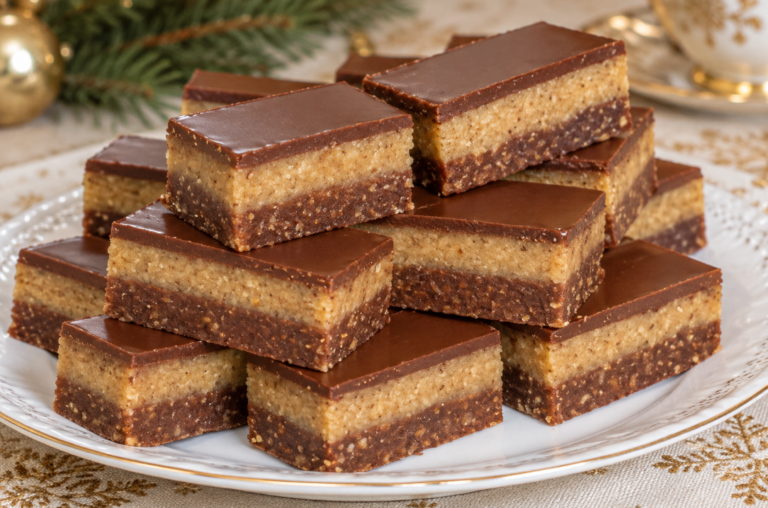
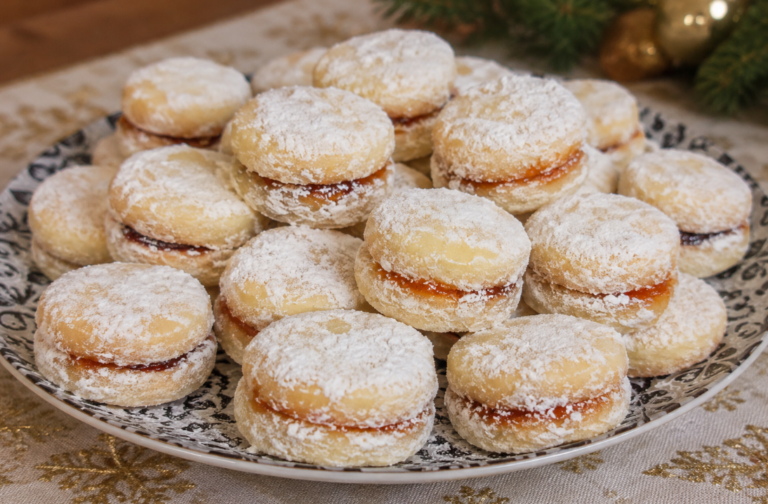
Slice the cooled roll with a serrated knife using a gentle sawing motion. Serve plain with Bosnian coffee or tea. A few vanilice offer a tender jam-filled cookie alongside the richer poppy spiral, while bajadera brings a different chocolate-and-walnut texture.
For preparing ahead, baking and cooling the rolls is the straightforward option. Because this version has a dense cooked-milk filling, use conservative refrigerated storage rather than assuming a long room-temperature shelf life. Refrigerate within 2 hours, or within 1 hour above 90°F, at 40°F (4°C) or below, and use within 3 days. If a roll is still warm near that limit, finish cooling in the refrigerator before wrapping it tightly.
For a longer lead time, freeze cooled rolls or slices well wrapped for up to 1 month for best quality, and thaw in the refrigerator. Bring only the portions being served briefly toward room temperature. Refrigeration can firm and stale the bread, so freezing is often the more useful option for preparation farther ahead; neither method makes it a shelf-stable preserved food.
Practical questions
Can I use whole poppy seeds? Grind them first with suitable equipment. Whole seeds are not a direct replacement for the finely ground seed amount in the cooked filling.
Does a doubled batch need twice the rising time? No. Make more comparable rolls and judge the dough’s expansion. Additional shaping and oven batches increase elapsed work, while the approximate proofing intervals per roll stay comparable.
How many portions does the nutrition cover? One of approximately 24 slices from two base-batch rolls. The card explains its checked ingredient matches, the small composition proxies, and the assumption that the full egg wash is used; actual slice weights and ingredient labels vary.