Prebranac Recipe – Serbian Baked Beans
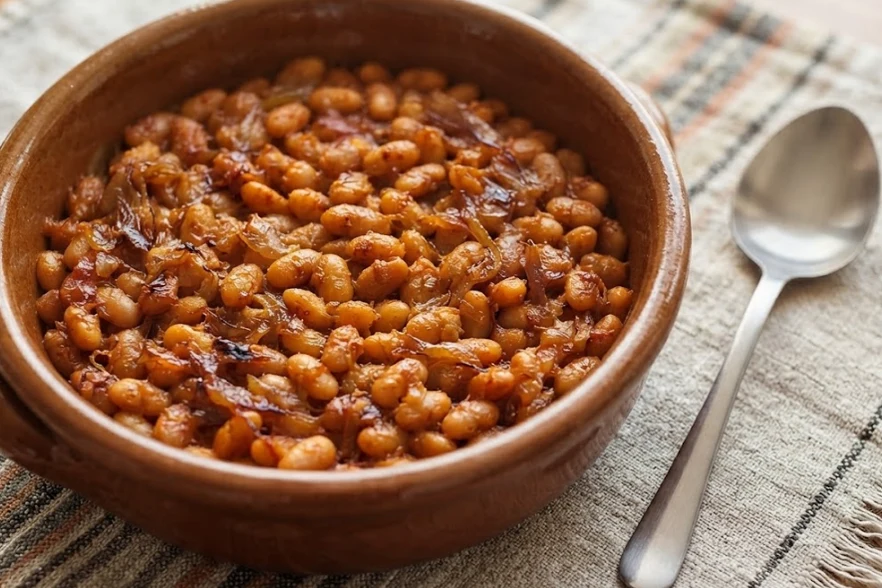
Prebranac is a traditional Serbian dish of white beans baked with plenty of soft onions, sunflower oil, garlic, and sweet paprika. The surface browns gently in the oven while the beans underneath stay creamy. A good spoonful holds together without becoming either bean soup or a dry crust.
This prebranac recipe starts with dried beans and keeps the preparation meatless, with no animal fat, sausage, or flour. The beans are cooked fully before they meet the onion mixture; uncovered baking then concentrates the liquid and brings the layers together. The generous amount of onion is part of the dish, rather than a garnish.
Plan to soak the beans in the refrigerator the night before. The recipe card includes US measurements and a Metric option, with weights for dry beans and onions so shopping and scaling are more dependable. Tetovac beans are the traditional first choice, with clearly identified US alternatives below.
Prebranac – Serbian Baked Beans
Ingredients
- 17.6 oz dried large white beans Tetovac preferred; Great Northern or cannellini are adaptations
- 10 1/2 cups cold water for refrigerated soaking; discard afterward
- 7 1/2 cups fresh water approximately, for cooking; add hot water if needed to keep beans covered
- 2 bay leaves
- 22.9 oz onions peeled weight; cut into thin half-moons
- 10 tbsp sunflower oil US volume rounded; Metric is the reference
- 0.53 oz garlic peeled; finely chopped or pressed
- 0.53 oz sweet paprika not smoked or hot paprika
- 2 tsp fine salt divided; weigh if using a different salt
- 1/2 tsp ground black pepper
- 1 1/4-1 2/3 cups reserved bean cooking liquid taken from the pot, not an additional batch of broth; divide during assembly
Equipment
- Kitchen scale
- Large soaking bowl
- Colander
- Large pot at least 4 liters (about 4¼ US quarts), with boil-over headroom
- Wide skillet
- Wide baking dish about 12 × 9 inches (30 × 22 cm)
- Slotted spoon
- Food thermometer
Method
- Sort and soak cold. Sort the dried beans, remove damaged beans and debris, and rinse well. Cover with the soaking water in a large bowl with room for expansion. Cover and refrigerate at 40°F (4°C) or below for about 12 hours.
- Drain and start fresh. Discard all soaking water, rinse the beans again, and drain. Place in a large pot with the fresh cooking water and bay leaves. The beans must remain covered; use additional hot water if evaporation makes that necessary.
- Boil before simmering. Bring to a full boil and keep boiling for at least 30 minutes, starting the timer only when the pot is actually boiling. Watch the water level and leave boil-over headroom. Do not taste undercooked beans. Then lower the heat and simmer gently until the centers are fully creamy but most beans still hold their shape. The source's 50–70-minute bean-cooking range is an overall guide including the initial boil; older or different beans can take longer. Do not use a slow cooker for the initial raw-bean stage.
- Reserve liquid and drain. Reserve slightly more cooking liquid than the full baking allowance, keeping the extra for small moisture corrections. Drain the tender beans carefully and remove the bay leaves. The reserved liquid comes from this same pot and is not extra broth to count twice.
- Soften the onions slowly. Warm the sunflower oil in a wide skillet over medium-low heat. Add the thinly sliced onions with about one-third of the salt. Cook gently for 25–30 minutes, stirring regularly, until very soft, translucent, and lightly golden. Do not fry them dark or crisp.
- Add garlic, then paprika off heat. Stir the garlic through the onions for their final minute of cooking. Remove the skillet fully from the heat. Stir in the sweet paprika, pepper, and remaining salt. Use roughly one-quarter to one-third of the listed baking-liquid allowance to loosen the onion mixture, stirring promptly so the paprika does not scorch.
- Heat the oven and layer. Preheat a conventional oven to 375°F (190°C). Use a wide, fairly shallow baking dish about 12 × 9 inches (30 × 22 cm). Spread a thin layer of beans, then some onion mixture. Continue alternating, ending mostly with beans and a few visible onions. Lift gently rather than crushing the beans.
- Add the remaining allowance. Distribute the remaining listed cooking-liquid allowance gradually at the edges and over the surface. The mixture should look moist without the beans floating in soup. Keep the separate extra reserved liquid for correction rather than pouring it in automatically.
- Bake uncovered. Bake on the middle rack for about 45 minutes. Check after about 35 minutes. If both the surface and the beans underneath are drying, add a small splash of hot extra reserved cooking liquid at the edge. Keep the final baking uncovered so excess liquid can evaporate.
- Check a creamy finish. The top should be lightly browned and most free liquid reduced. Underneath, the beans should remain creamy and moist, with recognizable grains. A dry, crumbly mass or a loose soup needs correction before serving. Do not bake longer merely to make the surface very dark.
- Rest and serve. Rest for 10 minutes after baking so the remaining liquid settles. Divide evenly according to the servings shown. Serve warm as a substantial side or a meatless main dish with bread and fresh or pickled vegetables.
Notes
- US ounces are weights, not fluid ounces. Weigh dry beans and peeled onions; cup measures and an assumed number of onions are less reliable. Tetovac is preferred; Great Northern and cannellini differ in size and cooking time. Canned beans are already cooked and are not an equivalent substitution for this dry-bean method.
- Keep the full initial 30-minute boil, including for white kidney/cannellini beans. The oven is a finishing stage, not a replacement for cooking raw beans safely. Check the package and follow stricter instructions where applicable.
- The baking-liquid allowance is divided between the onions and the assembled dish. Extra reserved liquid is used only as needed to prevent drying. Do not add flour, sausage, bacon, butter, or animal fat to this defined meatless recipe.
- Planning time is 30 minutes preparation + 70 minutes bean cooking + 30 minutes onion cooking + 45 minutes baking + 12 hours soaking + 10 minutes final rest = 15 hours 5 minutes. This conservative schedule uses upper-end source times without overlap; cooking onions while the beans finish can shorten elapsed time. Bean age and heating time can extend it.
- For 2x or 3x, use additional comparable pots and wide baking dishes. Keep layer depth similar. Check every pot and dish; cooking time does not multiply with ingredient amounts.
- Refrigerate leftovers in shallow containers within 2 hours, or 1 hour above 90°F (32°C). Keep at 40°F (4°C) or colder and use within 3 days. Reheat throughout to 165°F (74°C), adding a little water only if needed.
- Nutrition is an ingredient-based estimate for one-sixth of the batch, using USDA dry Great Northern beans as a stated proxy for the specified large white beans. All oil is counted at an approximate density of 0.92 g/ml. Discarded bean liquid, variety, and food left in the dish change actual intake; no measured cooked yield is claimed.
What Makes Prebranac Different from Grah?
Prebranac is a Serbian baked bean dish with a thick texture, abundant onions, and an uncovered oven finish. This version contains no meat or animal fat. The individual beans remain visible, surrounded by a creamy onion-and-paprika mixture.
Our Bosnian grah is a different preparation: a white bean and beef stew served with more liquid. They share beans as a foundation, but prebranac should not be loosened until it resembles a bowl of grah. Nor should it be baked until all moisture has disappeared.
Choosing White Beans in the United States
Look for dried Tetovac beans in Balkan or Eastern European grocery stores. They are large white beans suited to this preparation. If they are unavailable, Great Northern beans or cannellini are practical adaptations, with differences in bean size and cooking time. Cannellini are white kidney beans and need the full safe boiling step described below. Buy a fresh, well-stored bag; very old beans may cook unevenly or take much longer to soften.
Use the dry weight in the card. A US one-pound bag contains about 454 grams, so it falls short of the original 500 grams. You will need a little more than one bag that size. Cups of dry beans vary with the variety and how they settle, which is why the US setting uses ounces by weight rather than pretending that a fixed number of cups is exact.
Canned beans are already cooked and do not follow the same soaking, cooking, or liquid-development process. They require a separate adaptation, including a different drained weight and moisture assessment. Do not replace the dried beans one-for-one and follow this card unchanged.
Soak Cold and Cook the Beans Completely
Sort and rinse the beans, then cover them with the cold soaking water in a bowl large enough for expansion. Cover and refrigerate at 40°F (4°C) or below for about 12 hours. Discard the soaking water and rinse again. Begin cooking in fresh water with the bay leaves, keeping the beans covered as water evaporates.
Bring the pot to a full boil and maintain that boil for at least 30 minutes, starting the timer once the water is actually boiling. Watch for boil-over and add hot water when necessary. Then reduce the heat and simmer gently until the centers are completely creamy while most beans retain their shape. Do not taste undercooked beans, and do not rely on a slow cooker or the later oven stage to make raw beans safe. This follows the FDA guidance on lectins in dry beans; follow stricter package directions if supplied.
The original 50–70-minute bean-cooking range is a guide for the whole bean stage, including the initial boil. It is not a deadline: variety, age, and water conditions can make beans take longer. Do not move firm beans into the baking dish hoping that the oven will finish their centers. Reserve the cooking liquid before draining the tender beans and remove the bay leaves.
Slow Onions and Paprika Off the Heat
The original recipe uses more peeled onion by weight than dry beans, along with a generous measure of sunflower oil. Cook the thin half-moons gently for 25–30 minutes with part of the salt. They should collapse into a soft, translucent, lightly golden mixture, without dark fried edges. Stir regularly and lower the heat if the onions begin to catch.
Add the garlic for the onions’ final minute. Take the skillet completely off the heat before stirring in the sweet paprika, pepper, and remaining salt. Paprika scorches quickly on a hot pan and becomes bitter. Loosen the mixture promptly with part of the reserved bean liquid.
Choose sweet paprika, rather than silently changing the recipe to smoked or hot paprika. There is no flour thickener here: tender beans, softened onions, and reduction during baking provide the body.
Layer in a Wide Dish and Control the Liquid
A wide, fairly shallow dish gives the surface enough room to brown while the interior stays moist. For the base batch, use a dish about 12 × 9 inches (30 × 22 cm). Alternate thin layers of cooked beans and the onion mixture, finishing mostly with beans and a few visible onions. Handle the beans gently so they remain recognizable.
The Metric baking allowance is 300–400 ml of reserved bean cooking liquid for the entire assembly, including the portion stirred into the onions. It is not an extra 300–400 ml for each stage. Use roughly one-quarter to one-third of that allowance for the onions, then add the remainder gradually to the dish. The beans should look moist without floating. Reserve a little extra cooking liquid separately for corrections instead of pouring it in automatically.
Bake uncovered at 375°F (190°C) for about 45 minutes on the middle rack, checking after about 35 minutes. Look for a lightly browned surface, reduced free liquid, and creamy beans underneath. If the mixture is drying through, add a small splash of hot extra cooking liquid at the edge. Rest for 10 minutes after baking before serving.
For a double or triple batch, use additional comparable pots and wide dishes so the beans have space and the baked layers stay at a similar depth. Ingredient quantities scale in the card; cooking times do not simply double or triple.
How Long Does Prebranac Take?
The card gives a conservative planning total of 15 hours 5 minutes: 30 minutes of preparation, 70 minutes of bean cooking, 30 minutes for the onions, 45 minutes of baking, 12 hours of soaking, and 10 minutes of final rest. That includes the rest missing from the shorter source total and uses the upper ends of its bean and onion ranges.
This schedule does not assume overlapping tasks. Preparing the onions while the beans finish can shorten elapsed time, while bringing the pot to a boil or cooking older beans may extend it. Start the night before and judge bean tenderness and the finished texture as well as the clock.
Fixing Common Problems
- Firm beans after baking: they were not tender enough before layering. Finish cooking the beans fully in the pot next time; oven browning is not a substitute for that stage.
- Too much free liquid: add the baking allowance gradually and account for the portion already used with the onions. Continue uncovered baking only as needed, watching that the top does not dry out.
- A dry, crumbly middle: the dish may be too shallow, the oven too hot, or the liquid insufficient. Add a little hot reserved liquid at the edge while the dish is still baking. Stop once the mixture is creamy rather than chasing a very dark crust.
- Bitter paprika or dark onions: use lower heat for the onions and remove the skillet before adding paprika. Scorched spice cannot be reliably corrected by adding more liquid.
- Broken beans: avoid hard stirring after they soften. Drain carefully, layer with a slotted spoon, and fold only when needed.
Serving and Storing
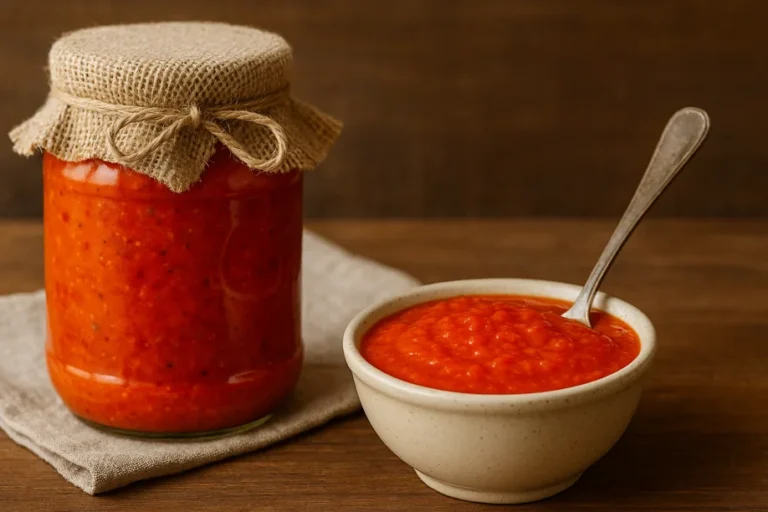
Serve prebranac warm as a substantial side or a meatless main dish. Bread, fresh vegetables, and pickles offer a simple accompaniment. Bosnian somun is useful for the creamy beans, and a small portion of ajvar can sit alongside for roasted pepper flavor.
Divide leftovers into shallow containers and refrigerate within 2 hours, or within 1 hour if the surrounding temperature is above 90°F (32°C). Keep them at 40°F (4°C) or colder and use within 3 days. Reheat throughout to 165°F (74°C), adding only enough water to restore moisture. The mixture thickens when chilled, so assess it after warming before adding more liquid. See the USDA guidance on leftovers for cooling and reheating.
Nutrition is an ingredient-based estimate per one-sixth of the batch, calculated independently with USDA dry Great Northern beans as a stated proxy for large white beans. The full oil allowance is included. Bean variety and liquid discarded after cooking affect the result; the values are not a laboratory analysis of a measured cooked portion.