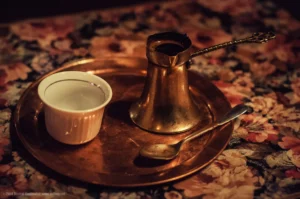
Bosnian Coffee (Bosanska Kafa)
1kcal
Ingredients
Unsweetened coffee
- 5/8 cup water fresh drinking water; U.S. volume rounded
- 2 tbsp powder-fine roasted ground coffee Bosnian- or Turkish-style grind, finer than typical espresso; spoon volume is approximate, so weighing is preferable
Optional serving accompaniments
- sugar cubes serve separately, to taste; excluded from nutrition estimate
- rahat-lokum Turkish delight, optional, served on the side; excluded from nutrition estimate
- drinking water optional, in a separate glass for serving; not extra brewing water
Equipment
- Food-safe džezva A long-handled coffee pot compatible with your stove. For the base recipe, a roughly 8–10 fl oz (250–300 ml) pot leaves room above 150 ml water for the foam. Use a larger suitable pot or repeated batches when scaling.
- Small heatproof cup For the reserved hot water; the handle and pot can be very hot.
- Teaspoon For stirring and sharing the foam.
- Fildžan cups Small heatproof drinking cups; espresso cups are a practical substitute.
- Kitchen scale Recommended for repeatable coffee strength; spoon weights vary.
Method
- Measure and prepare. Measure the coffee and brewing water. Choose a food-safe, stove-compatible džezva with ample empty space above the water for rising foam. Set out the small heatproof cup and drinking cups. The optional serving water is separate from the measured brewing water.
- Heat the water first. Put the measured brewing water in the džezva and bring just to a boil over moderate heat. Keep the handle away from the burner and use a dry heatproof holder if needed. Do not leave the pot unattended.
- Reserve a little water. Remove the džezva from the heat. Carefully pour 1 tbsp (15 ml) of the hot water into the heatproof cup, about one-tenth of the original brewing water. This is part of the measured water, not additional water.
- Stir in the coffee. With the pot off the heat, add the finely ground coffee to the remaining hot water and stir gently until evenly wetted. Keep your face and hands clear of steam. Leave the sugar out of the pot for this unsweetened main method.
- Raise the foam. Return the džezva to low heat. Watch continuously as the surface foam begins to lift and expand. Remove the pot as soon as the foam rises, well before it can reach the rim or spill over. Do not maintain a rolling boil or chase repeated rises in this main method.
- Return the reserved water. With the džezva off the heat and standing securely, gently add the reserved hot water. Let the coffee stand undisturbed for about 3 minutes so the grounds begin to settle. This rest also allows some cooling, but does not guarantee it is cool enough to drink.
- Share and pour. If desired, spoon a little surface foam into each cup, then pour the coffee slowly among the displayed servings. Leave the dense grounds in the pot and stop pouring when the liquid becomes muddy. Let any fine sediment carried into the cups settle; do not filter or stir it back up.
- Sip and serve. Allow the coffee to cool to a comfortable drinking temperature before sipping. Offer the separate drinking water and optional sugar cubes or rahat-lokum on the side. Sip slowly and leave the sediment at the bottom of the cup rather than drinking the last gritty mouthful.
Notes
- Strength and portions: The precise reference ratio is 10 g coffee to 150 ml brewing water, divided into two small cups. The U.S. spoon measure is approximate and depends on the grind and packing. Finished liquid yield is lower than the starting water because of evaporation and liquid left with the grounds; this is not a measured yield.
- Method: This recipe uses a hot-water-first method with one controlled foam rise and a little of the same water reserved for the finish. Other Bosnian households use a separate kettle or repeat the rise. Neither a fixed number of rises nor one household's coffee dose is universal.
- Foam: Pjena, sometimes called kajmak in this coffee context, is coffee foam, not dairy kajmak or cream. No milk product is added to the base drink.
- Heat and scaling: Leave generous headroom and watch the pot continuously. Remove it before the foam reaches the rim. Keep the handle away from heat, use protection if it is hot, and place the pot on a stable heatproof surface. Use repeated batches if your pot cannot safely accommodate the scaled volume. Heating time depends on the stove and pot; do not multiply it automatically.
- Serving and storage: Let the coffee settle and cool enough to sip. Pour slowly without stirring up the sediment, and leave the muddy last mouthful. Freshly brewed coffee is best; do not keep reheating the grounds. Store dry coffee airtight, cool, dry, and away from strong odors.
- Nutrition: Approximately 1 kcal per small cup is a generic USDA brewed-black-coffee reference calculated for 75 g beverage, not the calories in the dry grounds and not a laboratory analysis of this unfiltered preparation. Actual served volume and extraction vary. Sugar and rahat-lokum are excluded; caffeine has not been calculated.
- Photo credit: Photo: Michał Huniewicz, “Bosnian coffee”, CC BY 2.0. Resized and converted to WebP; original watermark retained.
